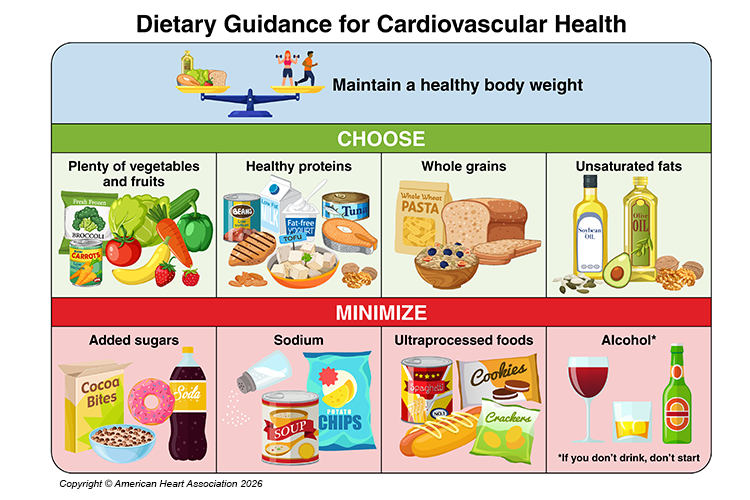
Key event: The American Heart Association published the 2026 Dietary Guidance to Improve Cardiovascular Health (Mar 31, 2026), updating the 2021 statement and refining nine features of heart-healthy dietary patterns across the life course. Implication: This is primarily public-health guidance with minimal immediate market impact, though it could gradually shift consumer demand and encourage product reformulation in food and CPG sectors toward heart-healthy options over time.
The Guidance will act as a demand-tilter rather than an immediate shock: expect a multi-year reallocation within the food channel away from high-sodium/-sugar commodities toward fresh, minimally processed and reformulated packaged products. That shift amplifies incumbent CPG scale advantages — large firms with diversified portfolios and R&D budgets can absorb reformulation costs (we estimate ~0.5-2.0% of COGS for major brands) and win shelf resets, while smaller niche brands face distribution and margin pressure.
Second-order winners are ingredient and flavor houses that enable sodium/sugar reduction (think seasoning blends, high-intensity sweeteners, plant proteins) and foodservice distributors that control institutional procurement (hospitals, schools, corporate cafeterias) where guideline-driven contracts can be sticky. Conversely, legacy commodity categories (sugary cereals, some snack segments) will see incremental SKU rationalization and promotional dollar reallocation, pressuring gross margins for exposed players over 6-24 months.
Regulatory and payer dynamics create optionality: health plans and hospital systems can monetize guideline adoption through reduced admissions and chronic care costs, translating to meaningful procurement leverage within 12-36 months. The key reversal risk is consumer taste inertia and substitution: if reformulations fail on taste or price, incumbents will face mix deterioration and promotional load, compressing EBIT by 100-300bps in affected categories within the first 12 months.
AI-powered research, real-time alerts, and portfolio analytics for institutional investors.
Request DemoOverall Sentiment
neutral
Sentiment Score
0.00
