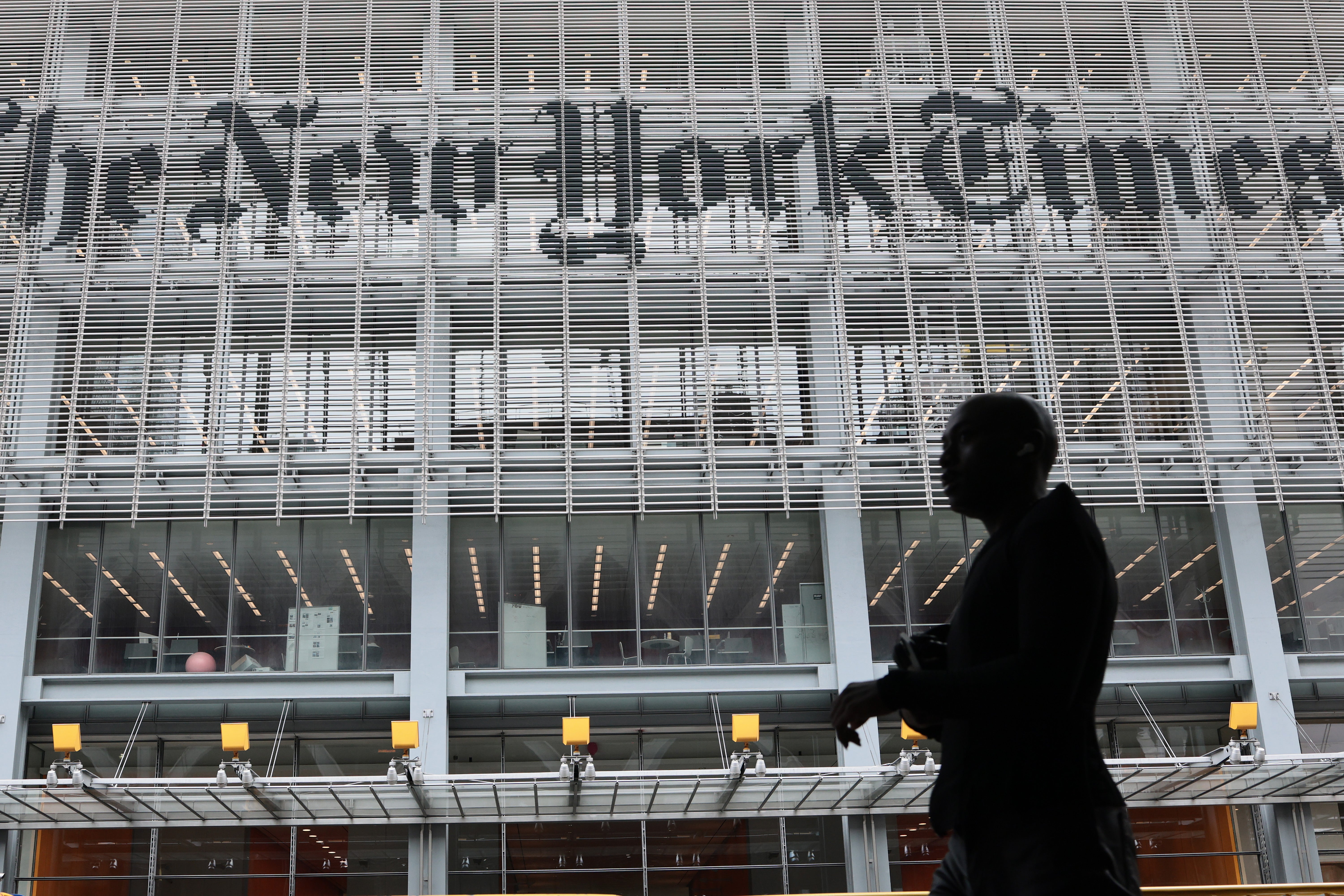
Benjamin Netanyahu said Israel will seek the harshest legal action, including a possible defamation lawsuit, against The New York Times and Nicholas Kristof over allegations of sexual violence against Palestinian prisoners. The dispute adds to already heightened Israel-Gaza tensions and underscores an ongoing legal and reputational fight over wartime reporting. The article is primarily a political and media controversy with limited direct market impact.
This is less a direct P&L event for NYT than a reputational-volatility event with asymmetric tails. The immediate market read is that management is choosing legal confrontation to deter future reporting, but that tactic often backfires by extending the news cycle and increasing advertiser/reader scrutiny. For NYT, the risk is not a one-day revenue hit; it is a slow-burn premium multiple compression if the brand becomes persistently associated with politically charged litigation rather than high-trust journalism. The second-order beneficiary is not any obvious media competitor, but the broader ecosystem of legal and crisis-management firms, while NYT’s peers may quietly gain if attention shifts from structural media economics to a single high-profile outlet. However, the larger issue is the precedent: a lawsuit threat against a major U.S. publication over conflict reporting can chill investigative coverage at the margin, especially among freelancers and opinion writers whose monetization depends on audience trust and platform distribution. That creates a subtle medium-term downside for opinion-led media products, where the audience is more polarized and churn-sensitive. The key catalyst is whether this becomes actual filed litigation versus another rhetorical threat. If a suit is filed, expect several weeks of headline risk and discovery-related scrutiny; if it is not filed, the market likely digests this as political theater within days. The contrarian view is that the stock reaction may be overdone because NYT’s core subscription base is less sensitive to partisan pressure than the market assumes, and controversy can sometimes reinforce engagement rather than impair it. The real risk would be a broader advertiser/partner discomfort cycle, which tends to show up with a 1-2 quarter lag rather than immediately.
AI-powered research, real-time alerts, and portfolio analytics for institutional investors.
Overall Sentiment
mildly negative
Sentiment Score
-0.15
Ticker Sentiment
