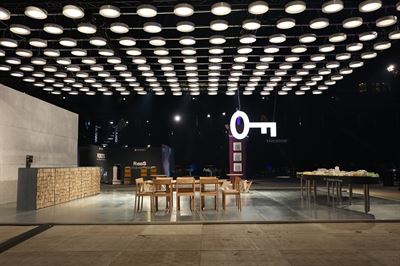
Fabege is the main sponsor of Techarena 2026 and will host seminars, panel discussions and an exhibition stand at the Feb. 11–12 event in Stockholm, focusing on urban development, talent attraction, Arenastaden and the intersection of real estate and technology. Sessions highlight AI, startup scaling, and the build-vs-buy debate with participants from Fabege, Telia, Stockholm Chamber of Commerce and several tech founders and firms. The participation underscores Fabege’s strategic positioning to support tenant attraction and sustainable urban growth, but the announcement carries minimal immediate market-moving financial implications.
Winners are hyper-local landlords and developers that control Stockholm tech clusters (Fabege/FABG, JM) and service providers (Coor, TietoEvry) because clustering raises willingness-to-pay for premium office+housing near Arenastaden; losers are peripheral, low-quality office owners and mall-centric retail landlords whose pricing power erodes. Expect ~100–300bp compression in cap rates for top-tier Stockholm assets over 12–36 months if leasing velocity picks up, while secondary assets could face 200–400bp widening if financing stress returns.
Competitive dynamics favor mixed-use owners with flexibility and ESG credentials; incumbents that retrofit space for AI labs and talent amenities can command +5–15% rent premiums vs vanilla offices. Supply constraints in housing imply sustained developer pricing power: a 5–10% annual new-home delivery gap supports construction names and materials (SSAB) but risks input-cost inflation.
Tail risks: swift regulatory moves (municipal rent caps, tightened planning) or a Riksbank rate shock could knock NAVs 20–40% for levered landlords within 6–12 months; AI-enabled remote-work adoption could structurally reduce space utilization by 10–30% over 2–5 years. Near-term catalysts are corporate HQ relocations announced at events like Techarena (0–3 months for newsflow), municipal zoning approvals (3–12 months) and Riksbank communications (weekly/monthly).
Contrarian: the market underestimates premiumisation — amenity-rich Stockholm nodes may outperform broader European REITs by 10–20% over 12–24 months, while consensus overprices a full office recovery; history (post-2008 urban rebounds) shows concentrated, well-capitalized landlords re-capture value fastest. Watch for unintended political backlash if housing costs rise >8% YoY, which would materially change the calculus.
AI-powered research, real-time alerts, and portfolio analytics for institutional investors.
Request DemoOverall Sentiment
mildly positive
Sentiment Score
0.28
Ticker Sentiment
