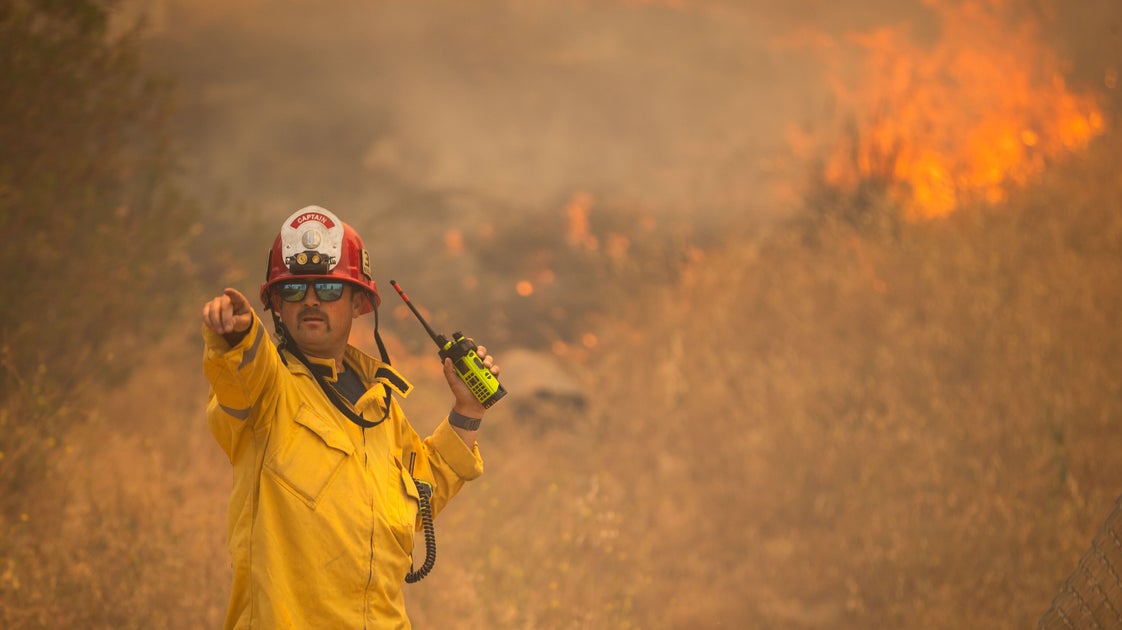
A wind-driven wildfire in Simi Valley burned more than 500 acres, damaged at least one home, and forced evacuations across several neighborhoods. The Ronald Reagan Presidential Library and Museum was closed, while firefighters also battled a separate 15-square-mile blaze on Santa Rosa Island that destroyed a cabin and equipment shed and evacuated 11 National Park Service employees. The article is primarily a localized public-safety event with limited direct market impact.
The first-order equity impact is limited, but the second-order trade is in regional real estate and restoration demand, not the fire headline itself. Southern California brush-fire events tend to create a short-lived bid for evacuation-linked services, temporary housing, debris removal, roofing, HVAC, and landscaping names with local exposure; the bigger economic risk is a small but measurable increase in insurance-loss severity if multiple structures are impacted, which can tighten underwriting standards for high-risk ZIP codes over the next renewal cycle. For housing, the key question is whether this becomes a catalyst for repricing in hillside and edge-of-wildland suburban markets. Even modest fire damage can extend transaction times and widen insurance spreads for exposed properties for 1-2 quarters, especially if carriers re-rate wildfire zones after a visible event near a dense population center. That creates a negative read-through for California-heavy brokers, mortgage originators, and homebuilders with exposure to exurban Simi/805 corridor demand, while benefiting firms tied to remediation and re-construction spend. On the travel side, the near-term hit is mostly local disruption rather than a broader leisure demand shock. Closure of a nearby landmark and island evacuations can suppress weekend visitation and camping traffic for days to weeks, but the deeper issue is that repeated fire headlines can modestly re-risk Southern California leisure itineraries during peak season, which is more of a sentiment drag than a structural demand destroyer. The overreaction risk is that markets extrapolate one fire into a sustained regional tourism slowdown; historically, unless smoke persists or the fire season broadens, those effects fade quickly once containment improves. Contrarian view: the market usually underprices the cleanup and mitigation cycle relative to the disaster itself. If this remains a contained event, the better trade is not to chase disaster protection, but to own the contractors and materials that monetize recovery and defensible-space spending, while fading any knee-jerk shorting of broader California housing proxies once winds subside and containment accelerates.
AI-powered research, real-time alerts, and portfolio analytics for institutional investors.
Request DemoOverall Sentiment
moderately negative
Sentiment Score
-0.45
