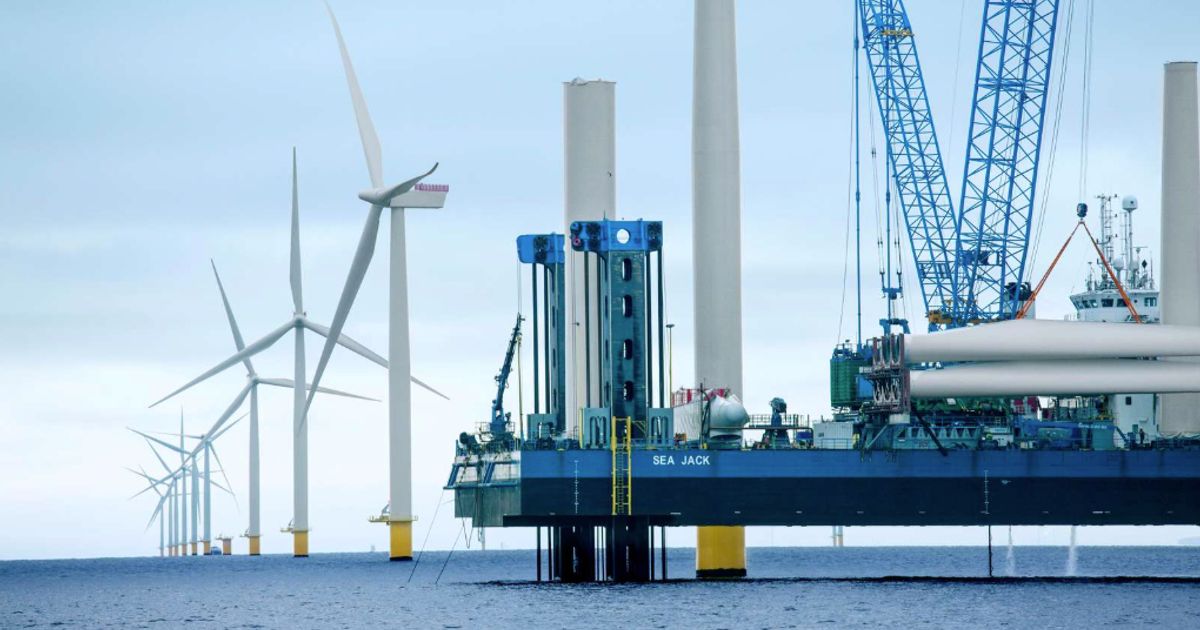
Ørsted has filed a supplemental complaint in the U.S. District Court for D.C. (1 Jan 2026) and will seek a preliminary injunction after the Bureau of Ocean Energy Management suspended the nearly complete $5 billion Revolution Wind project (87% complete) and four other East Coast offshore wind projects. Revolution is a 50/50 JV with Skyborn Renewables (GIC/BlackRock) and carries 20-year PPAs for 400 MW to Rhode Island and 304 MW to Connecticut; Sunrise Wind (also suspended) holds a 25-year 924 MW PPA to New York — together the two projects can power roughly 1 million homes. Ørsted warned the suspension will cause substantial harm, increase regional electricity costs and lower reliability, and Copenhagen-listed shares rose ~3.6% on the report. The dispute heightens regulatory and national-security risk for U.S. offshore wind developers and suppliers and could materially affect project timelines, contractor revenues and sector valuations.
Market structure: The BOEM suspensions are a direct shock to offshore wind developers (Ørsted, Vineyard/Empire Wind partners, Sunrise consortium) and to turbine/installation contractors (Vestas/Vestas Wind Systems VWS.CO, Siemens Gamesa). Short-term pricing power shifts toward fossil-fuel generators and merchant gas suppliers in the Northeast as ~2 GW of expected capacity is delayed, which could raise peak power spreads in NYISO/ISO-NE by an incremental $5–15/MWh in winter months if outages coincide. Cross-asset: expect widening credit spreads on project finance debt (green bonds +50–150bp tail risk), higher volatility in renewable equities and related options, modest USD safe-haven flows into Treasuries on policy uncertainty, and upward pressure on Henry Hub forwards for 3–12 months.
Risk assessment: Tail risks include a multi-quarter or multi-year moratorium, permanent contract renegotiations, or forced divestiture under national-security grounds — each could impair equity and project-level cashflows by 30–100%. Immediate risk (days–weeks): headlines and court filings driving vol; short-term (1–3 months): preliminary injunction decision; long-term (6–36 months): regulatory precedent that raises hurdle rates for US offshore projects, increasing required IRR by 300–500bp. Hidden dependencies: supply-chain commitments (vessel charters, turbine deliveries) generate fixed costs irrespective of BOEM status and can produce liquidiity stress for sponsors.
Trade implications: Favor selective longs in developers with deep balance sheets and legal recourse (Ørsted ORSTED.CO) sized 2–3% with tight stops; short near-term revenue exposure names (VWS.CO 1–2%) or buy puts on wind ETFs (ICLN put spreads) to express project-delay risk. Options: buy 3–6 month call spreads on ORSTED.CO sized to 1–2% of portfolio if court injunction odds >40%; conversely buy 3–6 month protective put spreads on ICLN/FAN to cap downside. Rotate 1–3% into US regional gas producers (EQT or UNG exposure) to capture potential spark spreads; hedge with short-duration duration in corporate bond books.
Contrarian angles: Market treats suspension as binary; litigation history (previous BOEM reversals) shows a >30% chance of injunction and reinstatement within 60–120 days — creating mispriced optionality in developers with solid mitigation agreements. Reaction may be overdone for sponsors who have completed 80–90% of construction; forced sale/liquidation risk is limited where PPAs exist, implying asymmetric upside if courts unblock projects. Watch for unintended consequences: higher domestic content requirements or defense reviews could re-shape supply chain winners (US shipyards, steel producers) — create long-term domestic industrial beneficiaries beyond renewables.
AI-powered research, real-time alerts, and portfolio analytics for institutional investors.
Request DemoOverall Sentiment
moderately negative
Sentiment Score
-0.45
Ticker Sentiment
