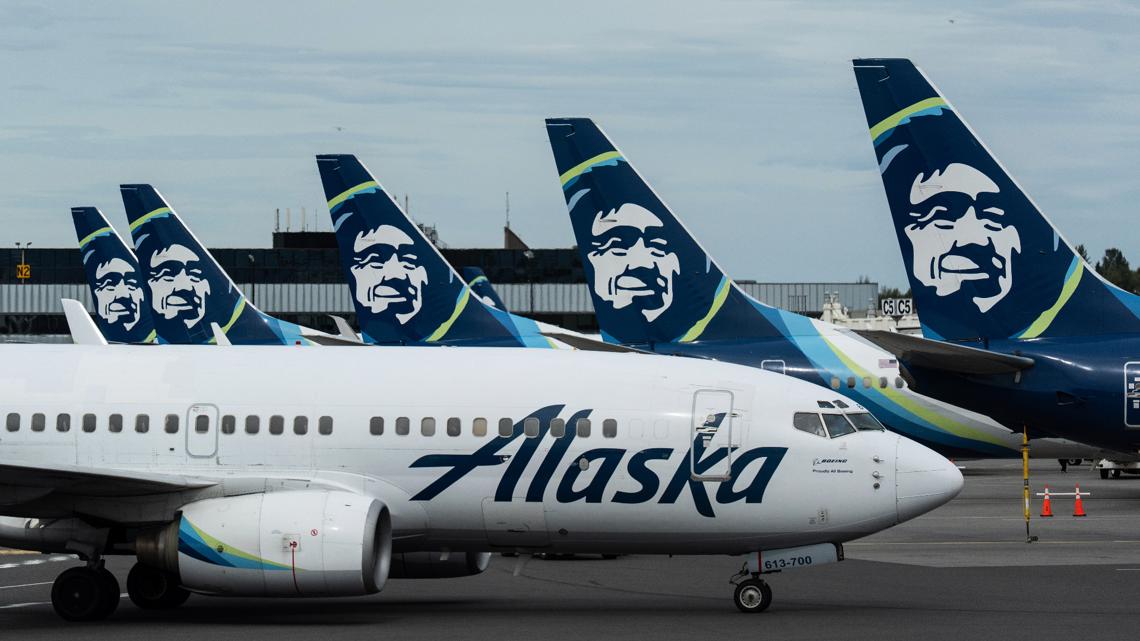
Alaska Airlines will add a direct seasonal Boise-to-Santa Rosa flight starting Nov. 1, expanding access to Sonoma County wine country. The carrier is also adding service from Phoenix and Salt Lake City, bringing direct Sonoma access to 12 western U.S. destinations. The news is positive for travel demand and route expansion, but likely has limited broader market impact.
This is a small-capacity, high-signal route announcement rather than a broad demand inflection, so the primary economic effect is likely to accrue to the airline with the best ability to monetize incremental leisure demand and ancillary revenue rather than to the destination itself. The route should be modestly accretive on a contribution basis if load factors can be filled with premium-leisure travelers, but the real second-order benefit is network defensibility: adding more nonstop Western U.S. spokes increases switching costs and makes it harder for rivals to poach price-insensitive travelers on weekend and shoulder-season trips.
The biggest winner is likely Alaska’s loyalty and margin mix, not just unit revenue. Seasonal, leisure-heavy flying tends to attract higher-margin baggage, seat-upgrade, and card-earning behaviors, and the incremental value of a new nonstop is magnified when it feeds an already sticky West Coast network. The competitive risk is that this kind of route is easy for competitors to copy if it proves profitable, which can compress yields within 1-2 booking seasons; the edge here is less “first mover” than “best operator” in a niche that favors schedule breadth and brand loyalty.
From a supply-chain lens, there is no direct freight read-through, but there is an indirect benefit to airport and hospitality ecosystems in Boise and Sonoma if the route shifts high-spend weekend traffic into the shoulder months. The key reversal catalyst would be a deterioration in discretionary travel spend or a spike in regional fares that makes the route uncompetitive, which would show up within one or two quarters through lower load factors and weaker ancillary attach. Because this is seasonal, the market should judge execution over the next 6-12 months rather than extrapolate a structural step-up.
Contrarianly, the market may overestimate the strategic significance of every new leisure route: the headline is good, but the economics are highly elastic and can be diluted quickly if capacity is added too aggressively across similar western leisure markets. The better way to express the idea is not to chase a destination story, but to own the carrier with the strongest loyalty flywheel and short the names most exposed to commoditized West Coast leisure capacity if they respond with discounting.
AI-powered research, real-time alerts, and portfolio analytics for institutional investors.
Request DemoOverall Sentiment
mildly positive
Sentiment Score
0.30
