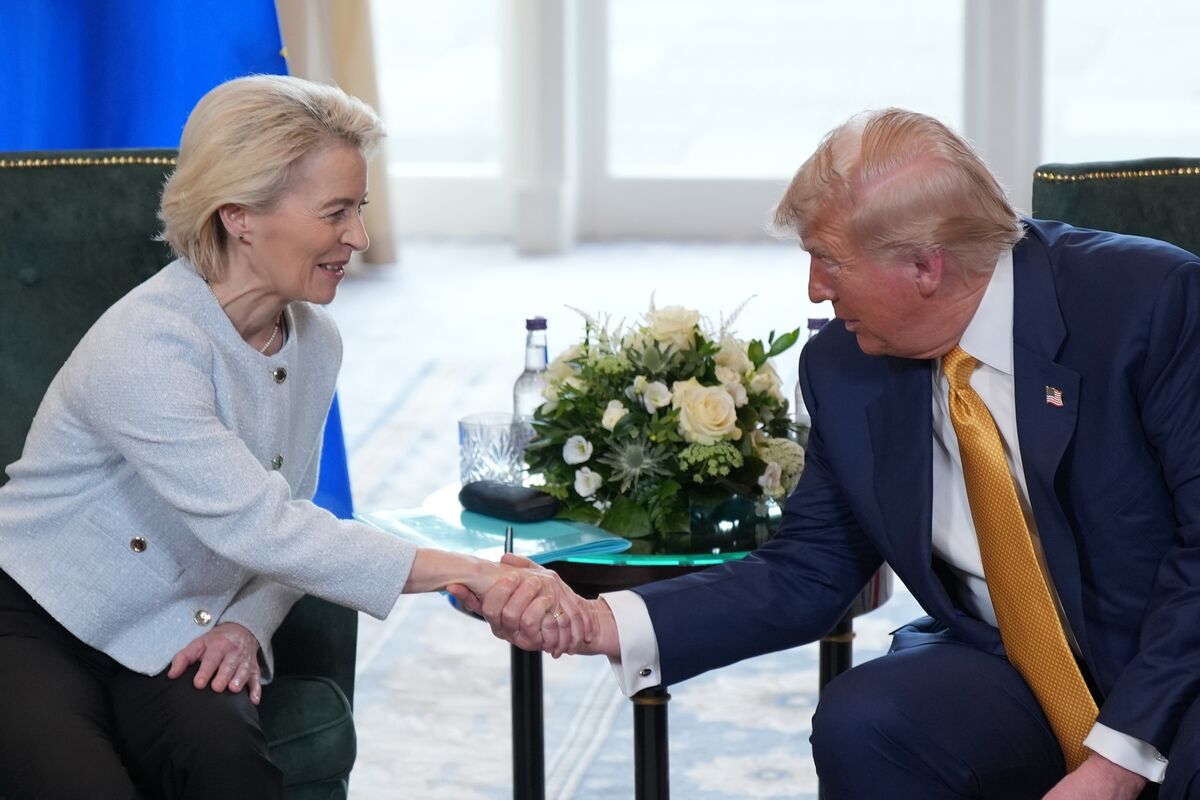
European leaders are defending a new trade agreement with the U.S. under which the EU accepts a 15% tariff on most of its exports to the U.S. while the U.S. reduces some levies to zero. This deal faces significant criticism from German industry officials, including the BDI, who warn it leaves the European auto industry exposed and reduces overall competitiveness, labeling it an "inadequate compromise" with a "disastrous signal" for transatlantic economies.
A new trade agreement between the European Union and the United States is facing significant opposition from key industrial stakeholders, creating a negative outlook for European exporters. The deal's terms, which see the EU accepting a 15% tariff on most of its exports to the US in exchange for reduced levies on some American products, are being heavily criticized. Notably, Germany’s BDI industry federation has labeled the accord an "inadequate compromise" that sends a "disastrous signal" to transatlantic economies. The core concern, articulated by the BDI, is that the agreement specifically leaves the European auto industry exposed and will broadly erode the competitiveness of companies across the continent. This sentiment is underscored by a strongly negative sentiment score (-0.7), indicating that the perceived economic damage outweighs any benefits from the deal and points to potential headwinds for corporate earnings and margins in export-dependent sectors.
AI-powered research, real-time alerts, and portfolio analytics for institutional investors.
Request DemoOverall Sentiment
strongly negative
Sentiment Score
-0.70
