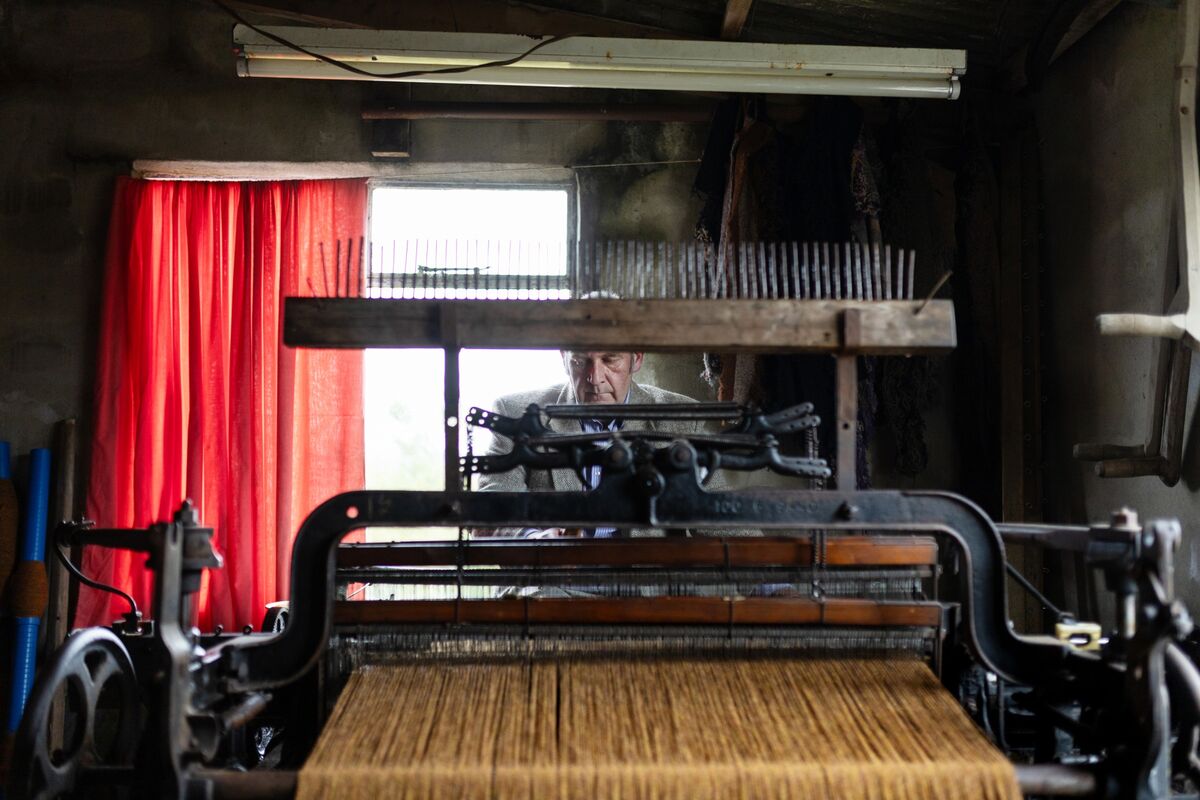
US tariffs, initially challenged in 1957 to protect Scottish tweed makers, are now threatening the industry again under President Trump, whose mother was a native of the Scottish island. Despite Trump's Scottish heritage, local weavers express skepticism that he will intervene to lift the tariffs, prioritizing his own interests over the well-being of the Outer Hebridean economy.
The re-imposition of US tariffs on Scottish woolen imports, specifically targeting hand-woven tweed from the Outer Hebrides, poses a direct economic threat to this specialized industry, reigniting trade tensions reminiscent of those addressed in 1957. A notable aspect of the current situation is the involvement of US President Trump, whose maternal heritage traces back to the Isle of Lewis, one of the affected areas. Despite this connection, local tweed producers express significant skepticism, captured by a moderately negative sentiment score (-0.5) and pessimistic tone, doubting any favorable intervention and perceiving the president's actions as driven by self-interest. These tariffs jeopardize what is described as the 'lifeblood of the local economy.' While the immediate impact is concentrated, the overall market impact score of 0.25 suggests that the broader financial markets are not expected to experience significant disruption from this specific trade issue. The situation is thematically linked to 'Tax & Tariffs,' 'Trade Policy & Supply Chain,' and 'Elections & Domestic Politics,' indicating its relevance within ongoing international trade dynamics and political considerations.
AI-powered research, real-time alerts, and portfolio analytics for institutional investors.
Request DemoOverall Sentiment
moderately negative
Sentiment Score
-0.50
