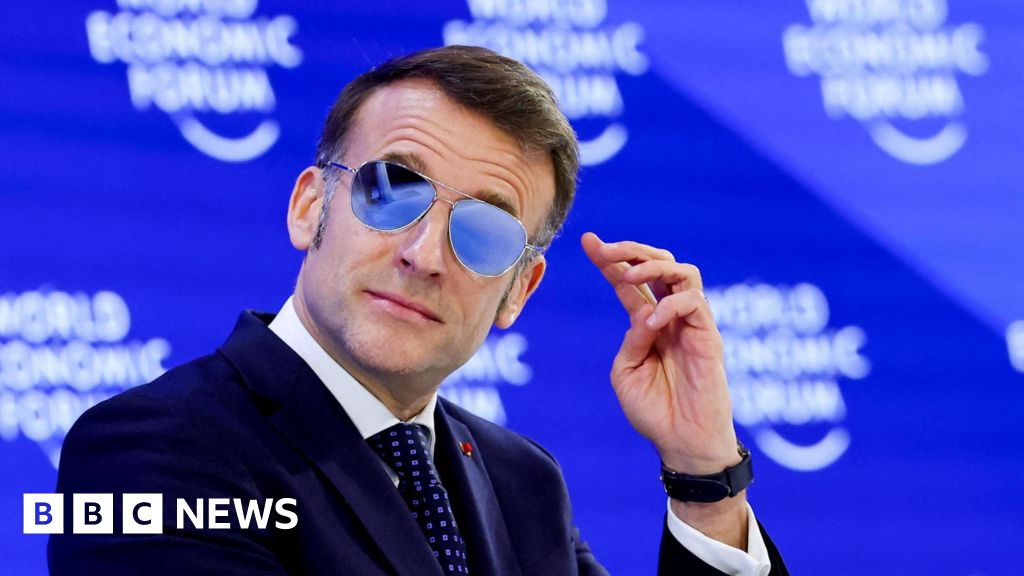
At the World Economic Forum in Davos, French President Emmanuel Macron, visibly wearing sunglasses due to a benign sub‑conjunctival haemorrhage, warned against a drift toward autocracy and criticized use of tariffs as leverage over territorial sovereignty. The remarks came amid US threats from President Trump to impose punitive tariffs — including a cited threat of 200% tariffs on French wine and champagne — over France's stance on a proposed Gaza 'Board of Peace'; such measures would raise risks for French exporters and exacerbate transatlantic trade tensions. While immediate market impact is limited, the episode underscores political tail risks for French agricultural exporters and potential escalation in trade policy rhetoric between the US and EU.
Market structure: A targeted US tariff threat on French wine/champagne and symbolic threats against EU goods benefits non-French global spirits/wine producers and domestic US producers (potential +2–5% share shift in premium segments if tariffs >25%) while directly hurting French exporters and luxury conglomerates with outsized wine exposure (Pernod Ricard, Rémy Cointreau, LVMH). FX and safe‑haven dynamics will amplify moves: euro downside pressure (2–4% shock possible) and bid for US Treasuries/gold if trade rhetoric escalates. Supply/demand remains intact physically (wine supply inelastic over season) but demand could reprice regionally and reroute logistics, creating short-term dislocations in importer inventories.
Risk assessment: Tail risk is implementation of punitive tariffs (e.g., the 200% headline threat) — low probability but high impact to targeted firms and French regional employment; timeline: immediate market repricing (days), revenue hit realization (1–3 quarters), structural repositioning (2–4 quarters). Hidden dependencies include tourism flows (regional luxury sales) and reciprocal EU retaliatory tariffs on US exporters (agriculture, industrial supply chains). Catalysts: presidential announcements/tweets (within 72 hours), formal tariff filing (30–60 days), WTO/retaliation rulings (6–12 months).
Trade implications: Tactical hedges: buy 3‑month puts or put spreads on REMYY and PDRDY sized 0.5–1.5% portfolio each; short EWQ (iShares MSCI France) 1–3% for near‑term risk‑off; pair trade long DEO (Diageo) 1–2% vs short PDRDY 1–2% for 3–6 months. FX: establish 0.5–1% notional short EURUSD via 3‑month puts or short FXE targeting a 2–4% move. Entry: stagger positions on headlines, deploy full size if tariffs are announced; trim at pre-specified recoveries (10–15%).
Contrarian angles: The market may overprice permanent damage — high‑end luxury demand is price‑inelastic and global (buy-on-dips for LVMH/LVMUY on a 10–15% drawdown, 6–12 month horizon). Conversely, smaller producers with concentrated France exposure (REMYY, PDRDY) face real earnings risk and are mispriced if tariffs materialize. Historical parallel: 2018 US-EU trade skirmishes produced short-lived equity hits but selective structural losers; worst outcomes occur only if tit‑for‑tat escalates to broader tariffs (an asymmetric risk to monitor).
AI-powered research, real-time alerts, and portfolio analytics for institutional investors.
Request DemoOverall Sentiment
neutral
Sentiment Score
-0.15
