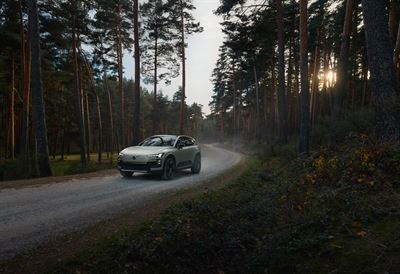
Volvo Cars launched the EX60 Cross Country, a raised, rugged variant of the all-electric EX60 with unique design features, exclusive Frost Green color, 20 mm additional ride height (plus a further 20 mm via air suspension), and provisional EPA-based range estimates up to 640 km for the P12 AWD and up to 514 km for the P10 AWD (both with 20" summer tires); Canadian launch timing is pending. The release complements Volvo's ongoing electrification and ESG push amid robust company fundamentals: full-year 2024 core operating profit of SEK 27 billion, revenue of SEK 400.2 billion and record global sales of 763,389 cars, supporting the company’s transition to a fully electric lineup and its long-term net-zero ambitions.
Market structure: Volvo (VOLCAR B) and suppliers of long-range EV components (battery cell makers, high-efficiency thermal systems, premium chassis/air-suspension vendors) are the direct beneficiaries; legacy lower-range ICE/SUV specialists and low-cost EV challengers that compete on price rather than range/quality are the marginal losers. The EX60 Cross Country nudges premium EV differentiation (range + utility), which supports modest pricing power in the premium crossover niche but is unlikely to move total market share rapidly given incumbent competition from BMW/MBGYY and VWAGY. On supply/demand, the model underscores steady demand for long-range premium EVs and adds marginally to battery metals demand (lithium/nickel), likely a +1–3% demand shock to relevant suppliers over 12–24 months.
Risk assessment: Tail risks include a material (>10%) downward revision of EPA range figures, battery supply constraints, or a manufacturing/recall event that compresses margins and investor sentiment. Immediate impact (days) should be muted; short-term (1–6 months) depends on official EPA figures, initial reviews, and Canadian launch timing; long-term (1–3 years) ties to Volvo’s EV conversion success and supply-chain concentration (e.g., single-supplier battery risk). Hidden dependencies include aftermarket service/warranty costs from air suspension and China supply-chain exposure; catalysts to watch are EPA range release, Q1 bookings, and supplier volume guidance.
Trade implications: Preferred direct play is a measured long in VOLCAR B to capture premium-niche upside and margin improvement already evidenced by SEK 27bn 2024 core profit — target 12-month gain 20–30%, but risk-manage with a 10–12% stop. Relative-value: long VOLCAR B vs short BMWYY/BMW.DE (1:1) to isolate Volvo-specific product momentum. Options: use a cost-limited 6–9 month call spread (buy 25% OTM, sell 50% OTM) to express upside around the EPA/canadian launch window while limiting premium bleed. Rotate modestly into battery metals exposure (LIT ETF or SQM) for 12–24 month thematic exposure.
Contrarian angles: The market may be undercounting Volvo’s ability to monetize brand and safety premium—record 2024 profits suggest execution credibility—so underweighting Volvo vs Tesla peers could be a mispricing. Conversely, consensus may under-emphasize service/warranty cost creep from more complex suspension/drive systems; a surprise >5–10% range downgrade or warranty reserve build could trigger >15% share correction. Historical parallel: premium niche product rollouts (e.g., V90 Cross Country) delivered healthy ASPs but capped volumes — expect similar mix-driven margin gains rather than large share grabs.
AI-powered research, real-time alerts, and portfolio analytics for institutional investors.
Request DemoOverall Sentiment
mildly positive
Sentiment Score
0.30
