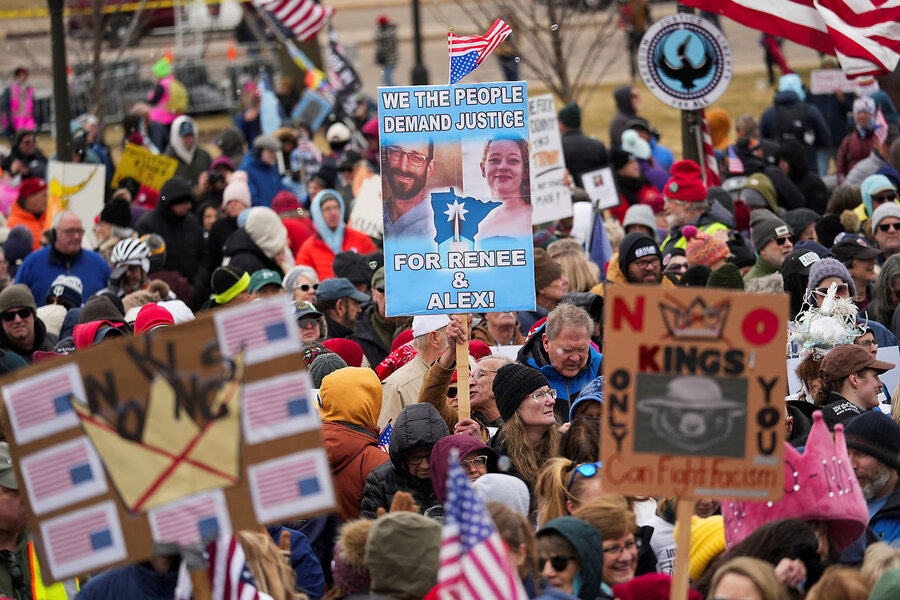
Organizers said roughly 9 million people participated globally (organizers) with at least 8 million reported by the Los Angeles Times and protests in 3,000+ U.S. locations, centered on opposition to President Trump. Recent polls cited: Reuters-Ipsos 36% approval (March 23) and Quinnipiac disapproval ~56% overall (58% economy, 59% foreign policy/Iran war). The story stresses that large turnout alone is unlikely to produce policy change without sustained organization, and the key market/political risk is whether the movement translates into coordinated local electoral activity that could influence November midterms.
The No Kings single-day turnout is a liquidity event for civic engagement more than a policy shock—its value to markets lies in whether organizers convert spectacle into durable infrastructure (local chapters, training, targeted canvassing). The March 31 training call is the inflection signal to watch: if national turnout is followed by systematic local campaigning over the next 3–9 months, the probability of Democratic gains in swing House seats meaningfully increases, shifting the regulatory and fiscal baseline for 2025 budgeting and sectoral regulation.
Second-order political dynamics matter more than raw crowd size. An effective grassroots machine will mirror the tea party playbook but in the opposite direction—primary threats, candidate recruitment, and concentrated pressure on local officials—raising the odds of targeted regulatory outcomes (voting laws, immigration enforcement, climate subsidies) that show up unevenly across industries and states over a 6–18 month horizon. Conversely, heavy decentralization and coalition heterogeneity raise the risk of fragmentation and an electoral rebound for right-leaning mobilization; expect volatility spikes around key local primaries and the November midterms instead of a smooth policy drift.
Market-relevant tail risks are binary and timing-dependent: a sudden international escalation (Iran-related) would favor defense and energy and lift volatility within days; a disciplined conversion to local organizing would raise long-term odds of progressive regulation, benefiting renewables and social-utility winners over 6–24 months. The clearest actionable signal to watch is fundraising/organizer staffing increases in battleground districts by end of Q2—if that accelerates, re-rate midcap renewable and regulated-utility exposure for potential policy-driven upside.
AI-powered research, real-time alerts, and portfolio analytics for institutional investors.
Request DemoOverall Sentiment
neutral
Sentiment Score
0.00
