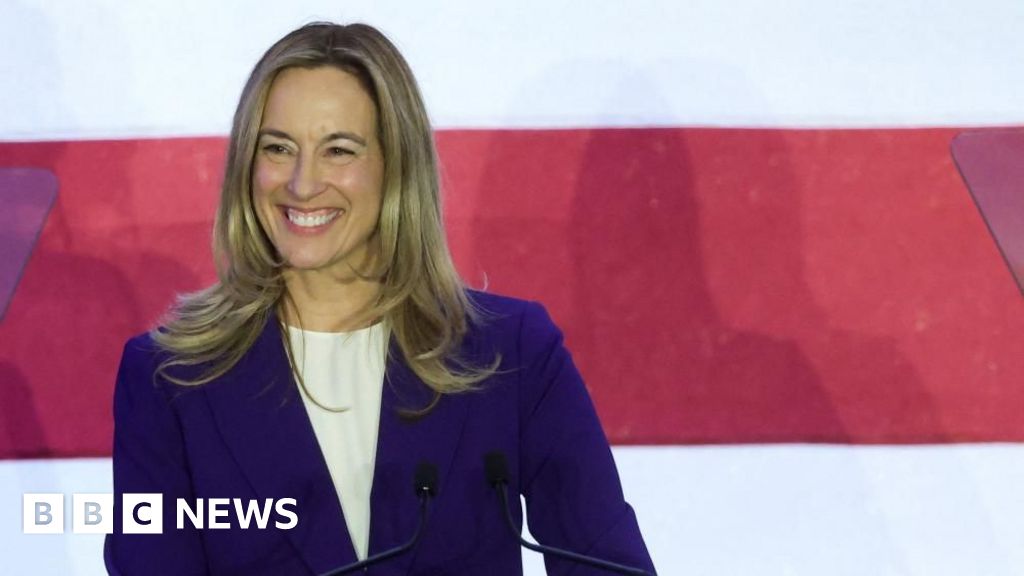
Democrat Mikie Sherrill has won the New Jersey gubernatorial race, succeeding a fellow Democrat, in an election seen as an indicator of public sentiment on national policies. Sherrill's campaign focused on proposed tax incentives for new housing developments and a freeze on utility rate hikes, signaling potential policy directions for the state's real estate and utility sectors. This outcome reinforces Democratic control in the reliably blue state, maintaining a predictable policy environment for institutional investors monitoring state-level fiscal and regulatory trends.
Democrat Mikie Sherrill's victory in the New Jersey gubernatorial race, succeeding a fellow Democrat, solidifies the state's "reliably blue" political alignment. This outcome, while reflecting broader public sentiment, suggests continuity in state-level governance and policy direction, with the low market impact score (0.15) indicating market expectations were largely met.
Sherrill's campaign platform emphasized proposed tax incentives for new housing developments and a freeze on utility rate hikes. These specific policy commitments signal potential regulatory and fiscal shifts directly affecting the state's real estate and utility sectors. The defeated Republican candidate had proposed lowering corporate and personal tax rates, highlighting a clear divergence in economic policy approaches.
The sustained Democratic control implies a continued focus on state-level regulation and fiscal policies aligned with the incumbent party's agenda. Institutional investors should anticipate legislative initiatives aimed at housing affordability and consumer protection in utility pricing. This political continuity provides a predictable, albeit potentially interventionist, regulatory environment for New Jersey-centric investments.
AI-powered research, real-time alerts, and portfolio analytics for institutional investors.
Overall Sentiment
neutral
Sentiment Score
0.00
