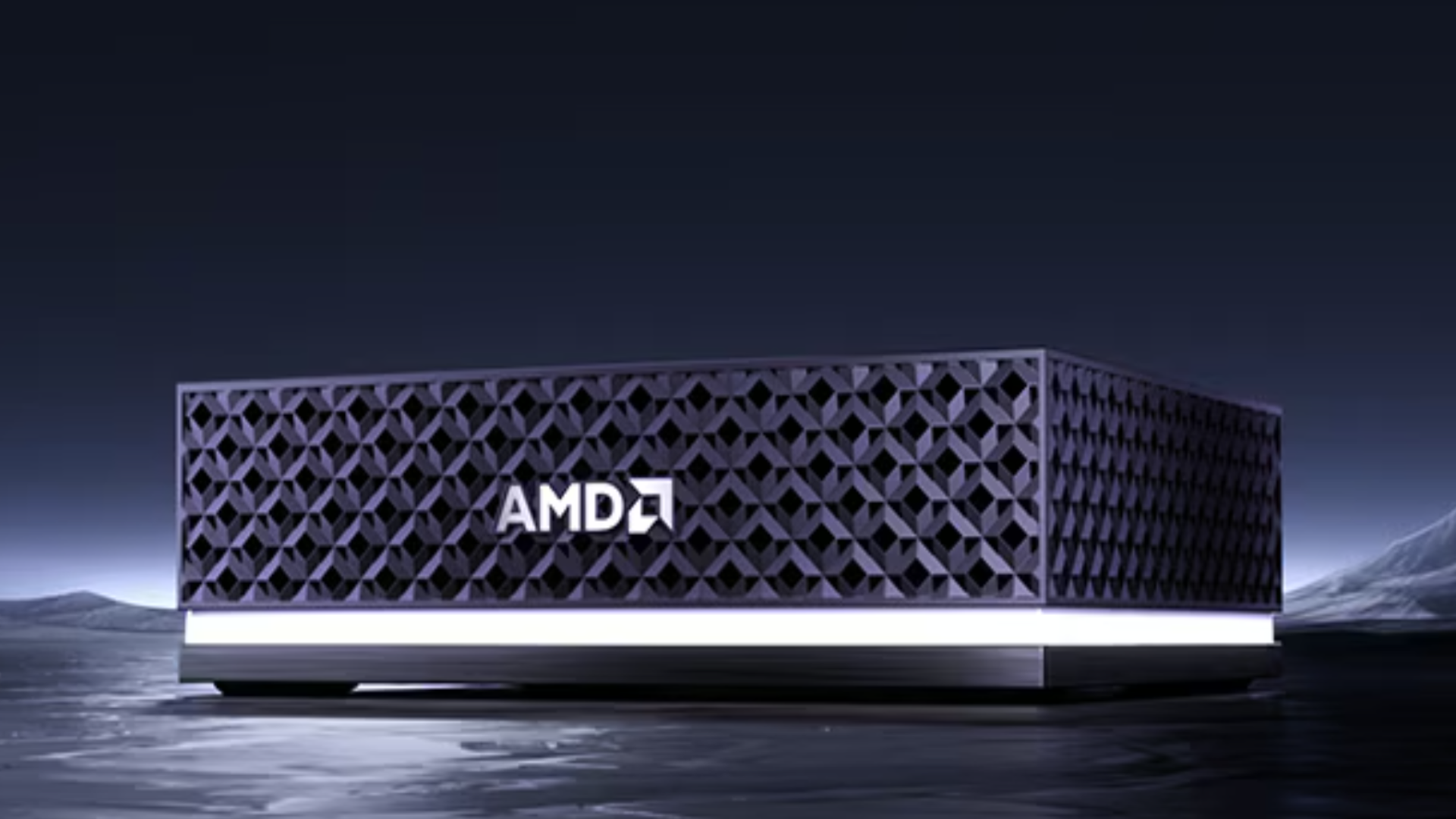
AMD will ship its first reference PC, the Ryzen AI Halo, in 2026 featuring the Ryzen AI Max+ 395 (up to 16 Zen 5 cores / 32 threads, 4nm, boost to 5.1GHz, 16MB L2 / 64MB L3, configurable 45–120W TDP) paired with a Radeon 8060S GPU (40 cores, up to 2.9GHz) and an integrated NPU. The system supports up to 128GB LPDDR5x-8000 unified memory, NVMe RAID, two USB4 ports, and is rated at up to 126 TOPS (50 TOPS from the NPU); it targets local AI development with full ROCm support on Windows and Linux and is positioned as a direct competitor to Nvidia's DGX Spark mini PC, though real-world adoption will depend on performance and ecosystem maturity.
Market structure: AMD (AMD) is the direct potential beneficiary — Ryzen AI Halo targets on‑prem/local AI experimentation and could capture share from compact AI appliance buyers today considering Nvidia’s DGX Spark. Memory suppliers (MU, SWKS) and PC OEMs offering preconfigured on‑prem boxes also stand to gain; DGX Spark pricing power and Nvidia’s premium ecosystem (NVDA) face pressure if Halo demonstrates similar real‑world throughput and cost per inference within 10–20%. Expect competition to compress premium appliance pricing over 12–36 months, especially for single‑node deployments.
Risk assessment: Key tail risks include ROCm/stack immaturity, underwhelming NPU real‑world throughput, and potential antitrust or IP disputes around software/tooling; any of these could blunt revenue, delaying meaningful AMD TAM capture into 2027–2028. Short term (days–months) market reaction will be driven by benchmark leaks and CES coverage; long term (2026 launch → 2028 adoption) depends on ISV support, enterprise procurement cycles, and LPDDR5x supply. Hidden dependency: developer tooling and model quantization dominate realized performance, not peak TOPS.
Trade implications: Direct: consider a modest (1–3% of fund NAV) strategic long in AMD equity or buy 18–30 month LEAP calls ~25–40% OTM, scale up if independent benchmarks within 90 days show ≥10% parity vs DGX Spark on common LLM tasks. Pair trade: overweight AMD +2% and underweight NVDA −2% (or buy AMD calls / sell NVDA calls) to express competitive reallocation while limiting macro exposure. Hedging/options: holders of NVDA >3% should buy 3–6 month 5–10% OTM puts as insurance against appliance‑driven cloud demand disruption.
Contrarian angles: Consensus underrates NVDA’s ecosystem moat — software friction could keep DGX premium intact, making early AMD optimism overdone; conversely, the market may underprice AMD’s unified‑memory NPU angle which could win edge use cases. Historical parallel: AMD’s CPU gains took multiple generations and ISV buy‑in; expect a multi‑year earnings effect, not an immediate revenue shock. Actionable implication: keep positions size‑limited and catalyst‑driven, watching benchmarks and multi‑vendor ISV support as binary triggers.
AI-powered research, real-time alerts, and portfolio analytics for institutional investors.
Request DemoOverall Sentiment
mildly positive
Sentiment Score
0.25
Ticker Sentiment
