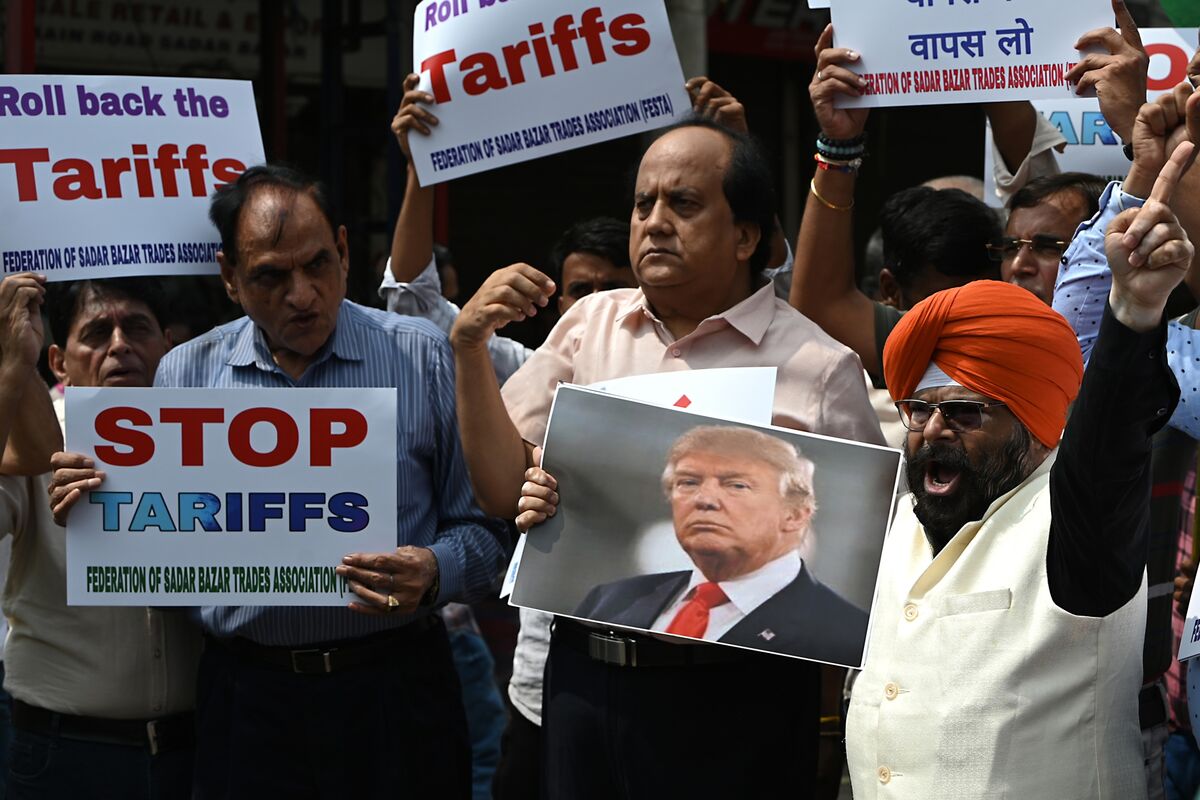
The U.S. is reportedly contemplating tariffs of up to 100% on China and India, contingent on EU and G7 support, with the stated aim of disrupting Russia's war efforts by targeting the largest buyers of its energy. However, the article argues this strategy would be a significant strategic misstep, risking a dangerous trade alliance against the world's two most populous nations and potentially destabilizing global trade and geopolitical relations.
The White House is reportedly considering a significant escalation of economic pressure, proposing tariffs of up to 100% on China and India to disrupt Russia's energy revenue. This policy, which is contingent on support from the European Union and the G7, is framed by the source as a 'huge strategic misstep' that could destabilize the global economy. The analysis suggests such a move would be counterproductive, risking the formation of a trade bloc against the world's two most populous nations and repeating past policy errors. It highlights that China is already too integrated into the global economy to be sanctioned without severe repercussions, and extending similar threats to India is viewed as equally dangerous. The proposal introduces substantial geopolitical and trade uncertainty, threatening to fracture global supply chains and energy markets, a risk underscored by the associated high market impact score and strongly negative sentiment.
AI-powered research, real-time alerts, and portfolio analytics for institutional investors.
Request DemoOverall Sentiment
strongly negative
Sentiment Score
-0.60
