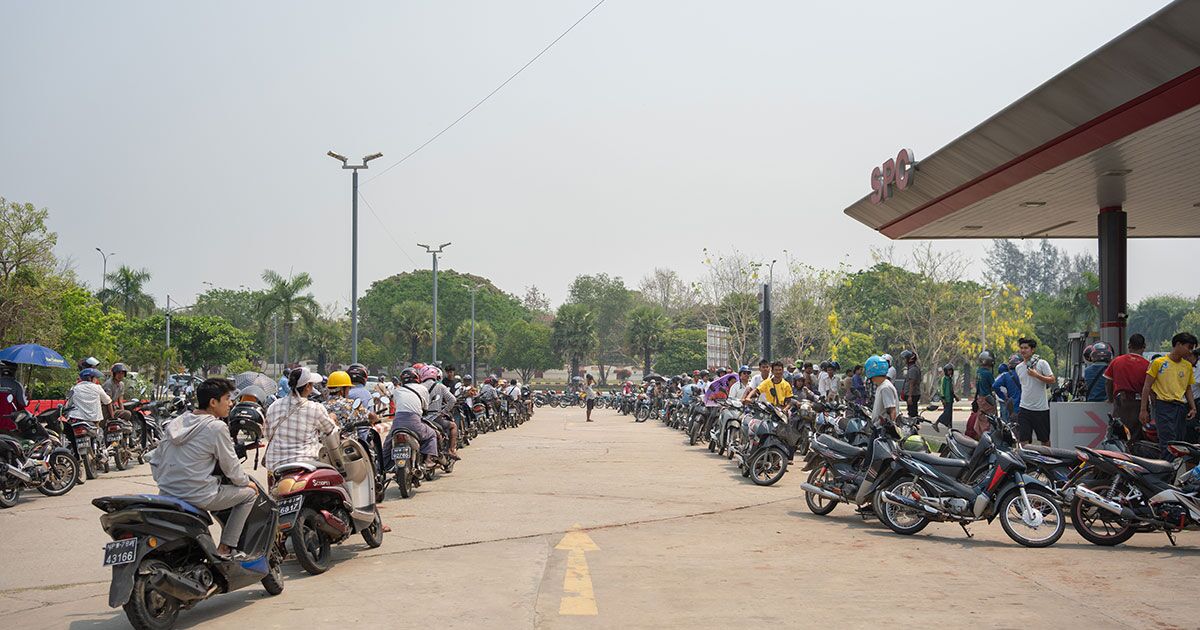
Key event: Iran's effective closure of the Strait of Hormuz has disrupted fuel flows, prompting multi-hour gasoline queues and strict purchase limits across parts of Asia. In Myanmar's junta-run capital Naypyidaw (population >800,000) drivers face multi-hour waits and retail rationing, with some delivery drivers refueling 2–3 times per week under severe shortages. Expect upward pressure on regional refined-fuel availability and crude prices and materially impaired logistics and consumer activity in Myanmar and other constrained Asian markets.
A chokepoint-style disruption in seaborne fuel flows has outsized effects on small, import-dependent markets because they lack inventory buffers and diversified supplier relationships. Expect localized retail gasoline/diesel cracks to spike well above global crude moves: a 5–15% increase in regional refined product differentials versus crude is plausible within 2–8 weeks as cargoes are reallocated to larger hubs.
Second-order winners are physical traders and hub refineries with spare blending capacity plus ports/air-cargo handlers that capture rerouted flows; losers are frontier sovereigns, informal retail networks, and last-mile transport-dependent SMEs whose margins are thin. The FX channel amplifies the shock: an extra couple of months of elevated import bills can force FX reserve drawdowns and accelerate sovereign credit migration in illiquid frontier markets.
Key catalysts and timelines: days–weeks for freight re-scheduling and immediate crack widening; 1–3 months for black‑market networks and rationing to entrench; 6–24 months for structural responses (new bilateral supply lines, onshore storage build-out, or vehicle-fleet shifts). Reversals are typically binary and external — diplomatic de‑escalation, coordinated SPR releases, or a rapid return of high-frequency tanker availability — any of which can compress regional spreads within 30–90 days.
For portfolio construction, treat this as a short-duration commodity and frontier‑risk event with asymmetric outcomes: the commodities side has defined-option entry points and limited carry; the sovereign/frontier side is low-liquidity tail risk that warrants option or CDS-like instruments rather than cash exposure.
AI-powered research, real-time alerts, and portfolio analytics for institutional investors.
Request DemoOverall Sentiment
strongly negative
Sentiment Score
-0.60
