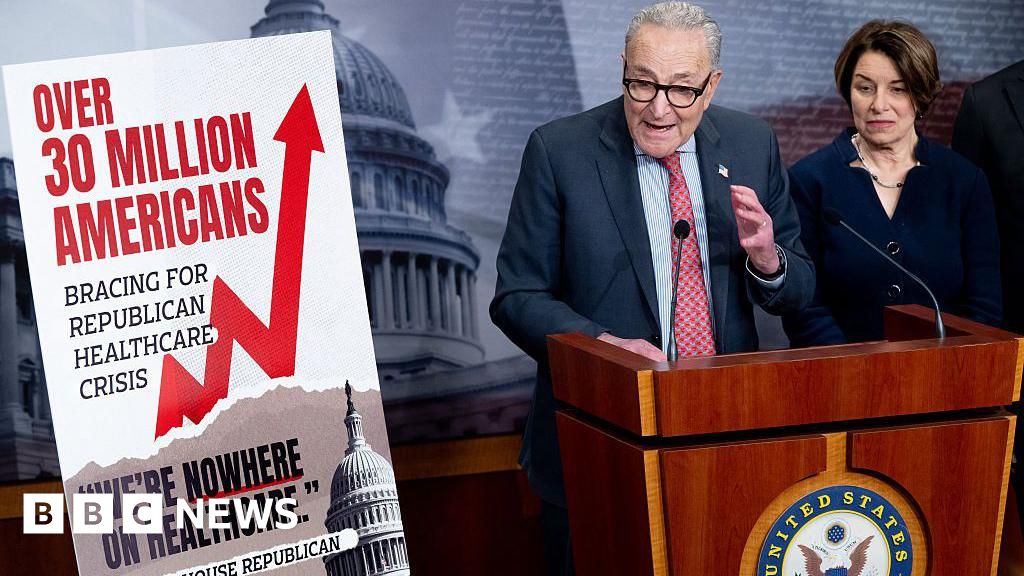
The Senate failed to advance either a Democratic or Republican proposal to extend Covid-era enhanced ACA subsidies, leaving credits that reduce premiums for roughly 24 million people set to expire on Jan. 1 and putting premiums on course to more than double for affected enrollees. Both measures fell 51-48, with four Republicans joining Democrats on the extension; Republicans argue for fraud reform and health savings accounts instead, while polling (KFF) shows roughly three-quarters of Americans favor extending the credits. The stalemate—absent high-level negotiations—raises near-term consumer-cost risk, makes healthcare a central issue heading into next year’s midterms and could carry political costs for lawmakers on both sides.
The Senate failed to advance either a Democratic three-year extension of Covid-era ACA premium tax credits or a Republican alternative to create new health savings accounts, with both measures falling 51-48, leaving the enhanced subsidies set to expire on January 1 and putting premiums "on course to more than double" for affected enrollees. More than 24 million Americans obtain coverage through Obamacare and the expiring credits are the pandemic-era additions enacted in 2021, so the direct consumer cost shock is large and immediate absent a legislative fix.
Public opinion and politics heighten the risk: a KFF November survey showed 74% support for extending enhanced credits, four Senate Republicans crossed to vote for the Democratic bill, and the standoff already contributed to a 43-day government shutdown this autumn, signaling elevated election-year consequences for lawmakers. Republicans publicly emphasize fraud concerns and prefer HSAs, while the White House says Republicans are developing alternative ideas but provided no details, leaving negotiating leverage and policy design uncertain.
Market implications are moderately negative and uncertain: the article's tone and sentiment outputs flag downside for healthcare affordability and possible volatility for insurers, ACA marketplaces and consumer discretionary sectors tied to lower-income budgets. Investors should monitor daily legislative developments, premium rate filings and enrollment guidance, as outcomes will materially affect near-term revenue and policy risk into next year's midterms.
AI-powered research, real-time alerts, and portfolio analytics for institutional investors.
Request DemoOverall Sentiment
moderately negative
Sentiment Score
-0.55
