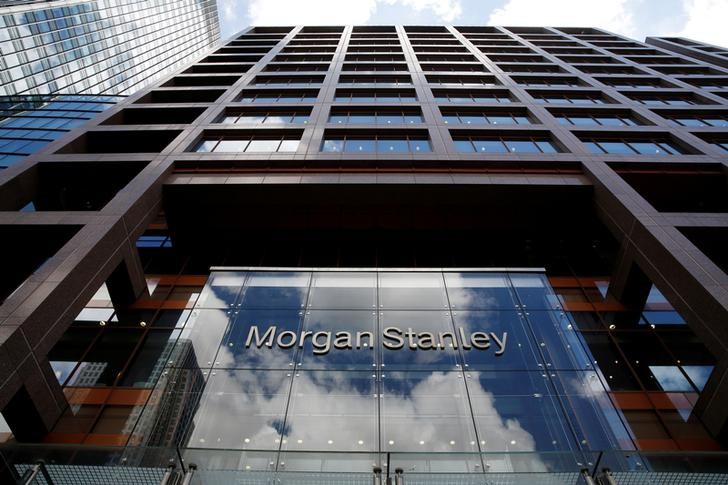
Morgan Stanley upgraded Assurant to Overweight from Equalweight and lifted its price target to $285 from $240, implying meaningful upside from the current $242.61 share price. The firm raised 2026 operating EPS to $21.20 and 2027 EPS to $23.60, while increasing growth expectations for premiums, fees and other income to 8.3% in 2026 and 9.4% in 2027. Recent Q1 2026 results also beat estimates, with EPS of $5.95 versus $5.32 expected and revenue of $3.42 billion versus $3.3 billion forecast.
The market is starting to re-rate AIZ not as a cyclical P&C proxy but as a contract-backed cash flow compounder. The key second-order effect is multiple expansion: when a business with mid-to-high single-digit top-line growth gets priced more like a stable annuity, the equity can outperform even without a dramatic earnings beat. That makes the setup less about quarterly EPS noise and more about whether management can keep converting improved underwriting and partnership economics into visible multi-year growth. What matters for competitors is that AIZ’s mix shift raises the bar for other insurers with more commodity-like exposure. If investors accept a higher terminal multiple for recurring distribution and embedded renewal relationships, peers without that contract structure may see relative de-rating even if they post similar near-term growth. That creates a dispersion trade: the winner is the insurer with durable fee-like revenue; the loser is the one still hostage to the broader softening cycle. The main risk is not a near-term miss, but a normalization of expectations over the next 6-12 months. If the market starts discounting the upgraded 2026/2027 trajectory as already fully reflected, the stock can stall despite solid fundamentals, especially given it is already near prior highs. A second risk is that the valuation premium becomes fragile if claims trends, renewal economics, or partnership momentum slip even modestly; at a 12x+ multiple, the stock has less room for execution errors than the current PEG suggests. The contrarian angle is that the upgrade may be correctly identifying quality, but late. The market may already be paying for the perceived low-beta, recurring nature of the story, while underappreciating that insurers with better growth visibility often attract crowded long-only ownership. That means upside still exists, but it likely comes from continued estimate revisions rather than multiple re-rating alone.
AI-powered research, real-time alerts, and portfolio analytics for institutional investors.
Overall Sentiment
moderately positive
Sentiment Score
0.62
Ticker Sentiment
