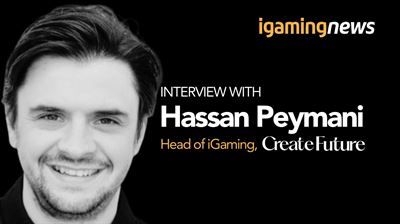
CreateFuture, a 600-person UK AI-native consultancy focused on iGaming, outlined at ICE Barcelona its seven-year track record working with operators including Fanatics, Fanduel, Evoke and Tombola and emphasized rapid product delivery—highlighting a predictions product launched within five months for Fanatics. The firm said trust, executive-aligned strategy and scaling culture enable delivery under commercial and regulatory pressure, and plans to increase market visibility and expand projects across North America and Europe in 2026. No financial metrics were disclosed; the update is relevant for investors tracking vendor-led acceleration and service demand in the iGaming technology ecosystem but is unlikely to move markets on its own.
Market structure: Agile, AI-enabled product teams and consultancies win—public operators that can shorten time-to-market (e.g., DraftKings, Flutter) and modern B2B providers (GAN, modern SaaS vendors) should capture incremental share; legacy tech suppliers (IGT, SGMS) risk pricing pressure. Faster launches (5 months demonstrated vs historical 12–18 months) compress differentiation windows and could shave 200–400bps off promotional margins industry-wide over 6–12 months, shifting pricing power to operators with superior UX/AI tooling.
Risk assessment: Tail risks include regulatory clampdowns (state or EU actions) that can cut operator EBITDA 10–30% within 6–18 months, and data/privacy fines or model failures costing $50M–$300M. Immediate risks (days–weeks): ICE/earnings headline shocks and product KPI releases; short-term (3–12 months): monetization evidence and partner rollouts; long-term (12–36 months): market-share reallocation and supplier consolidation. Hidden dependencies include third‑party data access, licensing timelines, and integrator capacity which can delay go‑to‑market by months.
Trade implications: Favor equities of operators who can iterate quickly and outsource smartly (DKNG, FLTR) and technology consultancies (EPAM/ACN) while trimming exposure to legacy suppliers (IGT, SGMS). Use options to express convexity—buy 6–12 month call spreads on high‑execution operators and 3–6 month put spreads on legacy suppliers to limit premium outlay. Key catalysts: upcoming quarterly reports and state legalization votes in next 30–180 days.
Contrarian angles: Consensus understates execution risk—fast launches don’t guarantee monetization; market may be overpricing small-cap platform stories (GAN) while underpricing consultancy/outsourcing winners. Historical parallel: adtech’s rapid feature replication led to margin compression and vendor shakeout; unintended consequence could be rapid consolidation where nimble consultancies capture permanent share from incumbents, creating 20–40% re-rating opportunities over 12–24 months.
AI-powered research, real-time alerts, and portfolio analytics for institutional investors.
Request DemoOverall Sentiment
mildly positive
Sentiment Score
0.35
