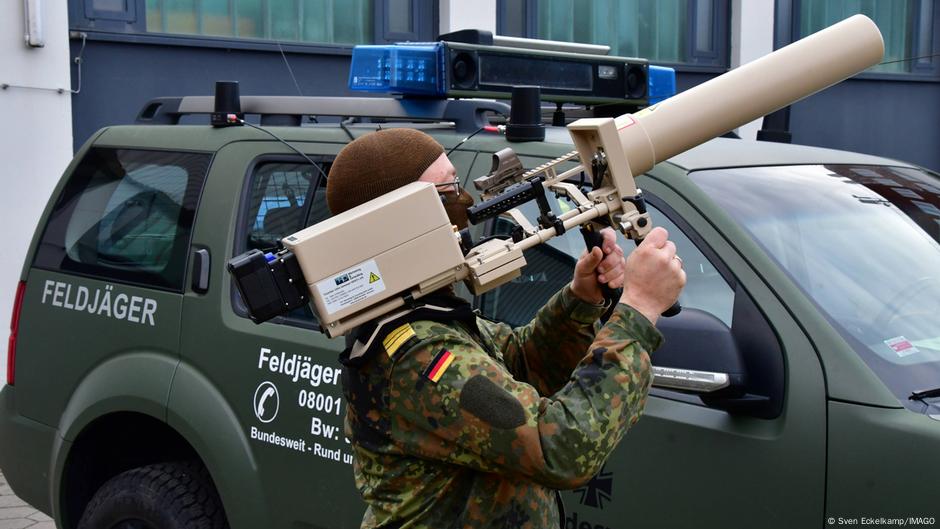
Germany is rapidly overhauling its drone defense and offensive capabilities, driven by recent suspected Russian drone incursions and lessons from the Ukraine war. The Bundeswehr is acquiring advanced anti-aircraft systems like Rheinmetall's Skyranger and interceptor drones, while also streamlining military-police cooperation through amendments to the Air Security Act and establishing a new drone defense center. Concurrently, Germany is embracing a new procurement strategy focused on rapid innovation, including the acquisition of offensive kamikaze drones and armed Heron TP drones, and partnering with domestic AI startups like Helsing, signaling a significant increase in defense spending and a strategic shift in military doctrine.
How Germany plans to fix its drone problem October 2, 2025"We're really behind when it comes to defending against drones," Defense Minister Boris Pistorius recently admitted. Uncertainty is high after Russian drones invaded the airspace of several NATO countries in recent weeks. Suspected Russian drones have even been supposedly spotted over Germany. On the German television channel ZDF, Pistorius assured viewers that everything was being done "to make up for this shortcoming." Why is Germany so poorly equipped to defend itself against drones? One of the reasons for is has to do with the equipment needed to defend against drones. Shooting down incoming drones with fighter jets, as Poland recently did, is possible but also expensive and dangerous over populated areas. More suitable for this tast is Rheinmetall's Skyranger anti-aircraft tank, which can be deployed quickly and can also combat swarms of drones. The Bundeswehr, Germany's Armed Forces, has ordered 19 of these, which will not be delivered until 2027. However, military experts estimate that the demand is significantly higher. Its predecessor, the Gepard anti-aircraft tank, was decommissioned by the Bundeswehr years ago and later given to the Ukrainian armed forces. It has proved extremely effective in repelling Russian drone attacks. In addition to jammers, drones are also an effective means of defense against drones. The Bundeswehr has recently acquired German-made interceptor drones that capture enemy drones with nets. "We need to develop a multi-layered defense system that provides various options for shooting down or disabling drones — electronic countermeasures, kinetic devices, and then low-tech solutions such as net launchers," drone expert Ulrike Franke from the European Council on Foreign Relations told DW. Closer cooperation between German army and police needed Another challenge that Germany faces in defending against drones has to do with the distribution of responsibilities. At the moment, responsibility for countering drone threats is divided between the Bundeswehr and the police forces of Germany's 16 federal states. Defending against external attacks, such as those from fighter jets or large drones, falls within the remit of the military. The Bundeswehr is also authorized to take action if drones appear over military sites. In all other cases, drone defense is the responsibility of the police, who are responsible for internal security. If a drone is spying on a German airport or industrial facility, for example, the Bundeswehr cannot be called in. Although the police do have means of defending against drones, the challenge they face is getting them to the location where the drone has been spotted quickly enough. Security experts think that setting up a comprehensive "drone defense shield" over Germany is unrealistic. First combat drones to be purchased The separation of military and police duties has developed over time and is enshrined in the constitution. Given the current threats, the Bundeswehr will now be granted more powers to defend against drones. Interior Minister Alexander Dobrindt plans to allow the military to assist the police, for example, by shooting down drones. The Air Security Act is to be amended accordingly. Dobrindt is also proposing the creation of a new drone defense center to coordinate the work of the federal and state governments. The Bundeswehr is not only stepping up its efforts in drone defense but also arming itself with drones. Recently, Inspector General Carsten Breuer, the highest-ranking German soldier, announced that they would conduct their first live-fire exercises with armed drones at the end of the year. In March, Germany decided to procure so-called kamikaze drones for the troops. These are aircraft equipped with warheads that explode upon hitting their target. This is something quite new for Germany. Learning from Ukraine It is no longer possible to wage war without drones — this became quickly apparent in Ukraine shortly after the Russian invasion in February 2022. Hundreds of thousands of drones are being deployed there. On the front lines, small kamikaze drones loaded with explosives are destroying expensive military equipment. The widespread use of reconnaissance drones means that no enemy movement goes unnoticed. This "transparent battlefield" has radically changed the nature of warfare. Drone expert Ulrike Franke recommends following Ukraine's example: "It is absolutely clear that NATO countries need to look to Ukraine and learn from Ukraine when it comes to the ability to deploy, manufacture and modify drones quickly," she told DW. The Bundeswehr must now keep pace with these developments. Due to political concerns, it has long refrained from procuring attack drones. Critics feared that unmanned, remotely controlled aircraft could lower the threshold for the use of military force. There has also been much suspicion about the autonomous functions that many drones have. It was not until the war in Ukraine that this changed. In 2022, the German government decided to arm Bundeswehr drones for the first time. It ordered guided missiles for five Heron TP drones, aircraft-sized drones manufactured in Israel. Until then, the Bundeswehr had used only unarmed reconnaissance drones. It took until the beginning of this year for the decision to purchase kamikaze drones. According to the Ministry of Defense, this marked "the beginning of a new era for the German Armed Forces." The small disposable drones are known as "loitering munitions." This refers to the drone circling above the target before diving down and exploding. The categorization of kamikaze drones as "ammunition" has very practical reasons: ammunition is fired and, therefore, consumed. A larger drone, on the other hand, is considered an unmanned aerial vehicle. With regard to flight safety and personnel certification, aircraft are subject to significantly higher technical requirements, thereby circumventing them. Rapid innovation and arms procurement The German Armed Forces have already begun conducting training exercises on the deployment and defense against drones. This is now considered an "everyman-skill" that every soldier must master. A specific number of drones are being procured for this purpose and for immediate needs. What's more, the Bundeswehr is keen to avoid having to keep thousands of drones in storage. Technology in this field is advancing so rapidly that the usual approach to arms procurement — long lead times, long periods of use — would be counterproductive. So new contractual agreements are being made with manufacturers to ensure they can quickly deliver large quantities of the latest standard models when needed. German AI start-ups are the first choice now. Among them is Helsing, a Munich-based company founded in 2021, which has already produced several thousand combat drones for Ukraine. This article was originally written in German. While you're here: Every Tuesday, DW editors round up what is happening in German politics and society. You can sign up here for the weekly email newsletter, Berlin Briefing. Germany is executing a significant strategic and financial overhaul of its drone warfare capabilities, driven by heightened geopolitical threats from Russia and tactical lessons from the war in Ukraine. This pivot involves a multi-layered approach, addressing both defensive and offensive gaps. On the defensive front, the Bundeswehr is procuring advanced systems like Rheinmetall's Skyranger anti-aircraft tank, with 19 units ordered for delivery by 2027, and deploying German-made interceptor drones. Structurally, Germany is amending its Air Security Act to grant the military greater authority in domestic drone defense, closing a critical gap in cooperation with police forces. Concurrently, there is a marked reversal of previous policy on offensive drones, with the procurement of armed Heron TP drones and kamikaze-style "loitering munitions." This is enabled by a fundamental shift in procurement strategy, moving away from long-lead-time acquisitions towards agile contracts with manufacturers, specifically favoring domestic AI startups like Munich-based Helsing, to ensure rapid delivery of cutting-edge technology. This comprehensive modernization signals a material increase in defense spending and a new, more pragmatic military doctrine focused on speed and technological superiority.
AI-powered research, real-time alerts, and portfolio analytics for institutional investors.
Request DemoOverall Sentiment
mildly positive
Sentiment Score
0.30
