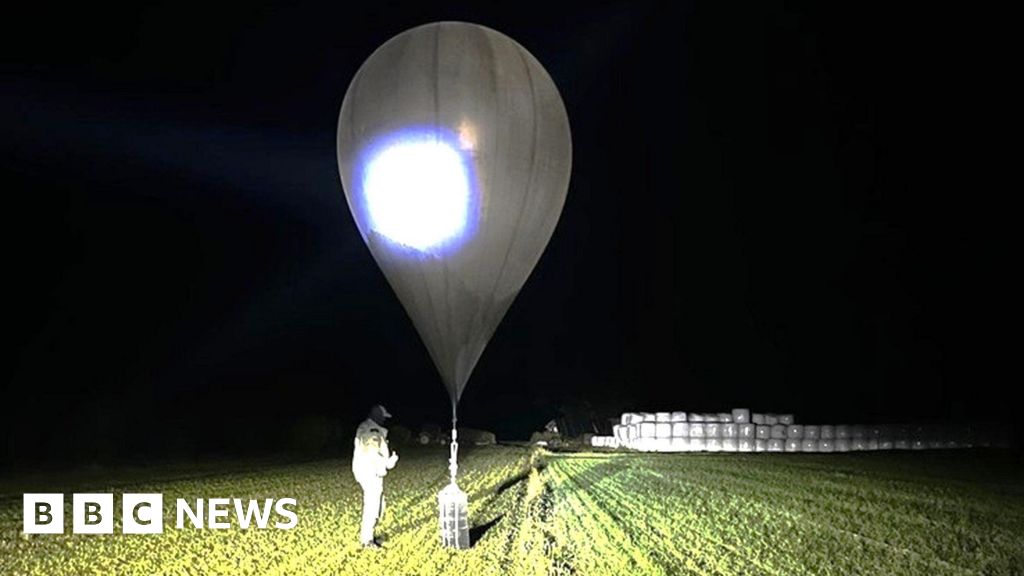
Lithuania has suffered repeated airspace disruptions—15 shutdowns in 10 weeks, including an 11‑hour closure—caused by large balloons launched from Belarus carrying crates of contraband cigarettes; Vilnius says the pattern, aimed at Vilnius airport about 30 km from the border and timed to exploit wind, appears 'weaponised' and more akin to hybrid warfare than ordinary smuggling. The government has declared an emergency, deployed military police and radar tracking, offered a €1m prize for interception technology, proposed tougher criminal penalties for aviation sabotage, and estimates about €2m of lost revenue to businesses and airports as airlines reroute or cut services. Framed against Belarus’s close ties to Russia and prior hybrid operations in 2021, Lithuanian officials argue the campaign seeks political leverage to ease sanctions, prompting calls to expand EU measures to cover hybrid attacks and highlighting vulnerabilities for regional aviation and NATO deterrence.
Lithuania has recorded 15 airspace shutdowns at its main airport over the past 10 weeks, including a single 11‑hour closure, after large balloons launched from Belarus carrying crates of contraband cigarettes drifted across the border; Vilnius explicitly frames the pattern — timed to exploit northwest winds and aimed at an airport ~30 km from the border — as weaponised hybrid activity rather than routine smuggling. The government has declared an emergency, deployed military police and radar tracking, offered a €1m prize for an interception solution and proposed criminal penalties for aviation sabotage, while airlines have rerouted or cut services and the airport estimates roughly €2m in lost revenue to affected businesses by year‑end.
Operationally, balloons flying at altitudes that make kinetic interception unsafe create a persistent disruption risk that is currently managed by tracking and ground patrols rather than by air defences; passenger confidence is already eroding as travellers consult wind forecasts before booking. Strategically, Lithuanian officials tie the campaign to Belarusian state leverage and prior 2021 hybrid operations, raising the probability of broader EU responses (sanctions expansion) and an uptick in defence, surveillance and procurement spending, while the Belarusian government publicly denies state culpability — an unresolved political risk that will drive policy and market reactions.
AI-powered research, real-time alerts, and portfolio analytics for institutional investors.
Request DemoOverall Sentiment
moderately negative
Sentiment Score
-0.45
