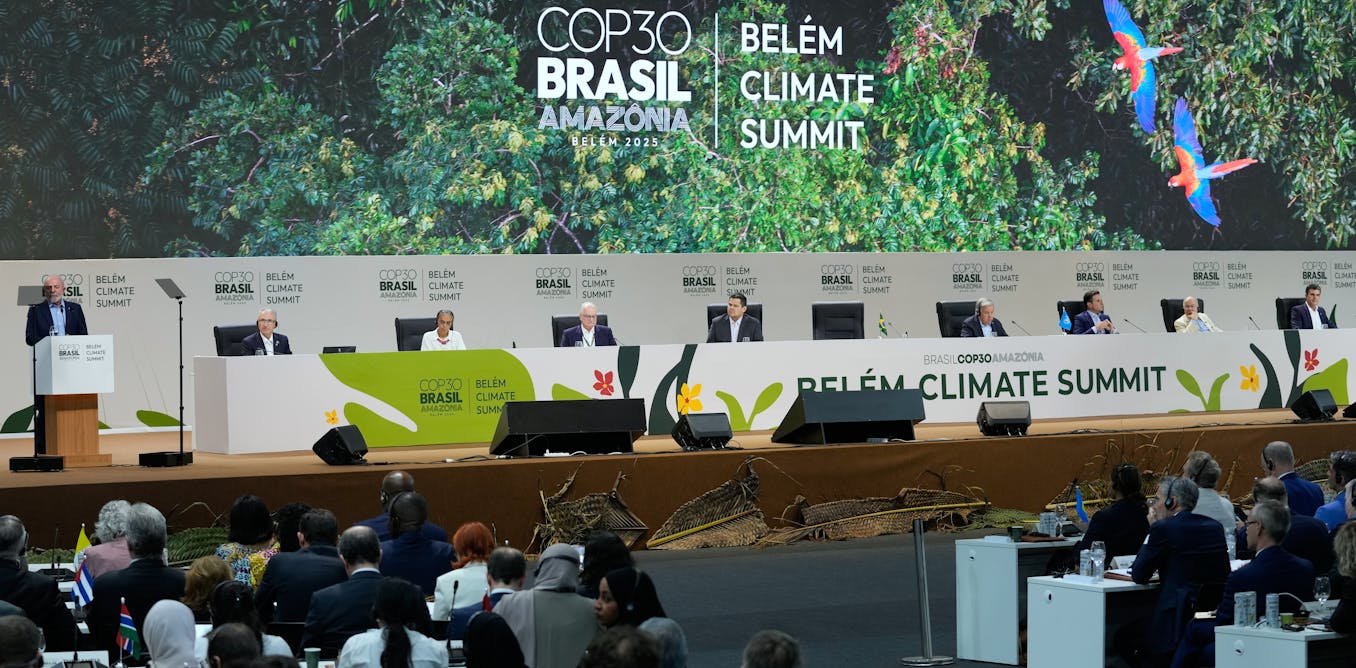
At COP30 in Belém AI was formally integrated as a central theme, with initiatives such as the Green Digital Action Hub and the AI Climate Institute aimed at helping countries—particularly in the Global South—design and deploy AI-based climate solutions; Climate TRACE was showcased as an AI-driven emissions-tracking example. Delegates highlighted practical applications including satellite- and sensor-based emissions inventories, energy and water-efficiency gains, precision agriculture, and AI-enabled early-warning and adaptation tools for floods, wildfires and landslides. At the same time officials warned of significant risks—from data-centre emissions and mineral-extraction impacts to AI-amplified disinformation—leading to a Declaration on Information Integrity and underscoring that real climate benefits depend on principled governance and powering AI with clean energy.
COP30 in Belém formally integrated artificial intelligence into its central agenda, with leaders including COP30 President André Aranha Corrêa do Lago and UNFCCC Executive Director Simon Stiell emphasizing technology's role. The conference launched initiatives such as the Green Digital Action Hub and the AI Climate Institute to support Global South countries in designing and deploying AI-enabled climate solutions.
Delegates showcased operational use cases: Al Gore highlighted Climate TRACE using satellite imagery, remote sensing and machine learning for emissions inventories, and sessions documented AI applications for energy and water efficiency, precision agriculture (an award-winning Laos project), and adaptation tools. A dedicated session, Smarter than the Storm, emphasized machine learning, computer vision and NLP for flood, wildfire and landslide prediction and early warning systems that can materially reduce adaptation costs.
Speakers also flagged material risks: data‑centre emissions, critical‑mineral extraction impacts and AI‑amplified disinformation led to a Declaration on Information Integrity on Climate Change and calls for principled development powered by clean energy. Market signals show mildly positive sentiment with a cautious tone and a modest market impact score (sentiment 0.28, market impact 0.32), indicating opportunity tempered by governance and supply‑chain risks.
AI-powered research, real-time alerts, and portfolio analytics for institutional investors.
Request DemoOverall Sentiment
mildly positive
Sentiment Score
0.28
