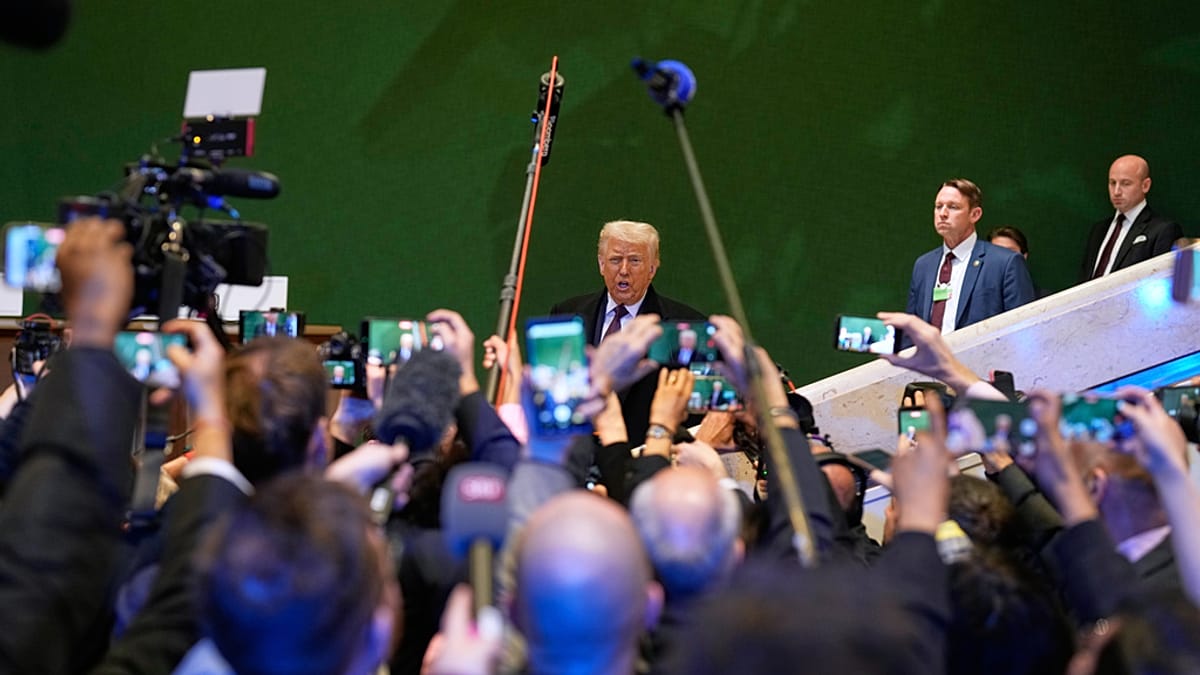
Heightened US–Europe tensions dominated Davos as President Trump pressed for negotiations over Greenland while explicitly ruling out military action, and signalled tariffs as a geopolitical tool — raising the prospect of transatlantic trade retaliation and weakening cohesion at a time when leaders warn the rules-based order is fraying. Senior figures including Macron, von der Leyen and NATO officials cautioned that the dispute risks distracting support for Ukraine and harming Western strategic unity, while trade officials framed market access as conditional. Technology and labor risk themes were also prominent: BlackRock’s Larry Fink and Elon Musk warned of rapid AI-driven disruption to white‑collar work and broader economic distribution effects, underscoring potential upside for AI infrastructure owners and downside for regions lagging in adoption (Europe cited as vulnerable).
Market structure: Davos highlights accelerate a bifurcation — beneficiaries are AI/platform owners, defense & domestic-focused manufacturers; losers are European exporters, integrated supply-chain plays and incumbent asset managers that rely on stable cross-border flows. Expect upward pressure on AI compute, semis and defense pricing power over 6–24 months while European tradeable goods face margin compression if tariffs or reciprocal measures reach 3–7% effective levels.
Risk assessment: Tail risks include an expanded US-EU tariff episode or targeted sanctions that spike oil >20% in 30 days or freeze specific supply lines (chips, energy), and an abrupt AI regulatory clampdown reducing TAM for model owners. Immediate (days) risks are volatility and FX moves, short-term (weeks/months) are trade-policy shocks and fund flows, long-term (quarters/years) are structural AI concentration and labor-market disruption.
Trade implications: Favored plays are selective long exposure to TSLA/AI-platform capture and semiconductors (compute infra) while shorting overvalued AI-service names like PLTR that face adoption/contract risk. Cross-asset trades: tilt to USD and gold (hedge), add 3–5 year Treasury duration as a hedge in a 1–3 month risk-off shock; use defined-risk options for event windows (3–9 months).
Contrarian angles: Consensus assumes prolonged transatlantic rupture; history (2018 US tariff cycle) shows knee-jerk moves largely reverse within 6–12 months once negotiations resume, creating mean-reversion opportunities. The market may be overpricing permanent AI dominance for a subset of firms — watch adoption KPIs (real revenue from AI products >15% of total in next 12 months) before paying up.
AI-powered research, real-time alerts, and portfolio analytics for institutional investors.
Request DemoOverall Sentiment
moderately negative
Sentiment Score
-0.45
Ticker Sentiment
