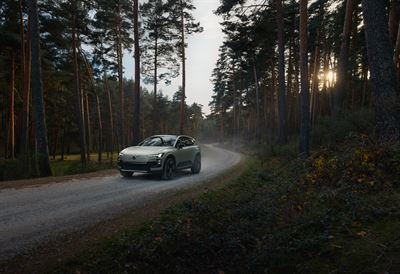
Volvo Cars introduced the EX60 Cross Country, an all-electric SUV variant with bespoke styling, a 20 mm higher ride height (plus an additional 20 mm via air suspension), unique exterior details and two AWD powertrains (P10 AWD Electric—up to 640 km WLTP range—for initial availability, followed by a longer-range P12 AWD). The model is open for pre-orders in some European markets and underscores Volvo’s push into premium EV segments and brand differentiation. Volvo also reported record FY2024 results—core operating profit of SEK 27 billion, revenue of SEK 400.2 billion and global sales of 763,389 cars—signaling strong company fundamentals that could support demand and strategic investment in electrification and sustainability (net-zero by 2040).
Market structure: Volvo’s EX60 Cross Country strengthens Volvo Car Group (VOLCAR B) as a premium EV niche entrant and benefits Tier-1 suppliers of chassis/air-suspension and battery systems (think APTV, LEA, and battery-cell suppliers). Battery-metal exposure (lithium ETFs like LIT or miners ALB/SQM) also gains from broader variant proliferation; modest SEK appreciation and tighter credit spreads for Volvo are likely if pre-orders convert. Competitive dynamics favor brands with clear premium SUV EV portfolios — peers without compelling mid‑sized AWD EVs risk share loss of 1–3 pts in EU urban markets over 12–24 months.
Risk assessment: Tail risks include WLTP-to-real-world range shortfalls, battery supply cost shocks (lithium/nickel +20–40% year-over-year), and regulatory recalls impacting brand trust; each could erase >15% equity value in 3–6 months. Immediate (days) effects: sentiment bump on launch; short-term (weeks–months): pre-order cadence and certification updates; long-term (quarters–years): margin trajectory and mix shift to AWD/tech options. Hidden dependencies: China production/exposure, cell-sourcing contracts, OTA software partners — failure in any reduces expected margins materially.
Trade implications: Consider a 2–3% long position in VOLCAR B sized to conviction, target +25–35% in 6–12 months, stop-loss -12% on confirmed pre-order shortfall; hedge with 6–9 month call spreads if available to cap cost. Add 1–2% allocations to LIT or ALB for 12–36 month exposure; pair-trade: long VOLCAR B vs short STLA (Stellantis) 1%/1% over 6–12 months to express relative EV execution. Rotate portfolio +3–5% toward EV supply chain suppliers and +2% underweight legacy ICE suppliers.
Contrarian angles: Consensus assumes Volvo’s halo converts to volume — that’s underdone risk: premium AWD variants often compress blended ASPs by 2–4% and can cannibalize higher-margin trims. Historical parallel: Volvo’s XC branding drove brand image but limited volume expansion in prior cycles; watch concrete triggers (pre-orders >5,000 units in month-1, WLTP-to-real-world >85%) before scaling allocation to avoid mispricing.
AI-powered research, real-time alerts, and portfolio analytics for institutional investors.
Request DemoOverall Sentiment
moderately positive
Sentiment Score
0.55
