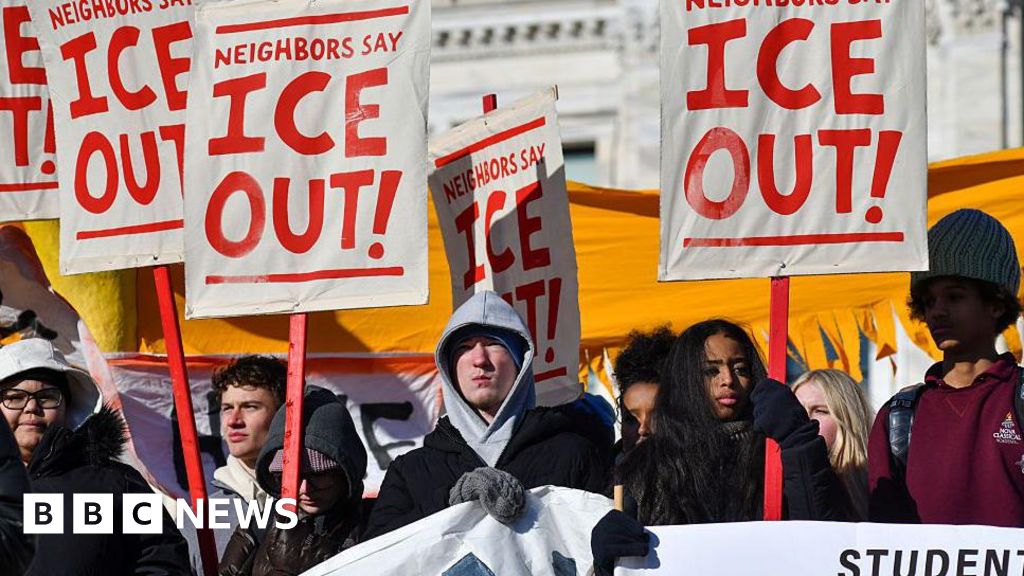
Video evidence prompted ICE to say two immigration agents may have given untruthful sworn testimony about a 14 January Minneapolis shooting; both unnamed officers were placed on administrative leave and face an internal probe and potential criminal charges. The US attorney moved to dismiss with prejudice assault charges against two Venezuelan men after the revised evidence contradicted initial DHS statements; the episode damages enforcement credibility and could fuel political controversy as the Minnesota enforcement surge — which arrested over 4,000 undocumented immigrants — is wound down.
Market structure: Direct losers are firms tied to ICE/detention and local law-enforcement contracting (private prison operators GEO, CXW; analytics/identity vendors with ICE revenue like PLTR exposure risk) because prosecutions, contract reviews and reputational risk can reduce utilization and billing. Winners are diffuse: defense primes with minimal domestic-ICE reliance (RTX, NOC) may see relative bid if federal homeland security budgets reallocate, while consumer-defensive names (KO, PG) can outperform in near-term political risk; cross-asset impact is small but watch regional muni spreads (Minneapolis Hennepin county) for short-lived widening <25bp and a modest USD safe-haven bid on escalation.
Risk assessment: Tail risks include DOJ civil/criminal referrals leading to multi-month audits and federal contract suspensions (low probability but high impact for vendors; loss of 5-15% revenue). Immediate window (0–30 days) is headline-driven volatility; short-term (1–3 months) could see contract pauses and guidance hits; long-term (6–24 months) risk depends on election outcomes and federal appropriations. Hidden dependencies: subcontractor chains and state-level detainers; catalysts include US Attorney filings, DHS contract pauses, or public FOIA/video releases.
Trade implications: Short 1–2% position sizes in GEO and CXW using 60–120 day 10–15% OTM put spreads to cap premium; hedge any PLTR exposure by buying 90-day 12.5% OTM puts sized to 1–3% portfolio risk. Pair trade: short GEO (ticker GEO) and long RTX (ticker RTX) to capture relative safety if private-detention revenue is cut (size 1:1 notional, 1–2% portfolio). Rotate 1–3% into consumer staples (KO, PG) for 3–6 months to reduce political-event beta.
Contrarian angles: Consensus underestimates legal tail risk to vendors beyond headline noise — contracts can be paused for quarters, not days; but market may over-penalize names already down >20% giving entry for selective mean-reversion. Historical parallels: past DOJ probes into federal contractors (2014–2016) produced 10–30% drawdowns then partial recoveries over 6–12 months. Action triggers: add to shorts if DOJ subpoenas or DHS suspends contracts; flip to long if no formal actions within 90 days and sell-off >20%.
AI-powered research, real-time alerts, and portfolio analytics for institutional investors.
Request DemoOverall Sentiment
moderately negative
Sentiment Score
-0.30
