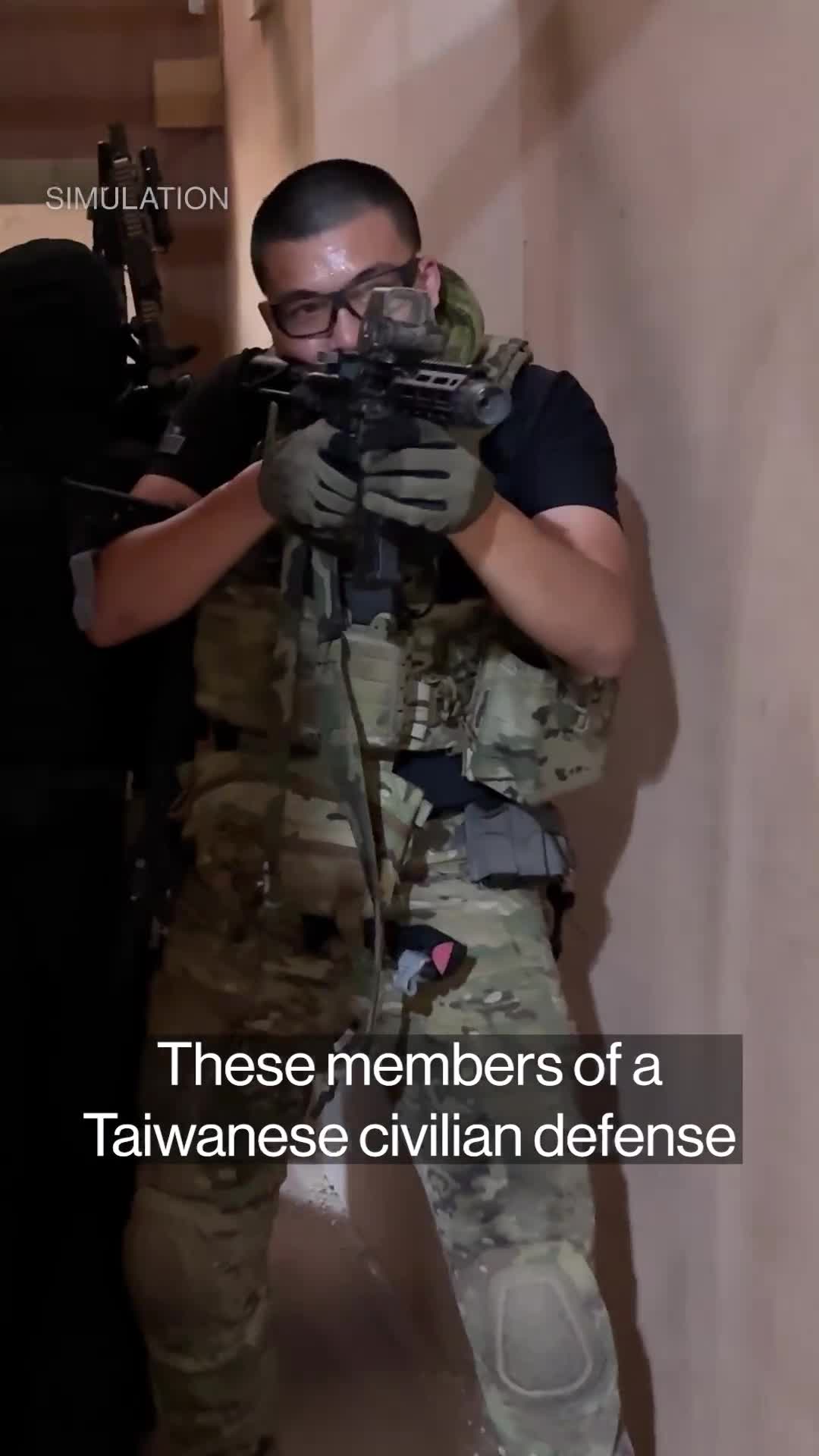
Taiwan is reportedly utilizing airsoft guns for civilian defense training, a measure aimed at bolstering readiness against a potential Chinese invasion. This initiative highlights Taiwan's proactive approach to perceived geopolitical threats and underscores the ongoing tensions in the region, signaling persistent geopolitical risk in the Taiwan Strait.
The report of Taiwanese civilians using airsoft guns for defense training is a significant qualitative indicator of rising geopolitical tensions in the Taiwan Strait. While the direct military efficacy of this initiative is secondary, its primary importance lies in what it signals: a tangible, society-wide preparation for a potential conflict with China. The associated data confirms the gravity of this development, with a strongly negative sentiment score of -0.6 and a high market impact score of 0.7, indicating that investors perceive such news as a serious threat to regional stability. This event reinforces the overarching investment themes of 'Geopolitics & War' and 'Infrastructure & Defense,' highlighting that the risk of conflict is not an abstract concept but is actively influencing civilian behavior and, by extension, the investment landscape. The absence of specific company tickers directs focus squarely on macro-level and sovereign risk rather than firm-specific fundamentals.
AI-powered research, real-time alerts, and portfolio analytics for institutional investors.
Request DemoOverall Sentiment
strongly negative
Sentiment Score
-0.60
