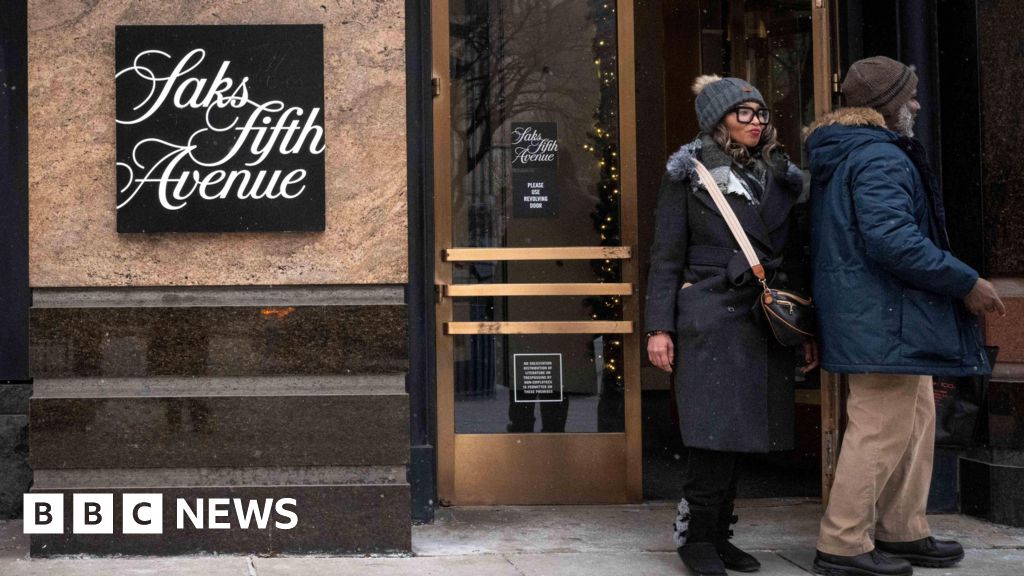
Saks Global, owner of Saks Fifth Avenue, Neiman Marcus and Bergdorf Goodman, is expected to file for bankruptcy protection after taking on roughly $2.2bn of debt to fund a $2.7bn acquisition and missing a $100m interest payment due in late December. The retailer has suffered double-digit sales declines since early 2023, slashed its full-year outlook, faced months-long vendor payment delays (prompting some suppliers and guarantors like Hilldun to halt new orders), experienced inventory shortages and cancelled customer orders, and saw CEO Marc Metrick depart in January as executive chairman Richard Baker returned to lead the company through a restructuring.
Market structure: The immediate winners are luxury brand owners and direct-to-consumer channels who can reallocate inventory (LVMH, Kering, Farfetch) while the losers are department-store specialists, their vendors and private-credit lenders tied to ~$2.2bn of merger debt and a missed ~$100m interest payment. Expect short-term scarcity of branded goods in physical stores, eroding department-store traffic and shifting pricing power back to brand owners and online marketplaces within 1–6 months.
Risk assessment: Tail risks include a full Chapter 11 liquidation (weeks) that would force vendors to take steep haircuts and trigger cross-defaults at private-credit funds; operational tail risk is vendor-run supply freezes (already occurring via Hilldun). Key catalysts are an imminent bankruptcy filing (days–weeks), vendor lawsuits or major asset firesales; monitor vendor payment flows and Hilldun order approvals as binary triggers.
Trade implications: Credit and equity volatility will spike — expect retail HY spreads to widen 300–800bp and mall REIT equities (SPG, MAC) to underperform if anchor-tenants default; at the same time allocate to high-quality luxury equities/call spreads and e-commerce plays (FTCH) for 6–18 month upside. Options: use short-dated puts to hedge REIT exposure and buy 3–9 month call spreads on premium brands to limit capital at risk while capturing reallocation benefits.
Contrarian angles: Consensus underestimates vendor fragmentation: sustained vendor pullback could accelerate permanent share gain for brands that control inventory and DTC, making department-store distress a near-term negative but a multi-quarter reallocation opportunity for brand equities. Historical parallels (Sears/JCP) show initial panic overstates long-term landlord damage; careful selection will separate transient distress from permanent impairment.
AI-powered research, real-time alerts, and portfolio analytics for institutional investors.
Request DemoOverall Sentiment
extremely negative
Sentiment Score
-0.85
