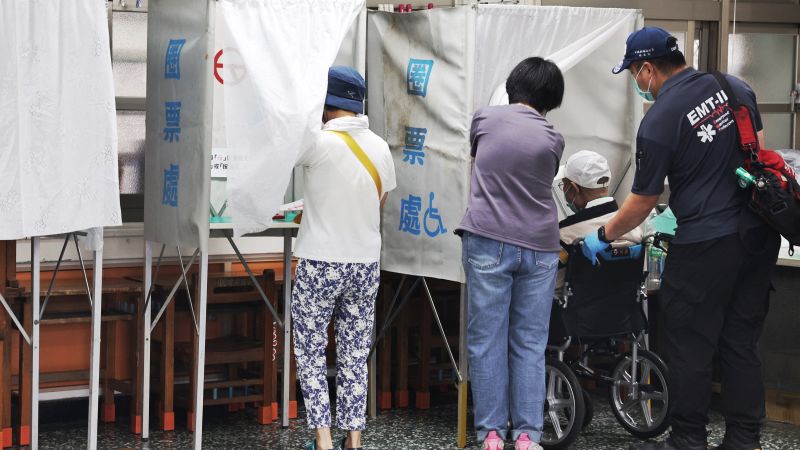
Taiwanese voters rejected recall efforts targeting two dozen opposition Nationalist Party (KMT) lawmakers, preventing the ruling Democratic Progressive Party (DPP) from flipping the legislative balance of power. This outcome, which saw no KMT lawmakers ousted, maintains the current legislative composition (KMT 52 seats, DPP 51) and significantly hinders President Lai Ching-te's ability to advance his agenda, signaling continued legislative resistance for his administration. The KMT framed the results as voters choosing stability over political infighting, further complicating Taiwan's political landscape amidst ongoing cross-strait tensions.
The failure of the recall election targeting 24 opposition Nationalist Party (KMT) lawmakers solidifies a period of legislative gridlock for Taiwan's ruling Democratic Progressive Party (DPP). With the KMT retaining its 52-seat position against the DPP's 51, President Lai Ching-te's administration is set to face continued, strong resistance in the legislature, significantly impeding its ability to advance its agenda. This stalemate has direct policy implications, as the opposition has been criticized for blocking key legislation, including the defense budget, and for passing controversial changes viewed as diminishing executive power. While the KMT has framed the outcome as the electorate choosing stability over political infighting, the result perpetuates a deeply divided political landscape. The situation is further complicated by the geopolitical backdrop, with China's Taiwan Affairs Office leveraging the event to criticize the Lai administration. The next key political catalyst will be the August 23 recall vote targeting another seven KMT lawmakers, although the recent result suggests the DPP faces an uphill battle in altering the legislative balance of power before the 2028 elections.
AI-powered research, real-time alerts, and portfolio analytics for institutional investors.
Request DemoOverall Sentiment
neutral
Sentiment Score
0.00
