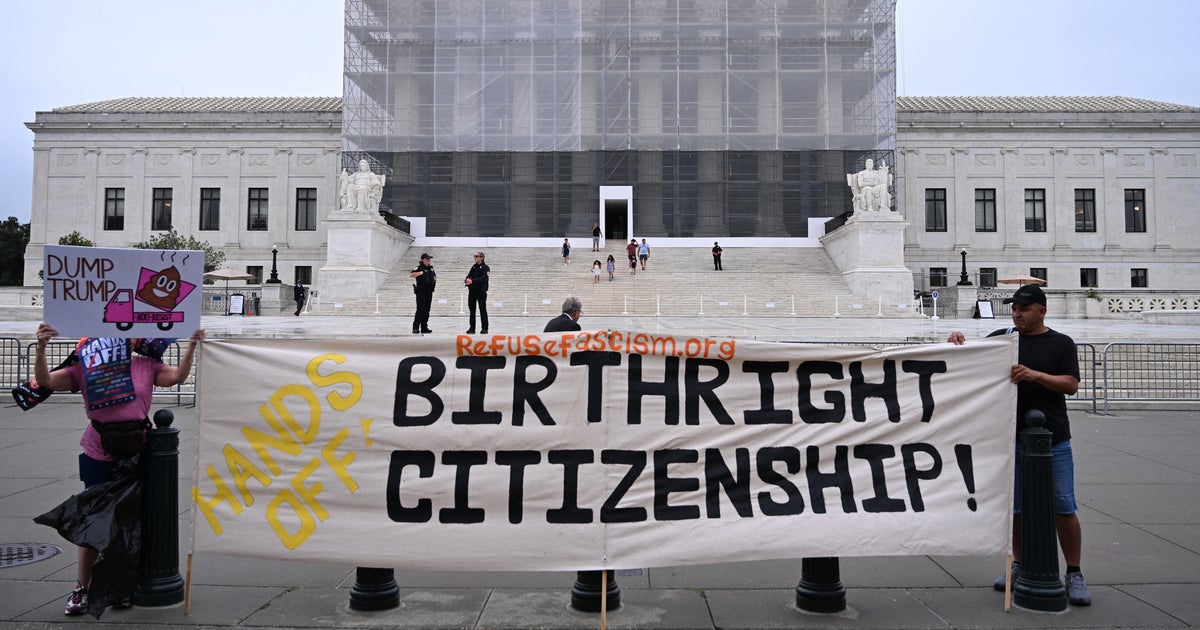
The Supreme Court will review President Trump's executive order seeking to end birthright citizenship, with a decision expected by late June or early July. Lower courts have enjoined the order as likely unconstitutional and the high court fast-tracked review after a district-rules-in-favor class-action; the administration argues the 14th Amendment was misread, citing Wong Kim Ark. Analysts estimate the order could affect more than 250,000 births annually and 20,000–24,000 births in California each year, and states warn of significant administrative burdens and potential federal funding losses if upheld.
A ruling that injects legal uncertainty into who is a citizen will drive predictable, non-linear demand for identity, vetting and legal-compliance services as federal and state agencies scramble to re-certify populations and safeguard benefit flows. Vendors with entrenched government contracts and scalable cloud verification platforms (credit bureaus, background-check and identity-risk units) can see contracting tailwinds that are measurable in mid-single-digit revenue percentage points over 6–12 months, while boutique immigration-law practices and compliance consultancies can command sharply higher hourly rates.
State and local balance sheets are the fragile margin here: any administrative deluge or loss of federal flow-through dollars will push Medicaid/education budgets and push states toward either reallocation or muni issuance. That creates an asymmetric hit to lower-rated, high-immigrant-population municipal credits while increasing near-term transactional demand for short-term liquidity (commercial paper, short muni issuance), which in turn favors banks and underwriters positioned to pick up that business.
Market pricing currently treats this as a political/legal binary, underweighting two plausible middle outcomes — a narrow procedural ruling or a stay that limits immediate downstream fiscal contagion. Those intermediate outcomes produce a surge in volatility and bid for event hedges but little long-term structural damage; conversely, a broad ruling expands litigation and compliance cycles for years, favoring ID/compliance vendors and certain government contractors. Time-horizon matters: trade volatility across the event window (weeks) and position for structural vendor wins across 6–18 months.
AI-powered research, real-time alerts, and portfolio analytics for institutional investors.
Request DemoOverall Sentiment
neutral
Sentiment Score
0.00
