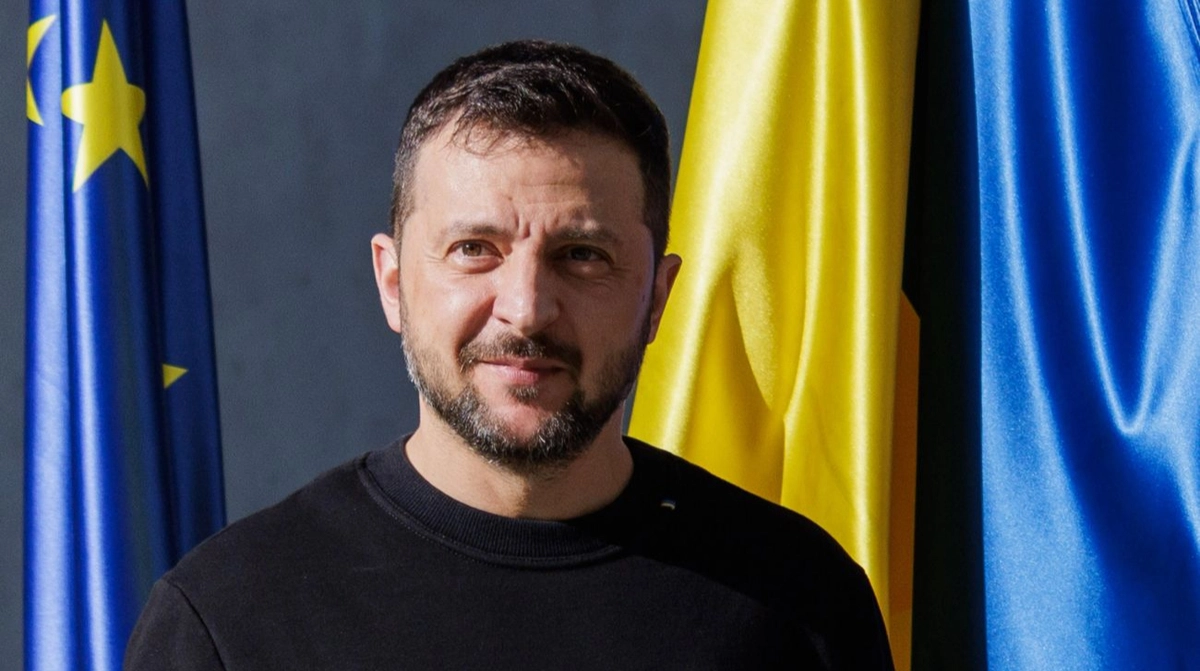
Zelenskyy said he and European Council President António Costa agreed Europe must be directly involved in negotiations to end the Russia-Ukraine war and should have a strong voice in the process. The discussion also covered Ukraine’s EU accession, including readiness to open negotiation clusters and the timeline for communication. The article is primarily diplomatic in nature and has limited immediate market impact.
This is less about an immediate market event than a negotiation architecture signal: Europe is trying to avoid becoming a passive price-taker in any Ukraine settlement. If Brussels secures a formal seat at the table, the baseline shifts toward a more conditional peace process, which supports longer-duration sanctions risk, higher European defense spending, and a lower probability of a rapid normalization in Eastern Europe risk premia. The second-order effect is that markets should start pricing a wider dispersion between firms leveraged to prolonged militarization and those most exposed to a clean ceasefire rebound.
The key economic transmission is through capex and procurement timing, not headline geopolitics. A stronger European role likely reinforces multi-year commitments to air defense, ammunition, drones, and border/security infrastructure, which is structurally positive for defense primes and select industrial suppliers, while delaying any broad-based discounting of energy and transport assets that would benefit from a swift end to the war. Conversely, a credible path toward EU accession talks is mildly supportive for frontier European credit and local currencies over months, but only if paired with budget support and governance milestones; otherwise the market will treat it as political optics rather than cash-flowable reform.
The contrarian risk is that the market is underestimating how hard it is to convert "Europe must be involved" into an actual decision-making mechanism. If U.S.-Russia channels dominate, European equity outperformance tied to defense could be capped, and any rally in European cyclicals on ceasefire hopes may fade quickly. The bigger tail risk is an early-stage diplomatic process that reduces headline war risk without reducing military spend, creating a classic false peace: lower volatility, but no real demilitarization, which tends to be bearish for rate-sensitive defensives and neutral-to-bullish for defense incumbents.
Near term, the catalyst window is days to weeks for rhetoric and summit scheduling; the tradable economic impact is more likely over 3-12 months as procurement budgets and accession milestones are formalized. Watch for any European nominee or framework for representation in talks, because that determines whether this becomes a coordination story or just another advisory role.
AI-powered research, real-time alerts, and portfolio analytics for institutional investors.
Request DemoOverall Sentiment
neutral
Sentiment Score
0.05
