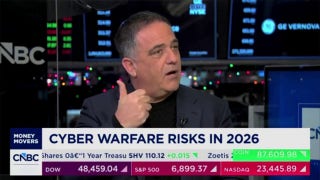
Cato Networks co‑founder Shlomo Kramer told CNBC that governments should limit First Amendment protections and take control of social platforms—proposing platform-level authenticity rankings and state intervention—to combat AI-enabled misinformation and alleged advantages for authoritarian states. Kramer framed the proposal as a national security and cyber‑defense imperative amid broader U.S.-Israel geopolitical discussion; the comments provoked viral backlash from free-speech advocates. The remarks highlight potential regulatory and reputational risks for social media and AI-focused technology firms, but represent advocacy rather than enacted policy.
Market structure: A credible shift toward government-mandated platform controls would be a net positive for cybersecurity, trust-and-safety, identity and cloud infra vendors (e.g., CRWD, PANW, FTNT, ZS, NET, OKTA, AMZN, GOOGL, NVDA) because compliance and real-time moderation are high-margin, recurring services; expect 5–15% incremental TAM expansion in enterprise/government security budgets over 12–24 months. Ad-supported social platforms (META, SNAP, PINS) face higher compliance costs and potential ad-revenue compression; conservatively model a 3–8% hit to revenue growth if stricter content controls reduce engagement or targeting precision.
Risk assessment: Short-term (days–weeks) expect headline-driven volatility and flows into defensive technology and sovereign bonds; medium (3–12 months) the key tail risks are a) heavy-handed regulation that triggers user/advertiser flight, b) retaliatory tech decoupling with China, and c) large-scale cyber incidents that accelerate budgets or political backlash. Hidden dependency: stricter rules favor incumbents with scale (GOOGL, META) because compliance is costly for smaller platforms — regulatory barriers can entrench winners. Catalysts: a major disinformation event, bipartisan bill or executive order, or a nation-state cyberattack will accelerate adoption.
Trade implications: Tactical long bias to cybersecurity and AI-infrastructure: build 2–4% portfolio positions in CRWD, PANW, and NVDA across 3–18 month horizons; hedge ad-tech exposure by trimming 3–6% weights in META and SNAP and buying 3–6 month 10% OTM puts if IV >25%. Pair trade: long CRWD / short META beta-neutral (6–12 month hold) to capture structural spend rotation. Options: use calendar spreads on NVDA (9–12 month) to express secular AI demand while limiting cost.
Contrarian angles: The market may underprice that heavy regulation can become an entry barrier that benefits the largest platforms (META, GOOGL) — a knee-jerk short could be premature. Historical parallel: post-9/11 security spending boosted defense contractors despite civil-liberty debates; similarly, a censorship/regulation regime could lift PLTR/CRWD/NVDA. Unintended consequences include migration to decentralized or offshore platforms (crypto-native social stacks) — monitor DEX/social token flows as an early signal.
AI-powered research, real-time alerts, and portfolio analytics for institutional investors.
Request DemoOverall Sentiment
mildly negative
Sentiment Score
-0.25
