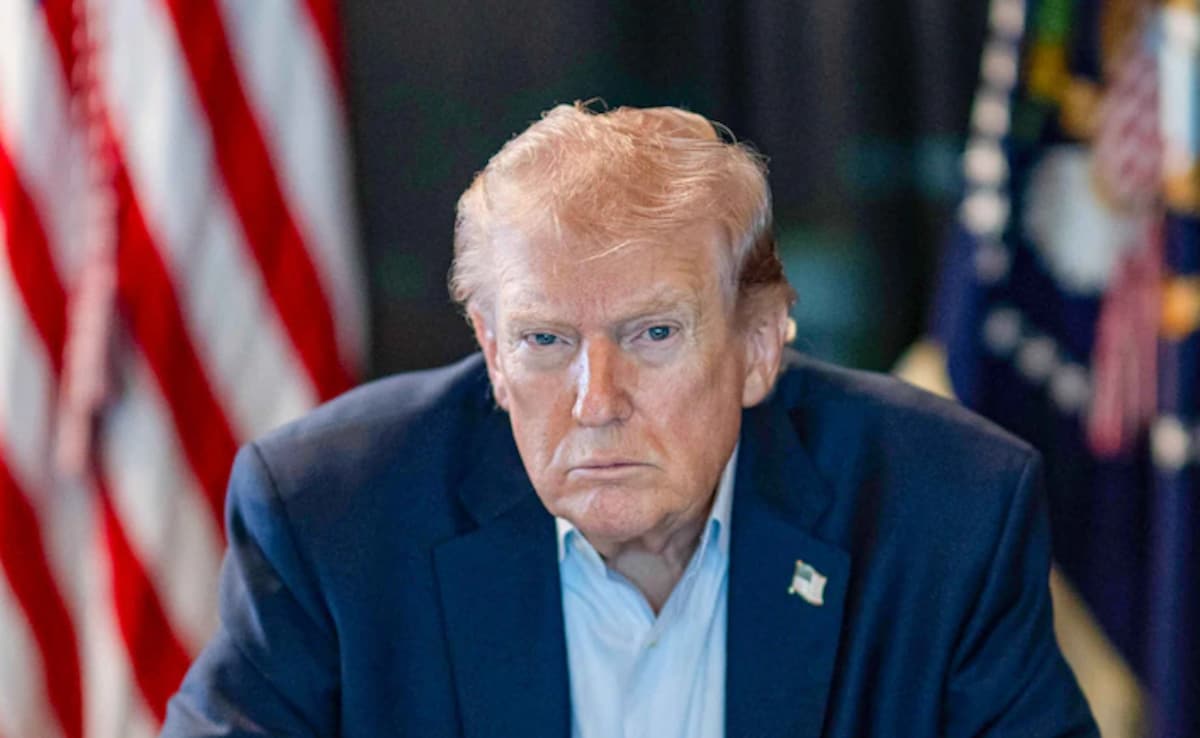
Iran's Revolutionary Guards threatened retaliatory strikes against 18 U.S. tech firms (including Apple, Google, Intel, Microsoft, Oracle, Tesla, Palantir, and Nvidia) and advised employees and residents within a 1-km radius to evacuate. The Trump administration said the U.S. military is prepared to curtail any Iranian attacks, citing a 90% drop in ballistic missile and drone strikes as evidence. This materially elevates geopolitical risk for major tech and defense-exposed equities and could trigger short-term risk-off flows across tech and regional markets.
Market mechanics will be driven first by a volatility spike and a short-term risk-off that disproportionately punishes the highest information-content names (NVDA, MSFT, AAPL) where perceived operational linkage to intelligence functions is highest; expect 7–15% intraday IV lifts for single-name options and a 3–5% bid in index tail hedges over the next 48–72 hours. Liquidity in deep-tech options will deteriorate, widening spreads and amplifying realized downside for leveraged funds that rely on delta-hedged option flows.
Operationally the clearest second-order cost is increased hardening and geographic diversification of compute and logistics: accelerated capex to retrofit data centers and move supply-chain nodes to neutral jurisdictions (India/UAE/Eastern Europe) will raise near-term opex and delay productivity gains — ballpark +1–3% margin erosion for exposed vendors across 3–12 months. Shipping and insurance costs for routes proximate to the Gulf can jump quickly (20–50% in marine insurance premiums), compressing component margins for assembly-heavy suppliers and elevating inventory lead times by several weeks.
On the policy side, expect direct government support for corporate protective actions and an uptick in offensive/defensive cyber operations that benefits defense-integrated software vendors and analytics firms; this is a 6–18 month structural tailwind for firms that package sovereign-intel feeds and secure-cloud offerings. Palantir-style revenues and specialized cybersecurity contract wins are the highest-conviction beneficiaries given contracting ceilings and renewal visibility.
The consensus overprices immediate operational linkage and underprices the reversion potential: absent kinetic escalation the sell-off is likely transient and fundamentals (AI demand, enterprise cloud adoption, EV secular growth) remain intact for most names. Reversal catalysts include clear US corporate protection commitments, one-off retaliatory incidents proving narrowly targeted, or rapid insurance-market normalization — any of which could compress spreads and restore multiples within 1–3 months.
AI-powered research, real-time alerts, and portfolio analytics for institutional investors.
Request DemoOverall Sentiment
strongly negative
Sentiment Score
-0.70
Ticker Sentiment
