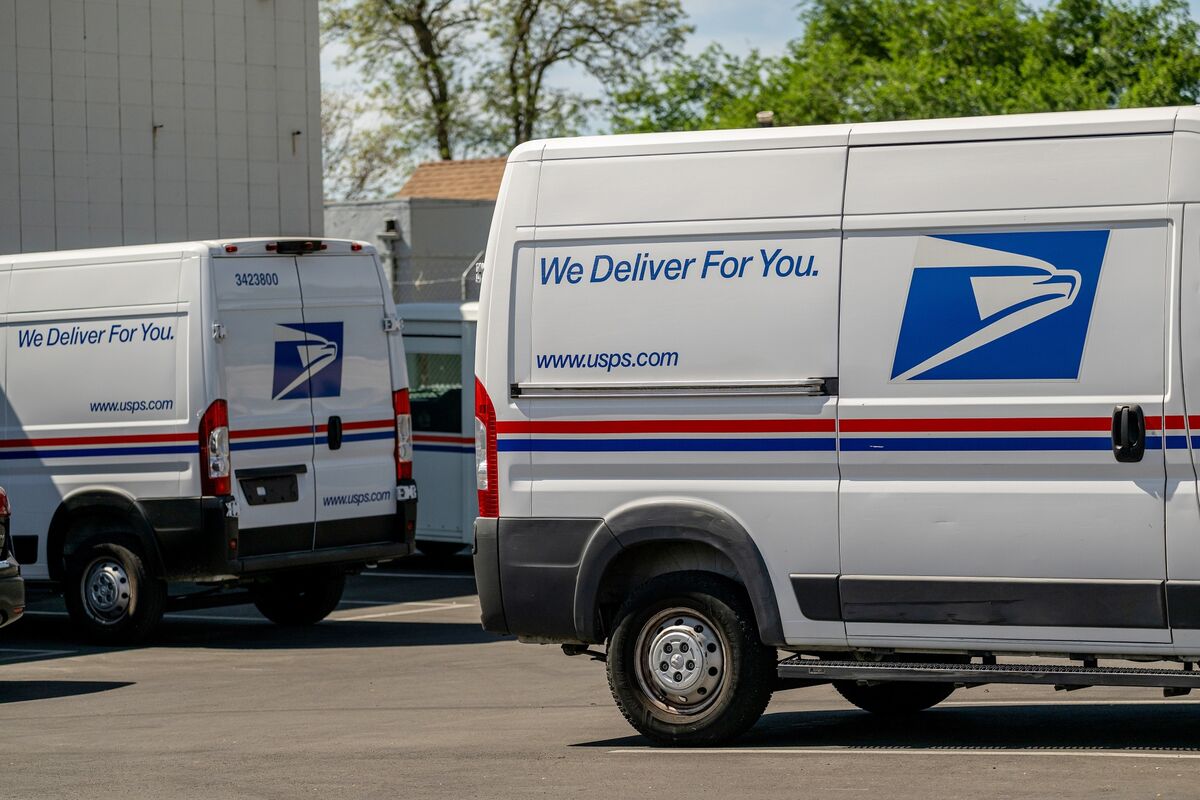
USPS signed a multiyear parcel delivery deal with DHL that is expected to generate at least $10 billion in revenue for the mail carrier. Under the agreement, USPS will handle last-mile e-commerce deliveries directly to customer homes for DHL. The deal strengthens USPS's logistics footprint and signals durable demand in parcel delivery, though the news is incremental rather than market-moving.
This is less about a headline revenue win and more about route-orchestration power: USPS is reinforcing itself as the marginal last-mile utility for fragmented e-commerce volume. That improves network density and absorbs fixed delivery costs, but it also increases the probability that USPS behaves more like a pricing-clearinghouse for parcel overflow, which should pressure private carriers that rely on premium residential delivery economics. The second-order effect is that any carrier with weaker route density or higher per-stop labor intensity will be forced either to cut price, cede volume, or lean harder into premium services where demand is more elastic.
The real winner is likely not DHL but the broader low-cost delivery ecosystem around it. If USPS can monetize incremental routes without adding much incremental capex, margin leverage should flow through over the next 2-6 quarters; meanwhile, regional and niche parcel competitors face a tougher unit economics backdrop as shippers benchmark against a lower-cost baseline. Watch for knock-on pressure in final-mile labor and linehaul rates: when a quasi-public incumbent deepens its role, private operators often see both pricing discipline and slower share gains in residential parcels.
The contrarian read is that this may be a defensive contract rather than a sign of demand strength. If e-commerce growth remains mid-single-digit or lower, large logistics players will keep outsourcing last mile to avoid idle capacity, so the deal can reflect efficiency-seeking rather than volume acceleration. The upside case is only durable if parcel counts keep growing into 2025; otherwise, the market may overestimate how much of the $10B headline actually converts into incremental profit versus merely replacing lower-margin volume.
Catalyst risk is concentrated over months, not days: margin expansion could show up gradually in USPS operating metrics, while competitive damage to private carriers should emerge as 1-2 quarter pricing and mix pressure. The main reversal would be a pickup in fuel, labor, or service failures that force DHL to rebid or rebalance away from USPS, which would quickly cap any valuation re-rating tied to network efficiency.
AI-powered research, real-time alerts, and portfolio analytics for institutional investors.
Request TrialOverall Sentiment
mildly positive
Sentiment Score
0.35
