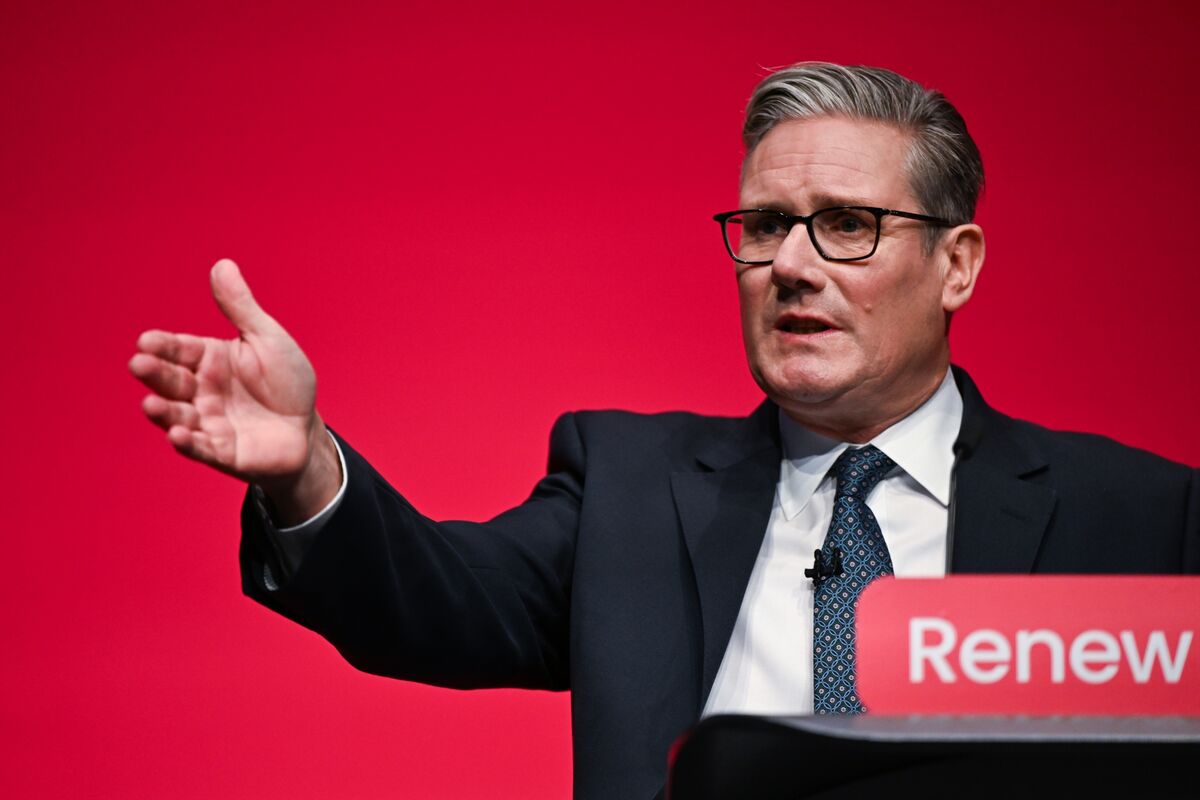
UK Labour leader Keir Starmer has significantly consolidated his position following the party's annual conference, successfully unifying the party behind him. This strengthening of his standing was achieved by confronting populist rival Nigel Farage and benefiting from the retreat of a key internal challenger, effectively buying him crucial time amidst prior discontent.
UK Prime Minister Keir Starmer has successfully navigated a period of significant internal pressure, consolidating his leadership and unifying the Labour party following its annual conference. This stabilization was achieved through a combination of a forceful speech, a direct confrontation with populist rival Nigel Farage, and the retreat of a primary internal challenger. The event has effectively diffused what was described as a 'pressure cooker of discontent,' significantly reducing near-term UK domestic political uncertainty. However, the observation that the party is unified 'for now' suggests this stability may be temporary, indicating that underlying political risks have been postponed rather than fully resolved. The neutral sentiment and very low market impact score (0.1) confirm that investors view this as a resolution of a minor political overhang rather than a significant market-moving catalyst.
AI-powered research, real-time alerts, and portfolio analytics for institutional investors.
Request DemoOverall Sentiment
neutral
Sentiment Score
0.00
