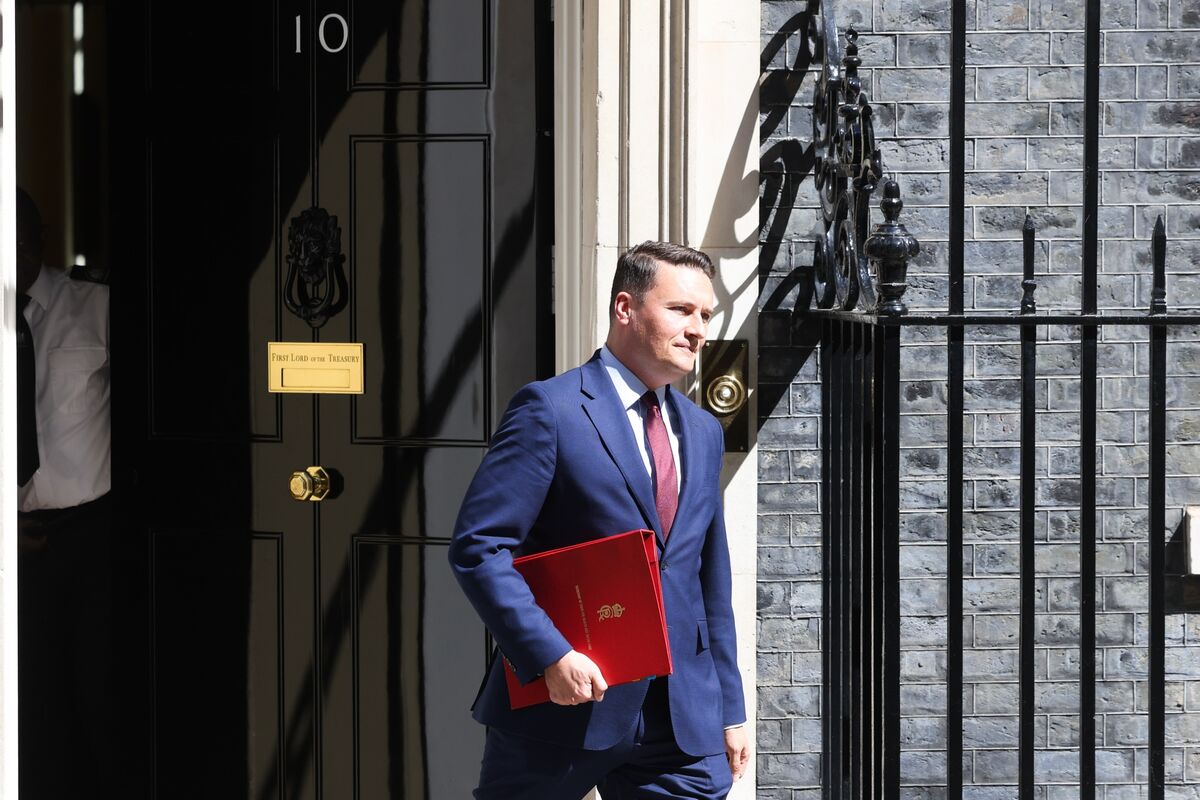
The article speculates that UK Health Secretary Wes Streeting may be positioning for a challenge to Prime Minister Keir Starmer, with his future role in the Labour leadership described as uncertain. It offers no policy announcement, economic data, or market-moving development, and is largely political color with a pop-culture reference.
The immediate market read is not about policy, but about governability. A credible challenge to the sitting PM raises the probability of a short-lived leadership vacuum, which typically widens UK political risk premia first in domestics exposed to regulation and second in sterling-sensitive assets; the setup is asymmetric because leadership contests can resolve in days, while the policy repricing can persist for months. The bigger second-order issue is that any successor contest tends to freeze decision-making on fiscal, planning, and NHS reform priorities, pushing out catalysts for sectors that need government execution rather than just rhetoric.
The more interesting angle is that a leadership challenge from within the same party is often bullish for the challenger only if it looks like a competence trade, not a ideological break. That favors a market interpretation where investors rotate toward “stability” beneficiaries—large-cap defensives, global earners, and companies with limited domestic policy dependence—while punishing UK cyclicals, small caps, and rate-sensitive names if Westminster noise keeps gilts volatile. The downside tail is a messy contest that revives election-risk discounting, which would be felt most acutely in housing, construction, and consumer finance through higher risk premia and weaker confidence.
The contrarian view is that the issue may be overstated by markets because cabinet churn is not the same as regime change; if the challenge fails quickly, the cleanest trade is fading the volatility spike rather than positioning for a structural UK macro rerating. But if the challenger gains momentum, the signaling effect matters more than the personnel: it tells markets that political capital is spent, which raises the odds of delay on fiscal consolidation and public-sector reform. That combination is usually negative for domestic UK equities even if headline politics eventually stabilizes, because the real damage comes from postponed capital allocation decisions rather than the leadership headline itself.
AI-powered research, real-time alerts, and portfolio analytics for institutional investors.
Request DemoOverall Sentiment
neutral
Sentiment Score
0.05
