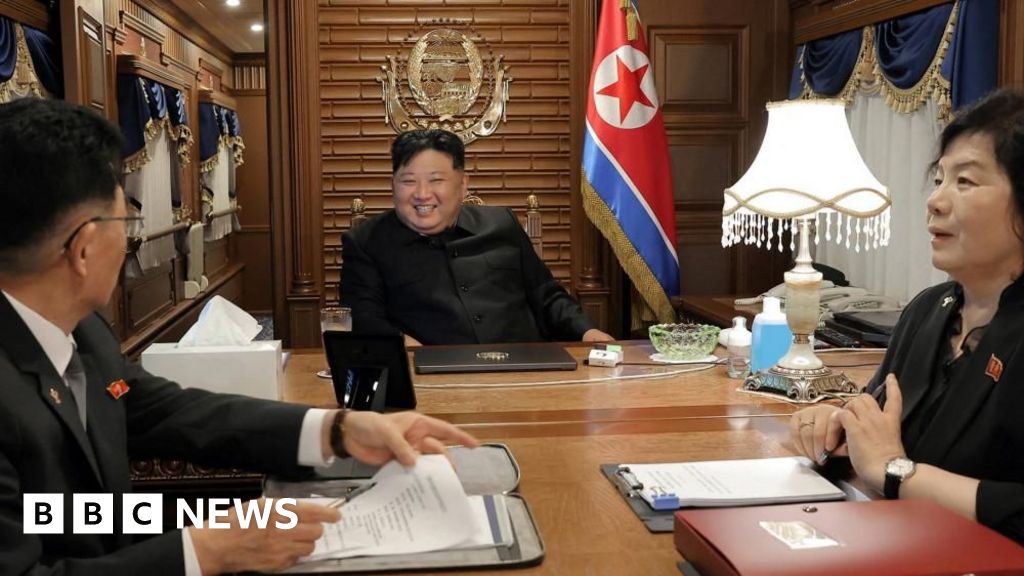
North Korean leader Kim Jong Un arrived in Beijing via armored train to attend China's "Victory Day" military parade, marking his first multilateral international meeting and the first such attendance by a North Korean leader since 1959. His participation, alongside President Xi Jinping and Russia's Vladimir Putin, underscores deepening geopolitical alignments among these nations. The parade, featuring China's advanced weaponry and notably lacking most Western leaders, highlights an emerging global divide and Beijing's strategic efforts to strengthen ties with non-Western allies.
North Korean leader Kim Jong Un's attendance at China's "Victory Day" military parade, his first multilateral international meeting, marks a significant geopolitical development. The event, which brings him together with China's President Xi Jinping and Russia's Vladimir Putin, visually solidifies a strategic alignment among nations often at odds with Western powers. This is the first time a North Korean leader has attended such a parade in China since 1959, underscoring a deliberate and historic deepening of ties. The parade itself serves as a platform for China to display its latest military hardware, including advanced aircraft, tanks, and anti-drone systems, signaling a notable advancement in its defense capabilities. The conspicuous absence of most Western leaders, contrasted with the presence of heads of state from Myanmar, Iran, and Cuba, highlights an increasingly polarized global landscape and Beijing's focus on strengthening its relationships within a non-Western sphere of influence.
AI-powered research, real-time alerts, and portfolio analytics for institutional investors.
Request DemoOverall Sentiment
neutral
Sentiment Score
0.00
