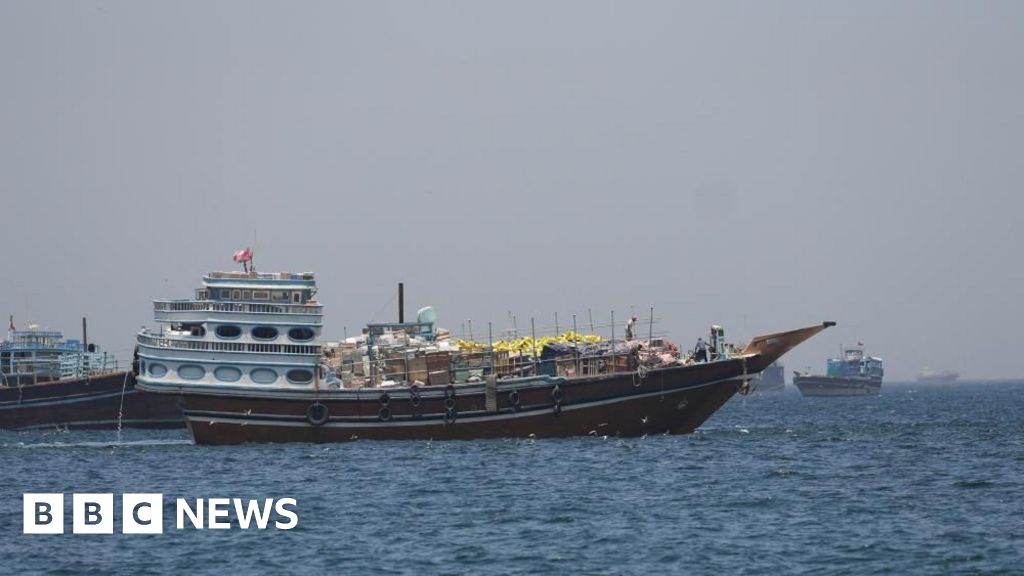
Trump's 'Project Freedom' is aimed at reopening the Strait of Hormuz, where Iran has restricted traffic and trapped an estimated 20,000 sailors and 2,000 ships. The standoff raises the risk of direct US-Iran military confrontation and threatens a chokepoint for roughly 20% of global oil and LNG flows, keeping Brent crude above $100/bbl, more than 50% higher than prewar levels. Centcom says US destroyers are already operating in the Gulf and assisting commercial transit, but Iran has threatened to attack any foreign armed force entering the strait.
This is less a one-off headline than a stress test of the entire seaborne energy complex. A prolonged choke point in Hormuz creates a convexity event: spot crude and LNG rates can gap on incremental escalation, while the real economic damage shows up later through inventory hoarding, voyage delays, and forced rerouting that tightens effective supply even if outright volumes are not destroyed. The market is still underpricing the second-order effect that insurers, charterers, and port operators may start demanding risk premia long before physical flows are fully stopped. The biggest beneficiaries are not just upstream producers, but any assets with embedded inflation pass-through and domestic feedstock advantage. Refineries with access to non-Middle East crude, LNG exporters outside the Gulf, and tanker exposure outside the immediate blast radius can all outperform as shipping ton-miles rise and voyage duration lengthens. By contrast, downstream industrials, airlines, chemicals, and EM importers become hidden losers because their margin compression typically lags the initial oil spike by weeks, not days. The key catalyst path is binary over the next few sessions: either this remains a managed escort-and-deconflict operation, which would let oil bleed lower, or one misread incident produces direct naval engagement and another repricing leg higher. The market is likely to overreact to headline denials and underreact to the operational reality that even limited escorts effectively militarize commercial transit, raising the odds of an accident. If a ceasefire holds and shipping windows reopen, the most crowded geopolitical oil trade should unwind fast; if not, the move can extend for months because fleet and inventory displacement are slow-moving. Contrarian angle: the consensus may be too focused on Brent and not enough on logistics capacity. If enough vessels are trapped or diverted, the real bottleneck becomes available hulls, insurance, and crew willingness, which can sustain elevated freight and delivered-energy prices even after crude itself retraces. That makes the better expression a relative-value trade on transport and energy logistics rather than a naked long on crude futures.
AI-powered research, real-time alerts, and portfolio analytics for institutional investors.
Request DemoOverall Sentiment
strongly negative
Sentiment Score
-0.65
