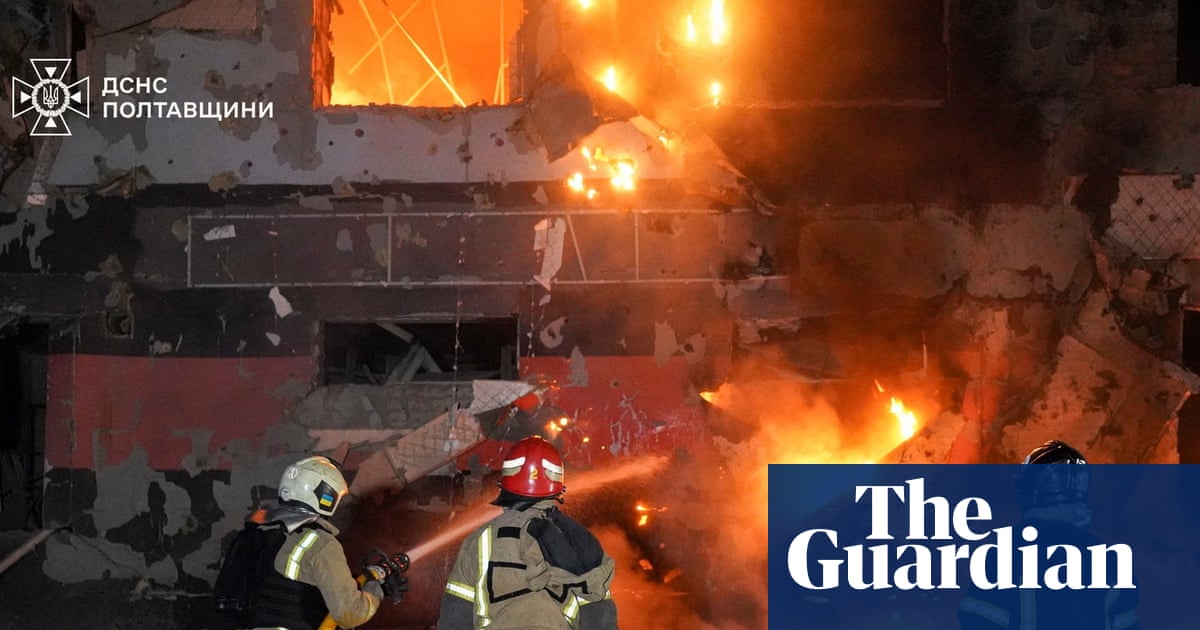
Russia launched nearly 400 long-range drones and 23 cruise missiles overnight, killing at least five people and causing damage across 11 regions including a reported hit to a UNESCO site in Lviv. Ukraine warns of looming air-defence ammunition shortages (notably Patriot interceptors) as US attention shifts to the Middle East; US-Ukraine talks in Florida yielded no breakthrough. Russian forces continue pressure in the east and south—holding positions ~20km from Sloviansk—while Moscow benefits from an energy-price windfall and has put peace talks on a 'situational pause.'
The immediate second-order market effect is a sharp, multi-quarter increase in demand for interceptor munitions, seekers, and associated radar upgrades — procurement cycles are long (3–18 months) so order books and backlogs at suppliers will matter more than spot revenue. That favors firms with existing PAC/THAAD/IP portfolio content and munition manufacturing capacity (prime contractors plus specialised mid-caps building seekers, propellants, and guidance chips). Expect margin expansion in contracted programs but also accelerated working capital needs and potential supplier bottlenecks (semiconductor and energetic materials nodes) that compress near-term free cash flow.
A sustained higher geopolitical risk premium supports energy prices and gives Russia fiscal flexibility, which can blunt the potency of sanctions and extend market dislocations in European gas and fertilizer flows over 6–24 months. This dynamic raises the value of liquid energy hedges and incumbent LNG sellers while increasing volatility in European utilities and grid-exposed names that have thin insurance coverage for geopolitical damage.
Consensus positioning is biased toward large, liquid defense primes — that crowding is the contrarian signal. Mid-cap specialists that actually build interceptors, seekers or kamikaze-drone countermeasures (and have available manufacturing capacity) are under-owned and offer asymmetric upside if U.S./EU replenishment programs accelerate. Key tail-risks that could reverse the trade are a diplomatic de-escalation, rapid US reallocation of interceptors to the Middle East, or discovery of alternate suppliers (political risk) which would re-price order flow within 30–90 days.
AI-powered research, real-time alerts, and portfolio analytics for institutional investors.
Request DemoOverall Sentiment
strongly negative
Sentiment Score
-0.75
