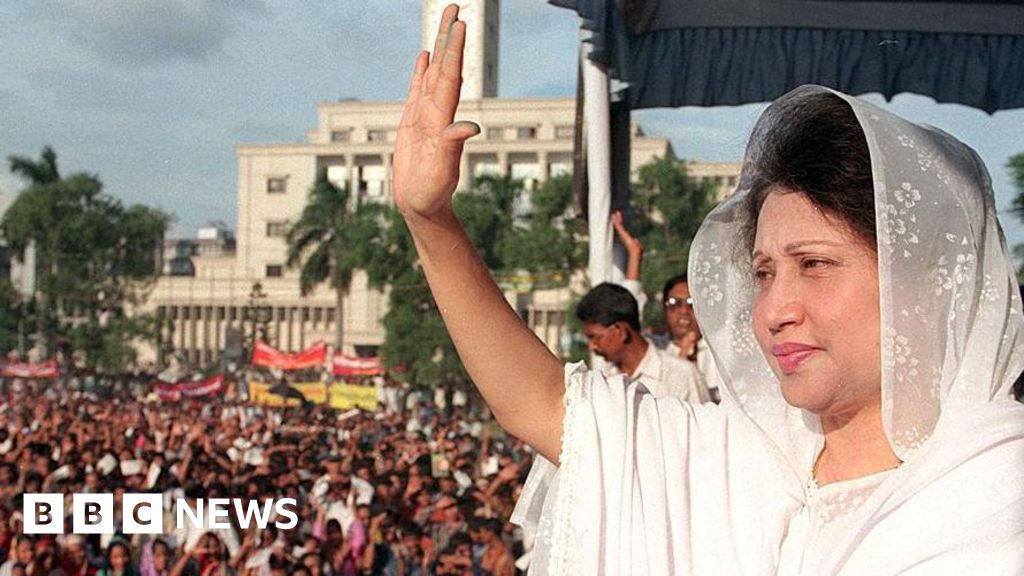
Former two-time Bangladeshi prime minister Khaleda Zia has died at age 80, removing a central figure in the long-running rivalry with Sheikh Hasina and a focal point for the Bangladesh Nationalist Party (BNP). Zia had been convicted in 2018 over alleged embezzlement of roughly $252,000 and jailed for five years, later released and acquitted following a 2024 uprising that ousted Hasina and led to the unfreezing of Zia's bank accounts; her elder son Tarique Rahman, returned from exile and is viewed as the BNP frontrunner. Her death increases short-term political uncertainty and succession risk in Bangladesh, a material consideration for investors with exposure to the country given recent regime turnover and potential policy shifts.
Market structure: Khaleda Zia's death increases political uncertainty in Bangladesh and raises near-term country-risk premia. Expect Bangladesh sovereign spreads to widen +100–300bp and BDT to depreciate 5–15% in a stressed scenario over 1–6 months; exporters (ready‑made garments) may see order volatility but ultimately gain pricing competitiveness if FX weakens. Regional beneficiaries are India and Vietnam (textile/garment re‑routing, FDI substitution) and global remittance processors who can capture higher corridor volume.
Risk assessment: Tail risks include a prolonged power vacuum, army intervention, capital controls or a sovereign default within 12–24 months — each could trigger >30% drawdowns in local equities and 200–500bp widening in CDS. Immediate (days) risk is elevated volatility; short-term (weeks–6 months) is FX/flow shock and bank funding stress; long-term (12+ months) depends on whether Tarique Rahman consolidates power and secures IMF/Indian support. Hidden dependencies: remittance flows, RMG order reallocation timelines (3–12 months), and export contracting seasons.
Trade implications: Tactical risk-off for direct Bangladesh exposure; favor proxied longs in INDA (iShares MSCI India) and VNM (VanEck Vietnam) to capture trade diversion over 6–18 months (target +8–20% upside). Hedge EM sovereign exposure: buy 1–2y protection via Bangladesh 5y CDS (or enter 6–12m put spread on EM bond ETF EMB if no CDS access) if CDS >200bp or BDT weakens >5% within 30 days. Maintain a small, high-conviction distressed long via frontier instruments (<=1% NAV) with tight 25–30% stop.
Contrarian angles: Consensus may overprice permanent decline; if Tarique forms a stable coalition and secures IMF/India support within 3 months, sovereign spreads could compress 100–200bp and Dhaka equities could rebound 20–40% over 12–18 months. Mispricings to exploit: short-term panic oversold in frontier ETFs (use 1% buy-the-dip trades) and selective longs in garment manufacturers with diversified export bases; downside risk is governance shock or sanctions that could make these plays permanently impaired.
AI-powered research, real-time alerts, and portfolio analytics for institutional investors.
Request DemoOverall Sentiment
mildly negative
Sentiment Score
-0.25
