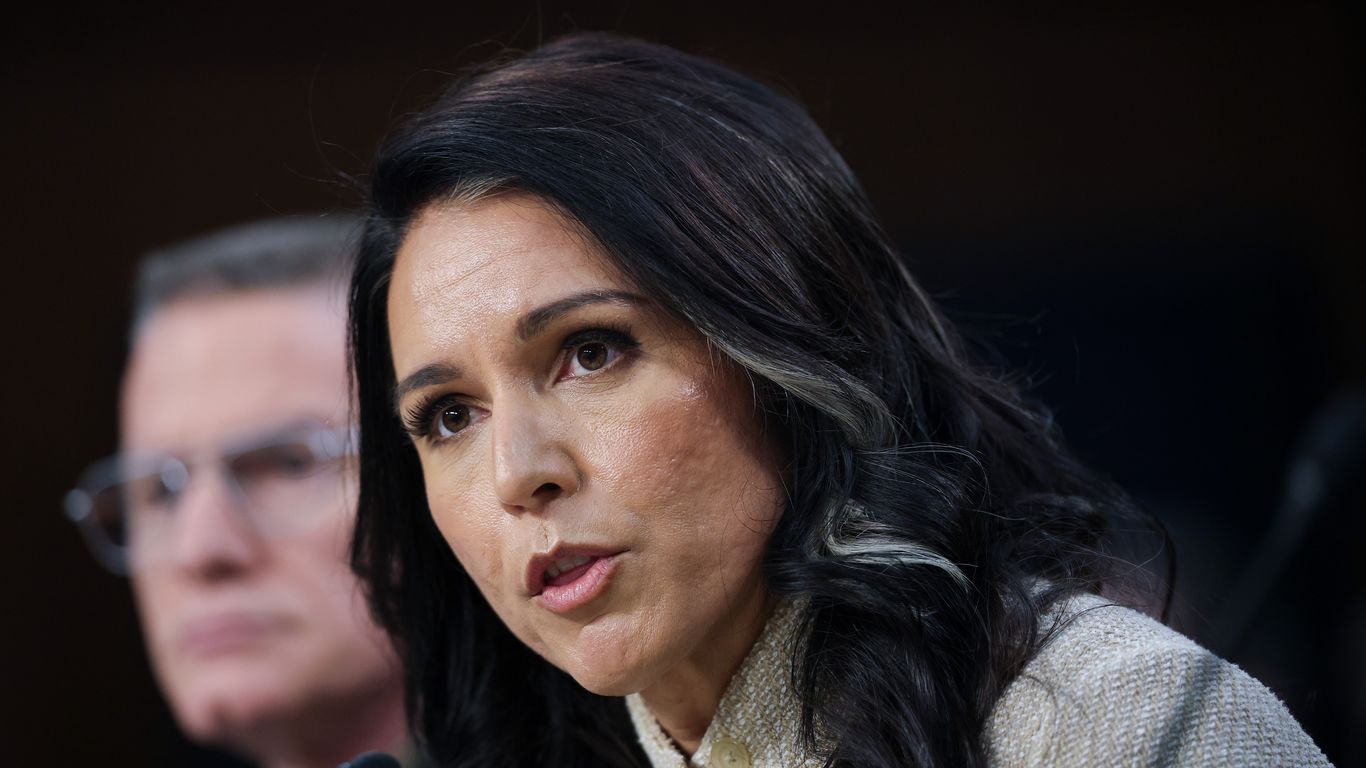
Director of National Intelligence Tulsi Gabbard told the Senate that only the president can determine whether a nation poses an "imminent threat," amid debate over recent U.S.-Israeli strikes on Iran and the resignation of senior aide Joe Kent. Her remarks contrast with customary intelligence-community threat assessments and have intensified scrutiny of her stance as the administration defends strikes despite offering no public proof of the imminent nuclear threat. The exchange highlights internal divisions (Ratcliffe disagreed with Kent) that could influence political dynamics and market perceptions of escalation risk in the Middle East.
The public dispute over who determines “imminent threat” has immediate market implications beyond politics: it increases the value of political signals versus technical intelligence and therefore raises near-term volatility for any defense- or sanction-sensitive names. Markets will start to price off statements from the political axis (President, campaign aides, high-profile resignations) rather than interagency analytic consensus, meaning headline-driven moves will be larger and more frequent — think 20–40% higher implied vol on relevant equities around major press events in the next 30–90 days. Second-order winners will be pure-play defense contractors and tactical intelligence/software vendors that sell directly to policymakers and special programs (short procurement cycles, classified pockets) because they capture spend when governments prefer quick, visible responses. Second-order losers are firms whose revenue depends on stable diplomatic channels and export predictability (civil aerospace OEMs, certain industrial exporters) since policy ambiguity and headline escalation increase sanction risk and export-control frictions with short lead times. Tail risks are asymmetric and event-driven: a rapid escalation or additional strikes would compress credit spreads for defense suppliers (faster invoice turns), lift their order books within 1–6 months, and spike risk premia in equities and FX for the region. Reversal catalysts include authoritative intelligence disclosure, bipartisan de‑escalation messaging, or an operational gap fixed by a new counterterrorism appointment — any of which could compress the newly minted political risk premium within weeks to a few months.
AI-powered research, real-time alerts, and portfolio analytics for institutional investors.
Overall Sentiment
neutral
Sentiment Score
0.00
