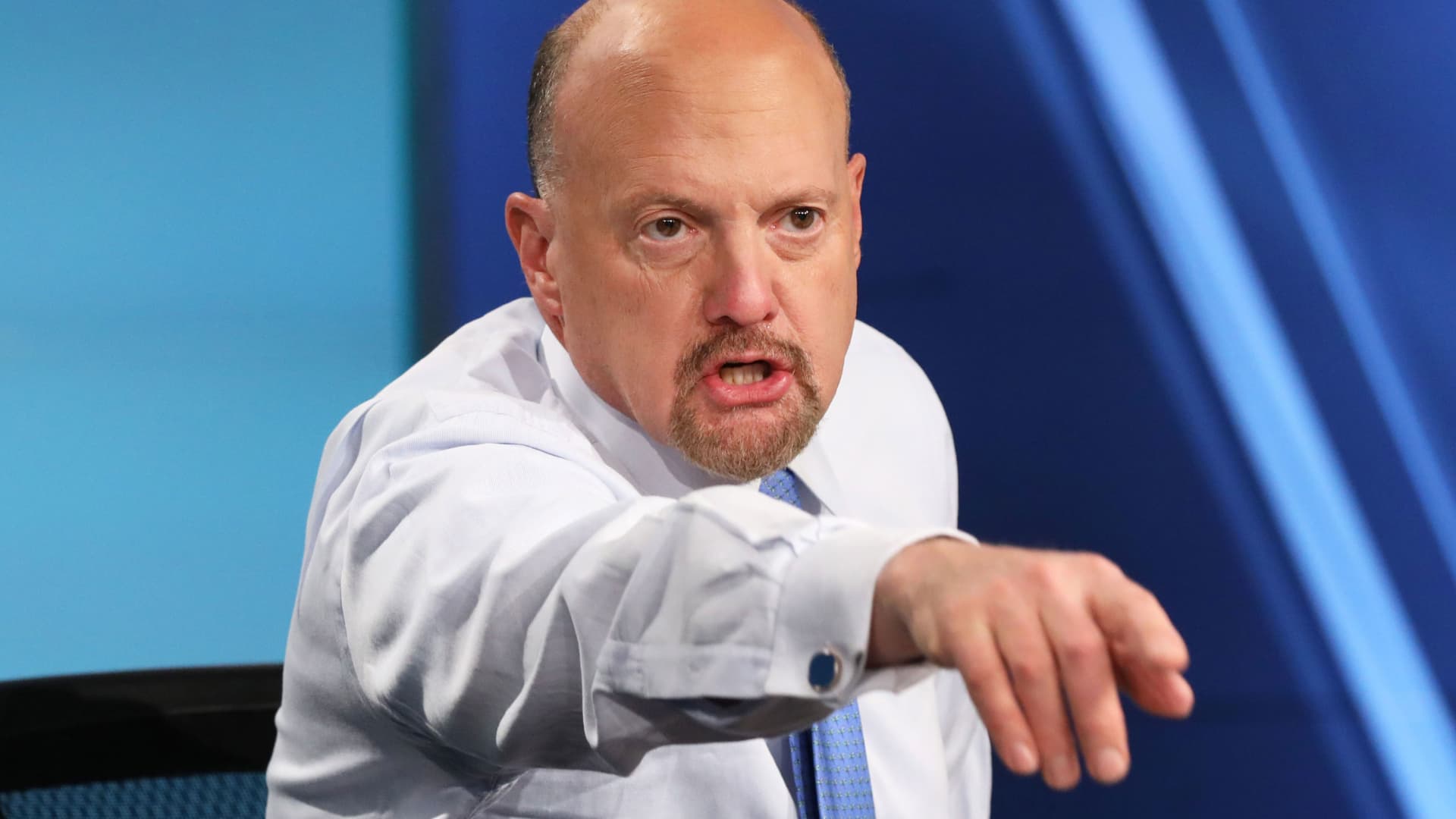
Jim Cramer warned that Wall Street’s once-fervent AI trade cooled this fall after a sequence of events beginning with Oracle’s September report, which showed a surge in cloud backlog largely tied to OpenAI and prompted Oracle to tap debt markets for AI infrastructure; scrutiny increased after leadership changes and former CEO Safra Catz’s option sales, and Oracle credit-default swaps have more than doubled in two months. Sentiment weakened further when Meta and Microsoft reported continued heavy AI spending yet saw stock declines, and concerns intensified around OpenAI’s reportedly more than $1.4 trillion in spending commitments and a CFO comment about a potential government backstop (later clarified). Cramer remains a believer in AI and says Nvidia could reverse the trend with a strong quarter, but he cautions that more turbulence and a possible shakeout are likely unless clearer assurances about OpenAI’s finances emerge.
Jim Cramer traced the recent cooling in the AI trade to a sequence of events beginning with Oracle's September report, which provoked a one-day 36% stock surge tied largely to a cloud backlog linked to a single customer, OpenAI. Oracle then tapped debt markets to underwrite AI infrastructure, announced a leadership change on Sept. 22, and former CEO Safra Catz sold roughly $2.5 billion in stock options, while Oracle credit-default swap costs have more than doubled over two months.
Market sentiment shifted further when Meta and Microsoft reported continued heavy AI spending in late October yet saw share declines, signaling investors no longer reward spending without clearer returns. Concerns intensified around OpenAI after reports of its more than $1.4 trillion in spending commitments and a comment from CFO Sarah Friar about a possible government backstop, later clarified, which increased scrutiny of OpenAI’s balance-sheet risk.
Cramer remains constructive on AI generally but warns of additional turbulence and a potential shakeout unless OpenAI’s financing is clarified; he flagged Nvidia as a possible positive catalyst if it posts a blowout quarter. The signals show moderately negative sector sentiment (score -0.45) with particularly weak per-ticker sentiment for ORCL (-0.8) and negative readings for META and MSFT (-0.4 each), implying elevated near-term volatility and idiosyncratic risk tied to financing and governance developments.
AI-powered research, real-time alerts, and portfolio analytics for institutional investors.
Request DemoOverall Sentiment
moderately negative
Sentiment Score
-0.45
Ticker Sentiment
