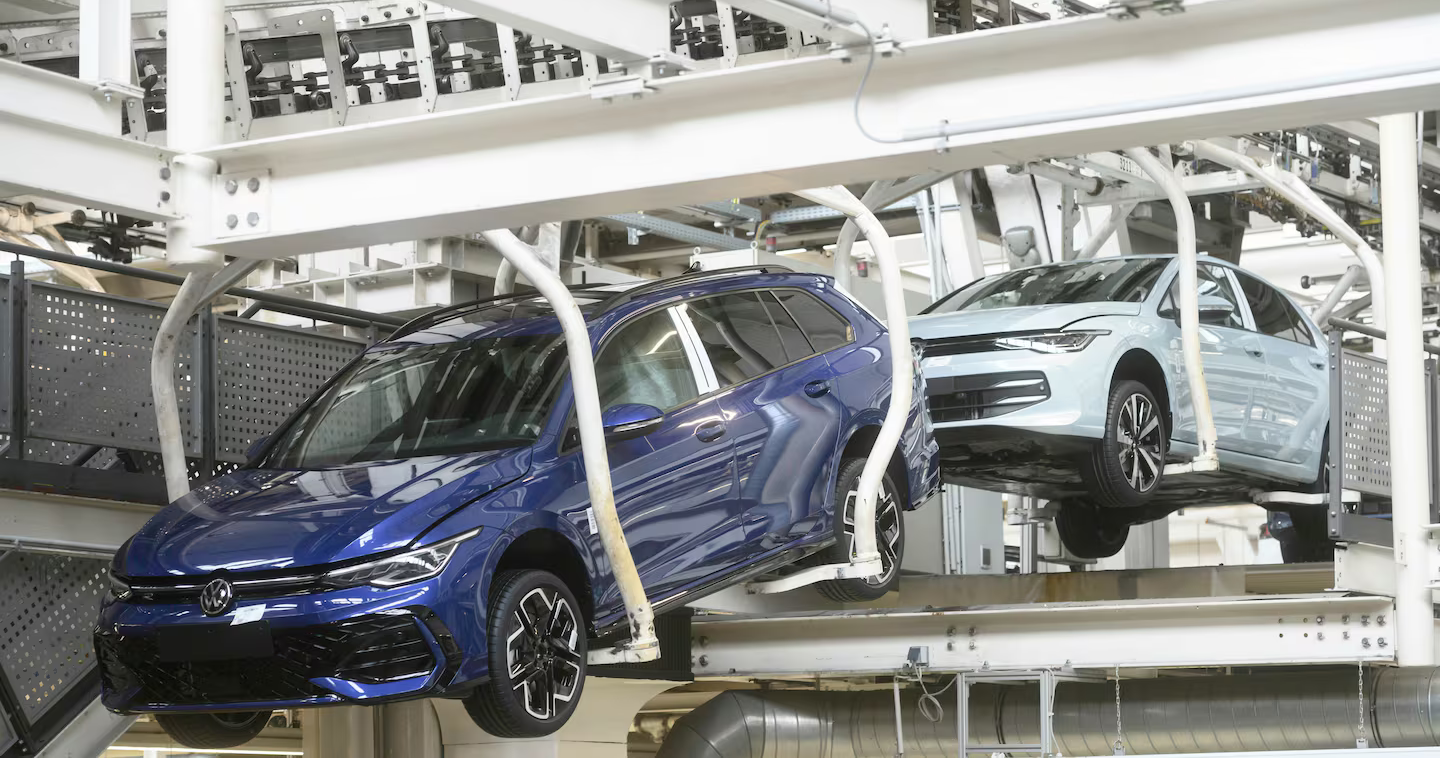
With tariffs implemented last April, automakers are reassessing whether to absorb higher import costs or incur upfront capital expenditures to build vehicles locally. The trade-off will drive near-term capital spending and alter manufacturing footprints, with direct consequences for unit costs, supplier demand and sector margins.
Market structure: Import tariffs create a durable cost wedge favoring automakers with established domestic manufacturing and local supplier networks (benefit magnitude: reduced per-unit import premium of ~ $1k–$5k avoided per vehicle over 2–5 years). Losers are low-cost offshore exporters and OEMs with >30% model mix imported into the tariff market, who face margin compression or must incur plant capex. Higher fixed costs raise barriers to entry, concentrating pricing power with large-cap OEMs and tier-1 suppliers that can scale local production.
Risk assessment: Tail risks include tariff escalation/retaliation, failed greenfield builds, major supply shocks (semiconductors) or labor strikes—each could move equity by 15–40% in stressed scenarios. Immediate (days–weeks): headline-driven volatility; short-term (3–12 months): capex approvals and supplier contracts; long-term (2–5 years): realized reshoring benefits or stranded assets. Hidden dependencies: local supplier density, union negotiation timing, and state tax/subsidy packages materially change ROI on new plants.
Trade implications: Direct tactical longs: US-heavy OEMs/suppliers (e.g., F, GM selectively; MGA, APTV, NUE) that gain market share or pricing leverage over 6–24 months. Shorts/relative shorts: import-reliant global OEMs (TM, HMC) until they disclose local investment plans; implement pair trades (long MGA or APTV vs short TM) to isolate reshoring alpha. Options: use 9–18 month call spreads on suppliers and 6–12 month put spreads on importers to control downside while capturing policy-driven moves.
Contrarian angles: Consensus underestimates speed at which governments and automakers may subsidize rapid nearshoring—some importers can pivot with $2–5bn capex and reclaim margins within 18–36 months, making deep shorts risky beyond 12 months. Market may also underprice material winners by 10–20%; unintended consequence: higher domestic vehicle prices could depress unit demand 2–6% annually, offsetting some supplier upside. Historical parallel: post-2008 supply-chain reconfigurations show winner consolidation but multi-year transition risk.
AI-powered research, real-time alerts, and portfolio analytics for institutional investors.
Request DemoOverall Sentiment
mildly negative
Sentiment Score
-0.25
