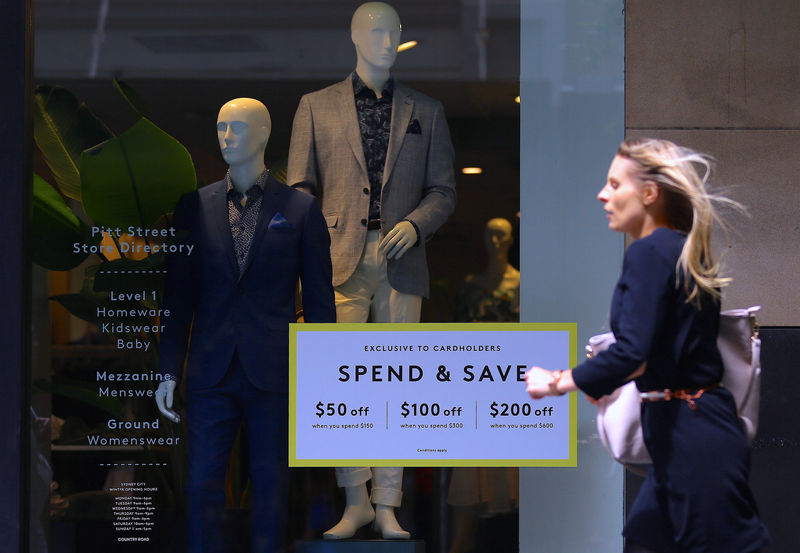
Australia's Westpac-Melbourne Institute Consumer Sentiment Index rose 3.5% in May to 83.0 from 80.1, but remained well below the long-run average of 100.3. Mortgage Rate Expectations climbed to a three-year high of 181.2, with 85% of consumers expecting further increases, while the 'time to buy a dwelling' index fell 16.1% to 72. The report signals persistent household caution amid higher borrowing costs, inflation pressure, and energy-price uncertainty, with Westpac suggesting the RBA may pause after three consecutive rate hikes.
The key signal is not the modest bounce in sentiment; it is the widening gap between headline relief from lower fuel and the underlying tightening in household balance sheets. When consumers expect mortgage rates to keep rising while willingness to buy housing deteriorates, discretionary demand usually rolls over with a lag of 1-2 quarters, especially in rates-sensitive categories like appliances, furniture, travel, and autos. That means the market should focus less on the monthly sentiment print and more on the second-order effect: weaker retail volume, slower housing turnover, and rising promo intensity as merchants defend traffic. The housing channel is the cleanest transmission mechanism. A higher-for-longer rate path effectively freezes marginal buyers, which hurts brokers, building materials, home improvement, and lenders with slower mortgage origination volumes. At the same time, landlords and rental REITs can see a delayed benefit from constrained ownership demand, but only if unemployment stays contained; if rates remain elevated into the next quarter, affordability pressure can also feed delinquency and credit losses in lower-quality consumer finance. The contrarian risk is that the market may be underestimating how much of the pessimism is already priced in. If the central bank pauses sooner than expected, rate-sensitive cyclicals could rip on valuation alone because positioning is likely light and any stabilization in fuel prices has an outsized psychological effect. But that rebound would likely be tactical rather than structural unless wage growth re-accelerates or inflation rolls over enough to restore real purchasing power. Energy is a hidden variable here: lower fuel prices act like a temporary tax cut, but the survey itself implies consumers still expect inflation and energy uncertainty to persist. That means the defensive trade is not simply short consumer stocks; it is favoring businesses with pricing power and low exposure to mortgage-linked demand, while fading names that rely on high home turnover and big-ticket spending.
AI-powered research, real-time alerts, and portfolio analytics for institutional investors.
Request DemoOverall Sentiment
mildly negative
Sentiment Score
-0.20
