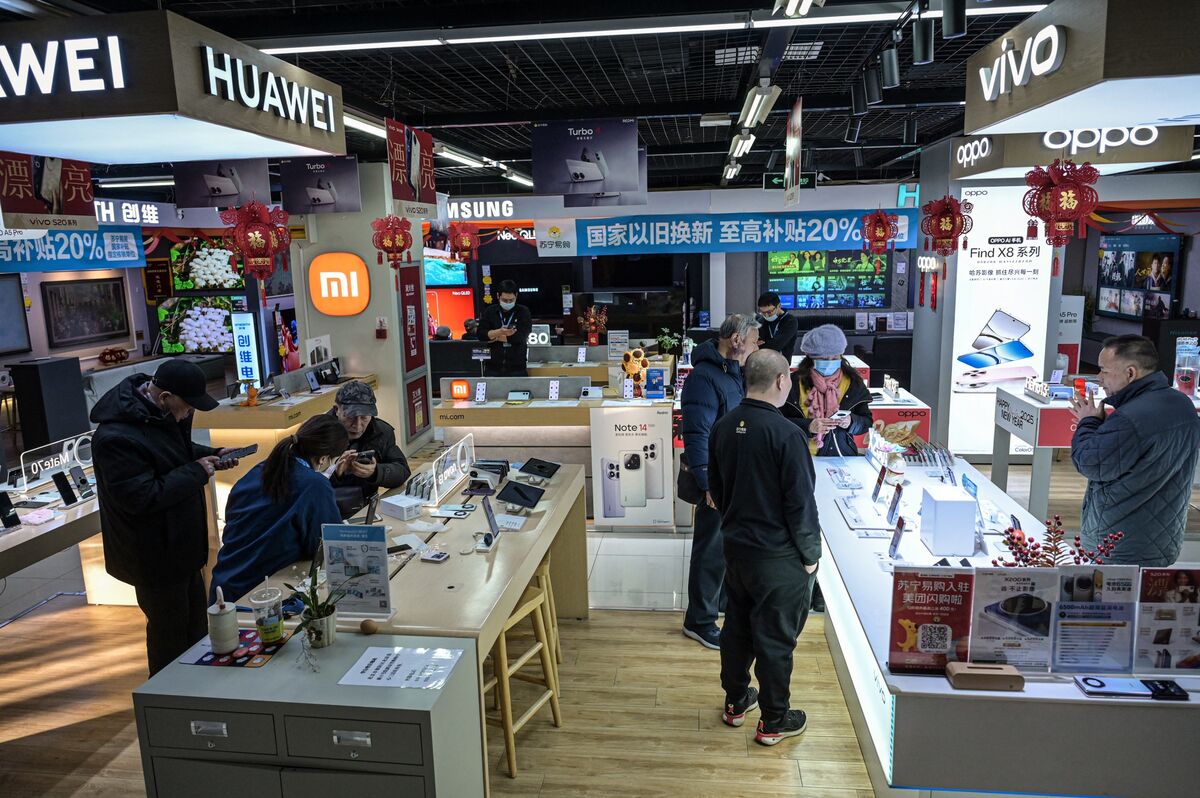
China's consumer stimulus program, designed to boost retail sales through subsidies on select goods, is facing challenges as high demand overwhelms available funding in several provinces. Henan and Chongqing have suspended subsidies, while Jiangsu and Guangdong have implemented restrictions like daily quotas, indicating the program's limitations despite driving retail sales growth to a year-high and testing the capacity of even the wealthiest regions to manage the stimulus effectively.
China's consumer stimulus program, which subsidizes purchases of select goods, has successfully fueled a shopping spree, leading to retail sales growth reaching its strongest point in over a year. However, this surge in consumer participation, particularly in the home goods trade-in initiative, is straining the program's financial resources, with provinces like Henan and Chongqing already suspending subsidy grants due to depleted funds distributed by the national government. Even wealthier regions such as Jiangsu and Guangdong are implementing restrictions, including daily quotas, to manage the overwhelming demand. This situation highlights the operational limits and potential unsustainability of the current stimulus design, testing the capacity of provincial authorities to manage and fund such initiatives despite the initial positive impact on consumption. The associated moderately negative sentiment and uncertain tone underscore concerns about the program's longevity and the fiscal pressures it imposes.
AI-powered research, real-time alerts, and portfolio analytics for institutional investors.
Request DemoOverall Sentiment
moderately negative
Sentiment Score
-0.40
