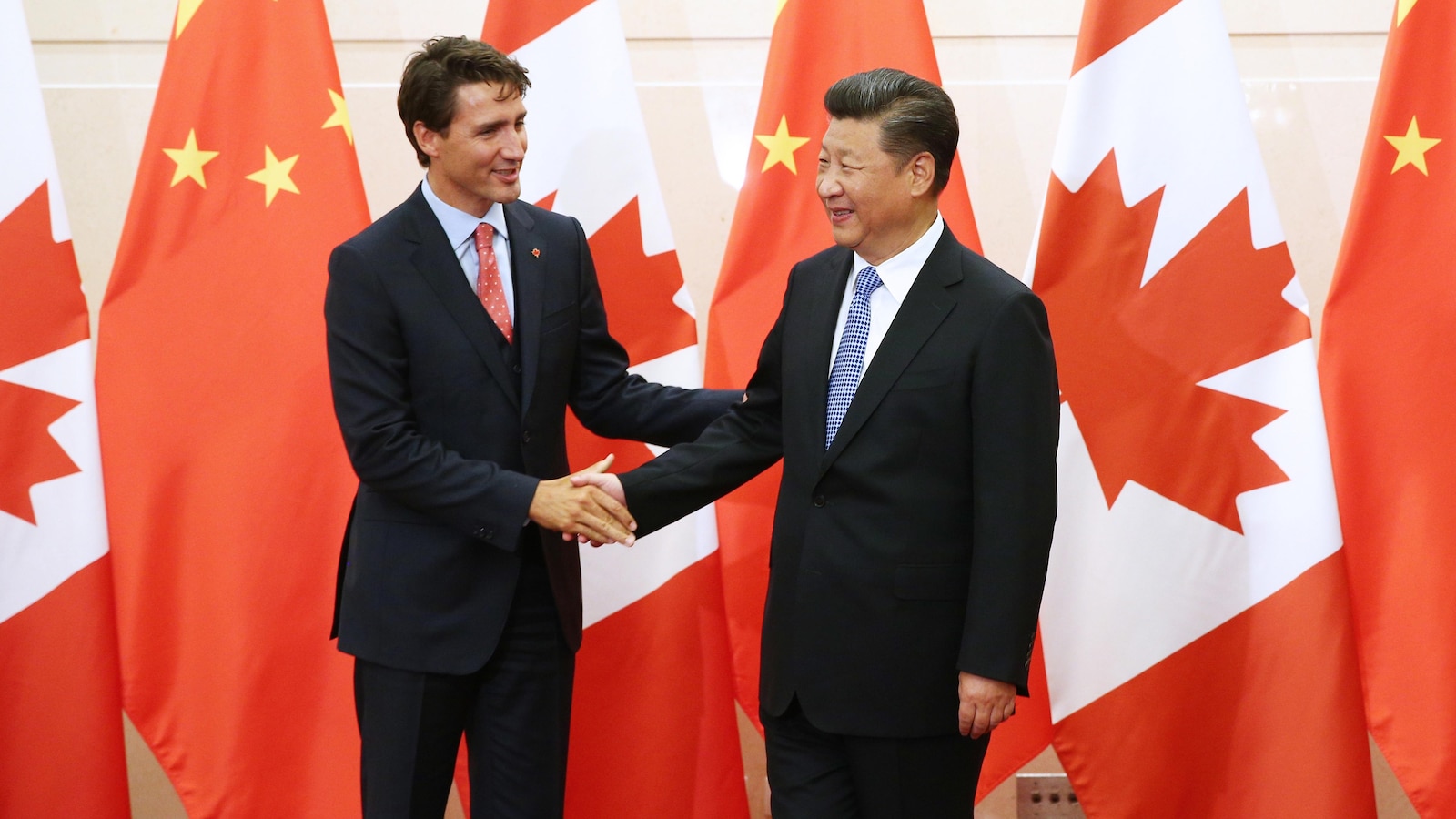
Canada-China relations have swung from early engagement in 1970 to a period of heightened political and trade tensions that directly affect markets: Canada has banned Huawei and ZTE from telecom systems, detained Huawei CFO Meng Wanzhou (triggering reciprocal detentions), and imposed a 100% tariff on China-made EVs plus 25% on Chinese steel and aluminum. China retaliated in March 2025 with a 100% tariff on Canadian canola and 25% on seafood and pork, raising material downside risk for Canadian agricultural exporters and adding regulatory uncertainty for telecom and tech suppliers. Prime Minister Mark Carney is in Beijing seeking to repair relations, but the episode underscores sustained political risk, potential supply-chain reconfiguration, and tariff-driven shifts in trade flows that investors and portfolio managers should monitor.
Market structure: The Carney visit and Canada’s recent tit-for-tat tariffs (100% on China-made EVs, 25% on steel/aluminum; Chinese 100% canola counter-tariff) shift near-term winners to non-Chinese telecom vendors (Ericsson ERIC, Nokia NOK) and domestic/US producers of steel and alternative EV supply chains; losers are Canada-export-dependent ag processors, China-linked auto OEM imports, and Canada equity beta (EWC). Pricing power rotates: Canadian exporters face narrower netbacks and forced rerouting, increasing logistical costs by an estimated mid-single-digit percent over 3–6 months; global component suppliers to Chinese EV makers see demand reorientation rather than demand destruction. Cross-asset: expect CAD weakness vs USD (pressure on imports), wider Canada sovereign spreads vs USTs by ~10–30bps if escalation persists, and elevated vols in CAD and TSX-listed cyclicals.
Risk assessment: Tail risks include escalation to broader Chinese tariffs or tech export controls (low prob, high impact) that could cut Canadian export revenues >2% of GDP over 12–24 months and freeze investment; immediate shocks (days) are FX-vol, short-term (weeks/months) are earnings hits for exporters, long-term (quarters/years) are supply-chain re-shoring and FDI diversion. Hidden dependencies: provincial exposure (Saskatchewan canola revenues), US policy alignment, and multinational contract clauses that trigger supply-chain reroutes. Catalysts to watch: next 60 days—US administration actions, China retaliation announcements, and quarterly earnings guidance from Canadian exporters.
Trade implications: Tactical: favor long positions in ERIC and NOK (6–12 month horizon) to capture 5G replacement cycle, and materially underweight Canada via EWC for 1–3 months to avoid tariff-driven earnings downgrades. Use FX to express view: buy USD/CAD using a 3-month call spread to limit premium, targeting 3–5% CAD depreciation. Hedge portfolio tail risk with a 3-month put on EWC sized 0.5–1% of NAV; consider modest long exposure to U.S. industrials and agricultural processors (BG, ADM) that can re-route supply.
Contrarian angles: The market may overprice permanent decoupling; many corporate contracts and supply chains have 6–18 month inertia—earnings shocks can be transitory. If Carney secures incremental concessions, CAD rebound and snapback in TSX cyclicals could be quick (30–90 days), creating fade opportunities. Historical parallel: 2018–19 tariff episodes drove 10–20% swings but normalized when diplomatic channels reopened; downside is more limited if Canada diversifies export destinations quickly.
AI-powered research, real-time alerts, and portfolio analytics for institutional investors.
Request DemoOverall Sentiment
moderately negative
Sentiment Score
-0.30
