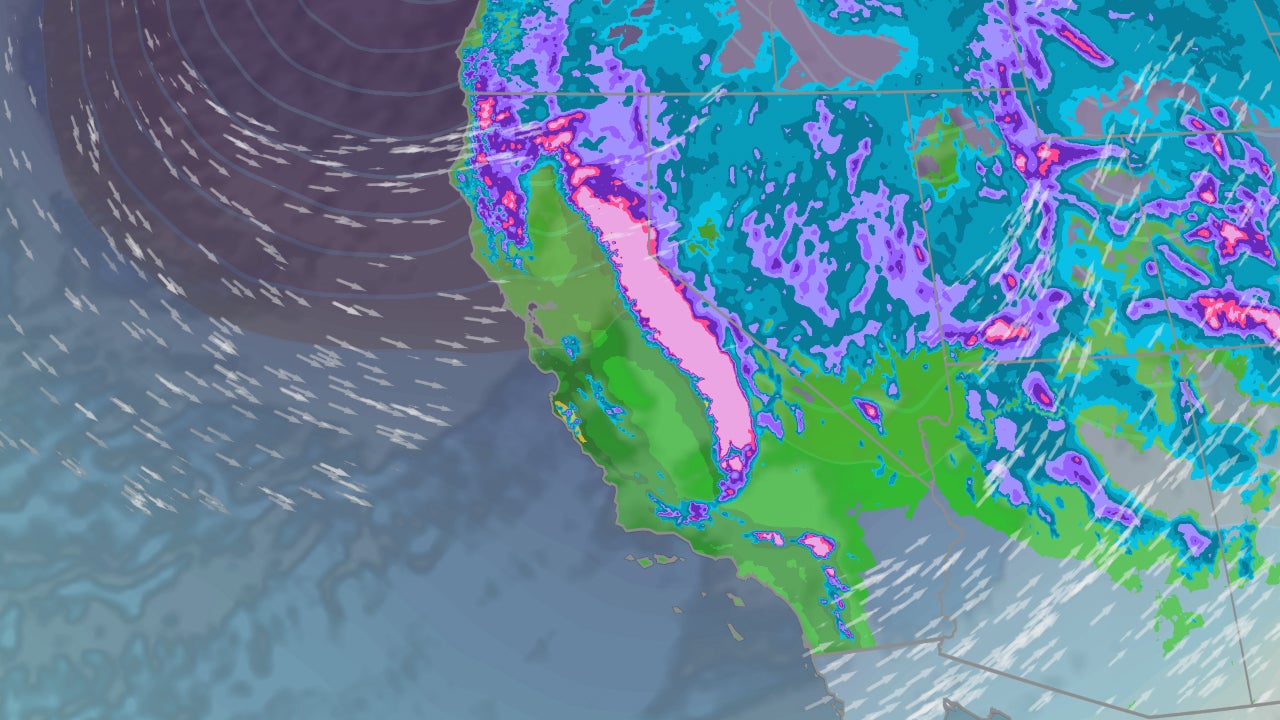
A multi-day Pacific storm is delivering feet of Sierra snow (NWS forecasts 5–8 feet in places) and locally heavy rain (1–6 inches in coastal/Sierra foothill locations) across California through Thursday, triggering avalanches, flash flooding, rockslides and road closures including stretches of I‑80 and potential impacts on the Grapevine (I‑5). The weather raises near-term operational and infrastructure risks—evacuations, debris flows on burn scars and transport disruptions—while providing much‑needed replenishment to a Sierra snowpack currently about 53% of average, with another front possible next weekend.
Market structure: winners include regional heavy-equipment and aggregate suppliers (snow/debris removal), water utilities/hydropower and municipal bondholders long-term as snowpack replenishment reduces drought risk; losers are regional P&C insurers, short-haul West Coast logistics, and toll/airport revenues while closures persist. Expect localized pricing power for aggregates/heavy-lift services (regional price uplifts of ~5–15% for 1–3 months) and temporary margin pressure for carriers reliant on I-5/80 freight lanes.
Risk assessment: immediate tail risks (next 72 hrs) are mudslides/avalanches causing concentrated insured losses and transport stoppages; medium-term (weeks–months) risk is elevated claims across wildfire burn scars if repeated rain cycles occur. Hidden dependencies include reinsurance program renewals (H1 2026) that could reprice capacity if losses materialize, and hydropower vs gas-generation substitution that flips by season (short-term natgas demand up, long-term demand down as reservoirs refill).
Trade implications: short-dated natgas exposure is attractive (heating demand spike) while municipalities and water-related credits look asymmetric positive if snowpack improvement persists into spring; insurer equity/option vol should widen near-term—opportunistic hedges or puts on CA-exposed P&C names are logical. Cross-asset: expect modest bid in NYMEX NG (+5–15% potential over 1–2 weeks if cold persists), brief widening of CA muni spreads if emergency spend headlines, and higher local construction-materials equities.
Contrarian angles: consensus will focus on damage and insurer pain; markets may underprice the economic value of a 50%+ improvement in local Sierra snowpack (reducing irrigation/drought risk into late 2026). Reaction may be overdone on short-term insurance equity hits; conversely, don’t dismiss multi-storm scenarios that could force reinsurance repricing. Key monitors: CA DWR weekly snow-water equivalent and NOAA 14-day ensemble for flip/extension of storm track.
AI-powered research, real-time alerts, and portfolio analytics for institutional investors.
Request DemoOverall Sentiment
mildly negative
Sentiment Score
-0.25
