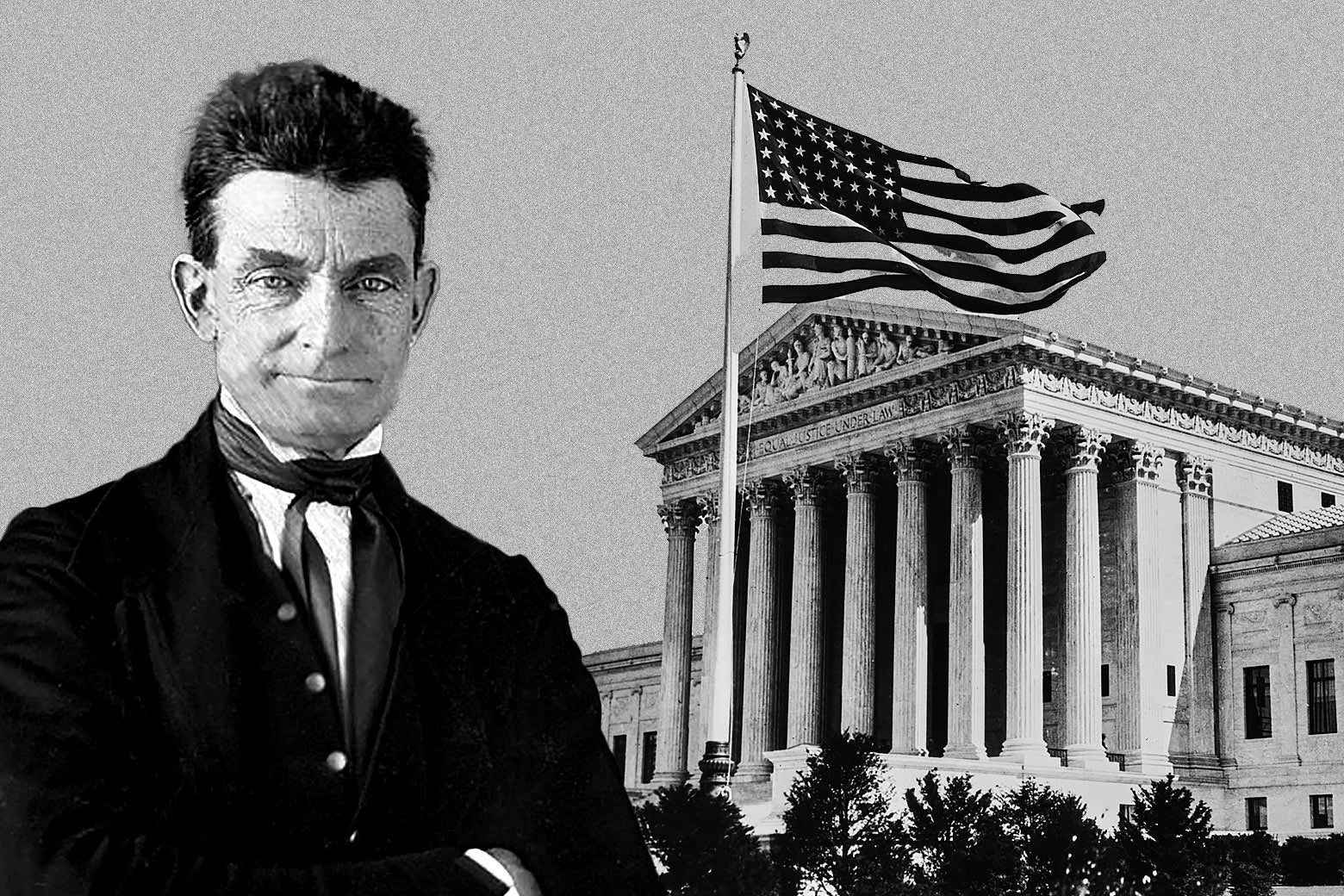
Key event: Supreme Court oral arguments in the birthright citizenship case. The article contends the Trump administration's two-step theory—redefining the 14th Amendment's 'jurisdiction' as 'allegiance' and excluding children of temporary or unauthorized entrants—is legally weak and rebutted by the 1859 John Brown treason trial, which affirmed the concept of temporary allegiance. The author argues historical context available to the 14th Amendment Framers undercuts the administration's interpretation and makes the effort unlikely to succeed.
The courtroom skirmish is principally a headline-volatility event, not a durable economic shock; my read is the legal chain the administration needs has <30% probability of surviving final review over the next 12 months, which implies most macro and corporate forecasts should not bake in a structural change to birthright citizenship. That low-probability tail is, however, concentrated in a handful of sectors and will produce sharp, binary moves around key milestones (oral argument windows, SCOTUS opinions, injunctions) — expect 5–20% swings in small-cap names that trade explicitly on immigration policy in 1–3 week windows.
Second-order winners if the administration loses: labor‑intensive consumer-facing chains and regional healthcare/housing providers benefit from policy stability because hiring and demand forecasts are less disrupted; their implied earnings volatility should compress after a definitive negative ruling. Conversely, names that have already repriced for tougher enforcement — private corrections/immigration detention (high operational leverage to enforcement), niche border‑security contractors, and small regional engineering firms that bid for border work — face mean reversion if the case fails, as the policy rationale for elevated forward revenues evaporates.
Key catalysts and timing: short-term (days–weeks) — court filings, emergency stays, and media cycles; medium-term (3–12 months) — written SCOTUS opinions and appeals; long-term (12–36 months) — follow-on legislation or state-level measures. Tail‑risk: an unexpected 6‑3 holding in favor of the administration would fast-forward enforcement-driven revenues, producing concentrated winners; conversely, a narrow rejection still leaves political agitation and state-level policy experiments that keep volatility elevated for 1–2 years.
Given the asymmetric, binary payoff, trade execution should emphasize option-based or small, directional pairings that monetize headline volatility while capping downside from a probable judicial loss.
AI-powered research, real-time alerts, and portfolio analytics for institutional investors.
Request DemoOverall Sentiment
neutral
Sentiment Score
0.00
