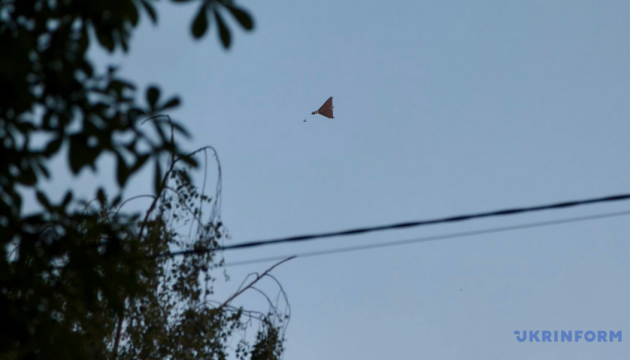
Ukrainian Unmanned Systems Forces said operators from the 412th Nemesis Brigade successfully intercepted a Shahed-type strike drone using an interceptor drone launched from an unmanned surface platform for the first time. The development signals a new integration of maritime and aerial unmanned systems and expands air-defense coverage for Ukrainian cities. This is tactically significant but unlikely to have direct near-term market impact.
The important signal here is not the individual kill, but the proof that low-cost unmanned surface platforms can now act as mobile launch racks for air-defense interceptors. That shifts the economics of point defense: a relatively cheap maritime node can extend coverage beyond fixed batteries, complicating saturation tactics and forcing attackers to spend more drones per successful strike. Over the next 3-9 months, this favors vendors and integrators tied to autonomous command-and-control, edge sensors, secure datalinks, and interceptor munitions rather than only legacy air-defense primes. Second-order, the tactical lesson is portability. If this scales, coastal and riverine defense becomes a software-defined problem with modular payloads, which increases demand for small drones, counter-UAS effectors, autonomy stacks, and EW-hardened comms. It also pressures adversaries to adapt with lower-signature, faster, or mixed-salvo attack profiles, which tends to raise their operating costs and shorten the shelf life of cheap one-way attack drones. The near-term risk is that this remains a showcase capability rather than a mass-deployed system; the bottleneck is not the intercept concept but sensor fusion, weather, bandwidth, and target identification at scale. If interceptor drones prove unreliable in cluttered maritime environments, the market may overestimate how quickly this can become a general-purpose defense layer. The more durable catalyst is replication: any follow-on videos or procurement announcements implying broader deployment would be a stronger signal than the single engagement itself. Contrarian view: the market may be underappreciating how much this benefits incumbents in naval electronics and command systems versus headline drone names. The real monetization likely sits one layer down the stack, in integration, secure networking, and autonomous payload management, not in the airframes that get the publicity.
AI-powered research, real-time alerts, and portfolio analytics for institutional investors.
Request DemoOverall Sentiment
mildly positive
Sentiment Score
0.20
