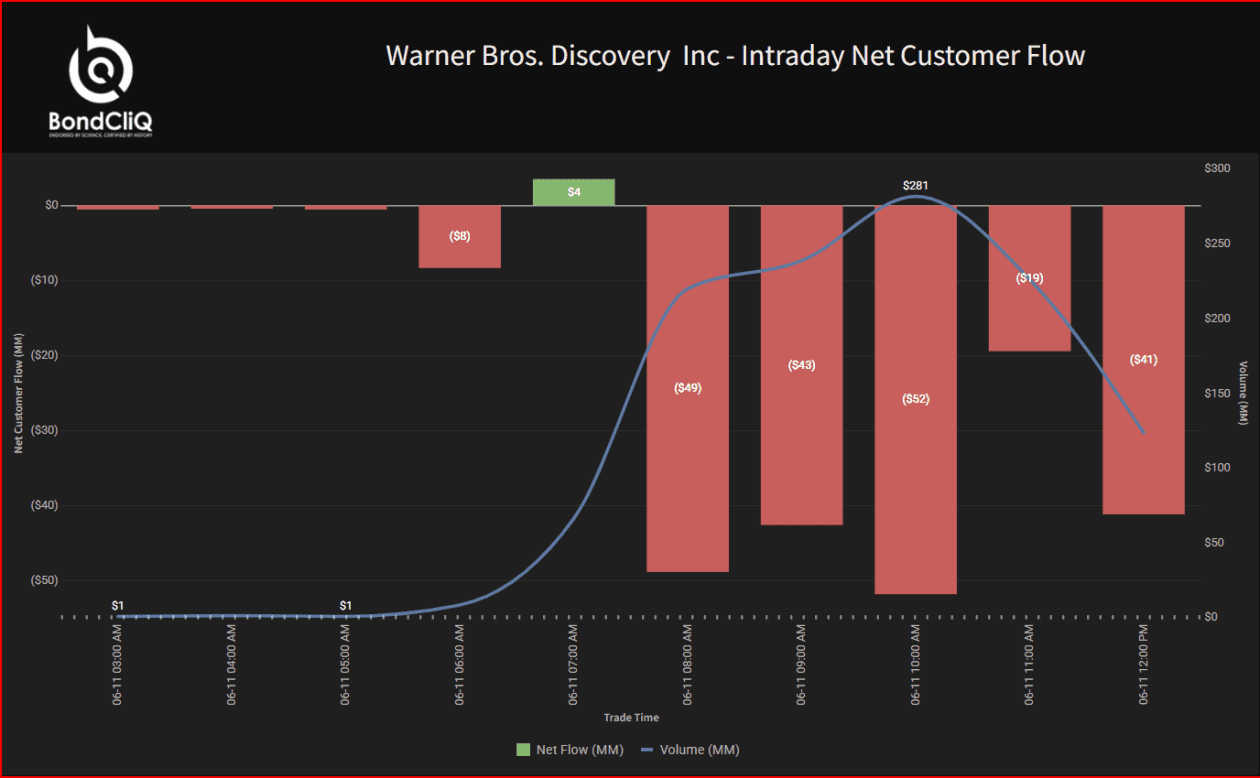
Warner Bros. Discovery bonds experienced a significant selloff after all three major ratings agencies downgraded the company's debt to junk status due to confusion surrounding the restructuring plan following the spinoff of channels like CNN and TNT. The downgrades, triggered by rules at many firms that prohibit holding non-investment grade bonds, will likely increase the company's borrowing costs, potentially impacting its bottom line, as highlighted by Fitch's concerns about the post-transaction capital structure and leverage. While the stock initially rose on the spinoff announcement, the bond market's reaction reflects uncertainty about the debt allocation between the separated companies, despite Warner Bros. Discovery's attempts to clarify its plans.
Warner Bros. Discovery's (WBD) bonds have experienced a significant selloff following downgrades by all three major ratings agencies—Fitch, Moody’s, and S&P—to junk status. This reclassification as a "fallen angel" was primarily driven by confusion and lack of clarity surrounding the company's debt restructuring plans in conjunction with the announced spinoff of its television channels, including CNN, TNT, and Food Network. The downgrades prompted forced selling by investment firms restricted from holding non-investment grade debt, as noted by BondCliQ. This development contrasts with an initial, albeit partially pared, positive reaction in WBD's stock, which rose approximately 5% since the spinoff announcement. However, the junk status significantly elevates WBD's borrowing costs, a critical concern given its Q1 net interest expense of $468 million and net loss of $453 million. Fitch highlighted specific concerns regarding the post-transaction capital structure of the remaining entity ("RemainCo"), estimating gross leverage in the mid-4x range, which it deems aggressive for a business segment facing declining revenues and margin compression. WBD has attempted to address these concerns by releasing further details on its debt handling and allocation strategy, involving a $17.5 billion bridge loan to refinance existing debt, but acknowledged that plans are subject to ongoing evaluation and capital market receptivity. The overall sentiment surrounding WBD is strongly negative (-0.8 per-ticker sentiment), reflecting the considerable uncertainty and financial risk associated with the restructuring.
AI-powered research, real-time alerts, and portfolio analytics for institutional investors.
Request DemoOverall Sentiment
strongly negative
Sentiment Score
-0.70
Ticker Sentiment
