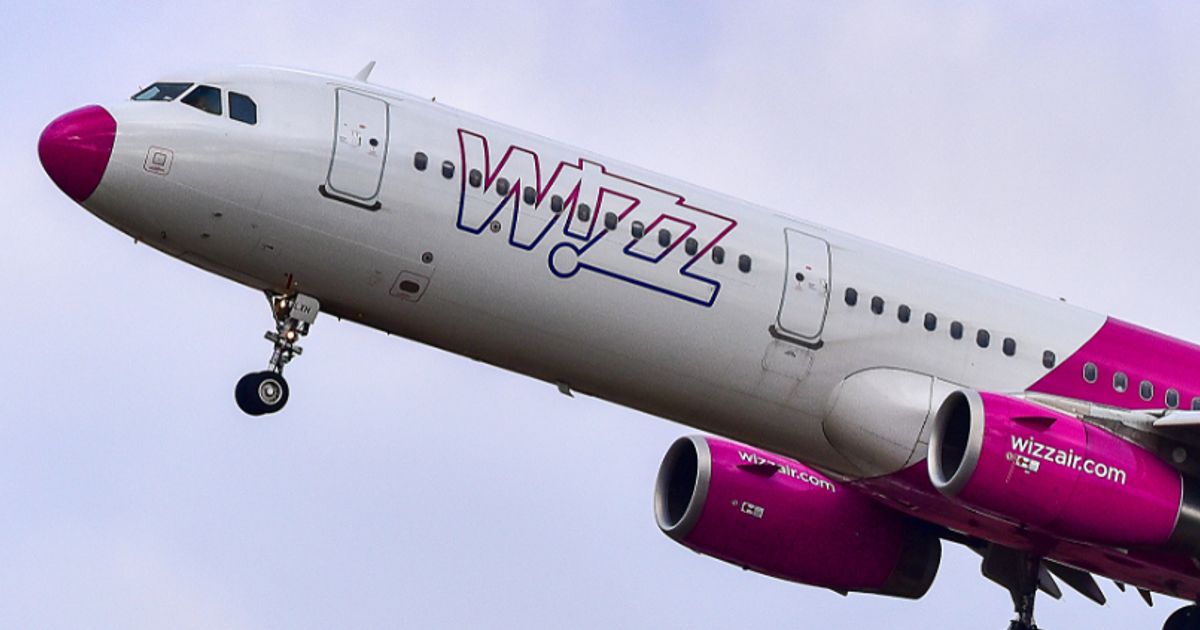
Wizz Air reported January traffic of 5.35 million passengers, up 8.5% year-on-year, and an 84.4% load factor across 6.34 million available seats (down 1.6 ppts vs Jan 2025), while the carrier announced it has carried over 500 million passengers and operates 1,000 routes to 200 destinations. In the quarter to 31 December net losses narrowed to €139m from €241m a year earlier as passenger volumes rose 12.5% to 17.5 million despite Pratt & Whitney engine disruptions; management expects fleet growth from 231 to 334 aircraft by 2030 and projects another 500 million passengers within five years. Analysts at Citi warn next year’s planned 20% capacity expansion faces headwinds from Ryanair stepping up growth on overlapping routes, increasing the risk of fare pressure given Ryanair’s lower unit costs and stronger balance sheet.
Market structure: Wizz’s jump to 1,000 routes and plan to grow fleet ~44% (231→334 by 2030) signals aggressive supply-side expansion vs. only 8.5% YoY pax growth in Jan and a 1.6ppt load-factor decline, implying near-term yield pressure. Ryanair (RYAAY) is the clear direct beneficiary — larger network, lower unit costs and stronger balance sheet give it optionality to grow capacity selectively and force price-led share gains on overlapping routes. Across assets, expect increased airline equity dispersion, widening CDS/spreads for smaller LCCs, higher short-dated options vol on Wizz, and sensitivity to Brent moves (jet fuel) where a $10/bbl move changes fuel cost by mid-single-digit percent of OPEX for LCCs over 12 months.
Risk assessment: Tail risks include renewed Pratt & Whitney groundings or another fuel spike (>+$15/bbl) that compresses margins and forces capacity cuts; regulatory antitrust action on predatory pricing is low-probability but high-impact. Immediate (days–weeks): scheduling disclosures and Ryanair capacity announcements; short-term (1–3 months): Q4/Jan traffic and next-quarter capacity guidance; long-term (1–3 years): fleet delivery cadence and financing needs if yields stay depressed. Hidden dependency: Wizz’s growth math assumes benign yields and steady engine/maintenance ops — a small demand shock or fleet delivery timing slip magnifies cash burn.
Trade implications: Tactical: establish a 2–3% long in RYAAY equity (or equivalent calls) to capture asymmetric upside if market-share gains continue; hedge with 0.5–1% position in short-dated puts to limit drawdown. Defensive: initiate a 1–2% short on WIZZ equity (or buy 3-month ATM puts) sized to expected 10–20% downside if Ryanair cuts prices on overlapping routes. Consider a pair trade: long RYAAY/short WIZZ 1:1 for relative strength, rebalance after 6–12 weeks around schedule and Q1 traffic prints.
Contrarian angles: Consensus underestimates forced consolidation potential — if price competition intensifies, weaker LCCs could be bought or exit, benefiting survivors (RYAAY) and realigning returns within 12–24 months. Conversely, if engine issues resolve and crude drops >$15 in 3 months, WIZZ’s aggressive network could monetize growth and mean-revert; buy 9–12 month OTM calls on WIZZ as a low-cost asymmetric hedge (small premium vs. large upside). Historical parallels: 2010s European capacity wars led to consolidation, not perpetual share erosion, so look for M&A signals after two quarters of margin pressure.
AI-powered research, real-time alerts, and portfolio analytics for institutional investors.
Request DemoOverall Sentiment
mixed
Sentiment Score
0.12
Ticker Sentiment
