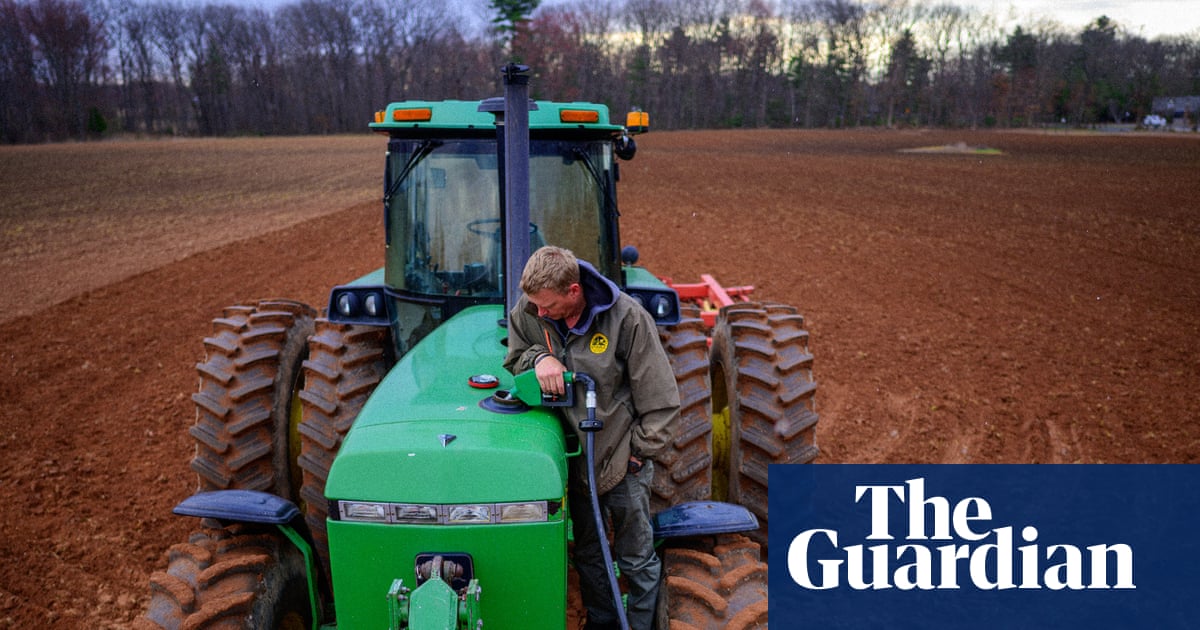
U.S. farmers are facing sharply higher input costs as diesel prices rise to around $5 a gallon in some areas, up from roughly $2.65 last April, while fertilizer supplies have been depleted by the Iran war. The pressure is especially acute during spring planting, when small family farms with thin margins and limited access to credit are most vulnerable. The article also highlights policy headwinds from tariffs, USDA staffing cuts, and canceled aid programs, adding to the strain on farm economics.
The immediate market read-through is not “higher food inflation” in the abstract; it is margin compression concentrated in the lowest-resilience segment of the ag complex. Small operators are forced to buy fuel at any price, so the first-order effect is not demand destruction but balance-sheet stress, which tends to show up with a lag in delinquency, equipment deferrals, and forced land sales. That creates a second-order winner set: larger, better-capitalized row-crop operators and custom applicators can consolidate acres, while regional equipment dealers and ag lenders face slower turns and rising credit loss reserves.
The more investable implication is that this shock is more likely to be sticky than a one-week energy spike because planting decisions are time-sensitive and largely irreversible once missed. Even if crude retraces, diesel differentials often stay elevated during seasonal inventory tightness, so the pain window likely extends through the planting-to-harvest cycle rather than just the headline geopolitical event. If fertilizer and diesel both remain constrained, the sector could see a double hit to yields and margins, which is why the downside risk for farm economics is nonlinear into summer.
The contrarian angle is that the market may be underestimating how quickly policy can offset the damage if the political salience rises. A targeted diesel release, temporary tax relief, or emergency USDA credit support would compress the duration of the shock, especially if crop prices stay firm enough to cushion revenues. Still, the credit-access channel is the key weak link: farmers without bank lines will cut input intensity first, which is bearish for productivity and ultimately supports higher grain and feed costs into 2026.
AI-powered research, real-time alerts, and portfolio analytics for institutional investors.
Request DemoOverall Sentiment
strongly negative
Sentiment Score
-0.72
